Taiwan, then Japan, confirms U.S. investment under Trump; when will South Korea finalize its LNG deal?
- Input
- 2026-10-15 15:26:30
- Updated
- 2026-10-15 15:26:30
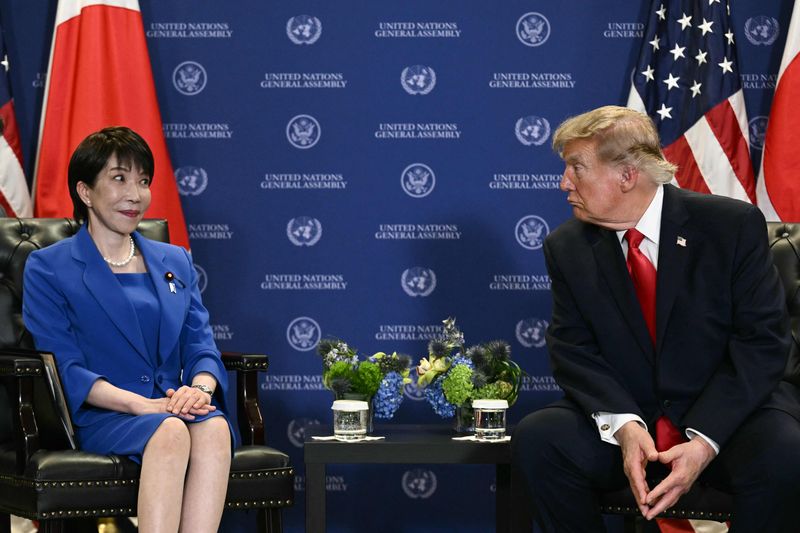
【Financial News, Seoul and Tokyo—Park Jong-won, staff reporter, and Seo Hye-jin, correspondent】With U.S. President Donald Trump unilaterally announcing details of Asian countries’ investments in the United States ahead of next month’s midterm elections, he said that Japan, following Taiwan, had also finalized its U.S. investment. This is expected to further increase the diplomatic pressure on the South Korean government, which has yet to finalize the Alaska liquefied natural gas (LNG) project.
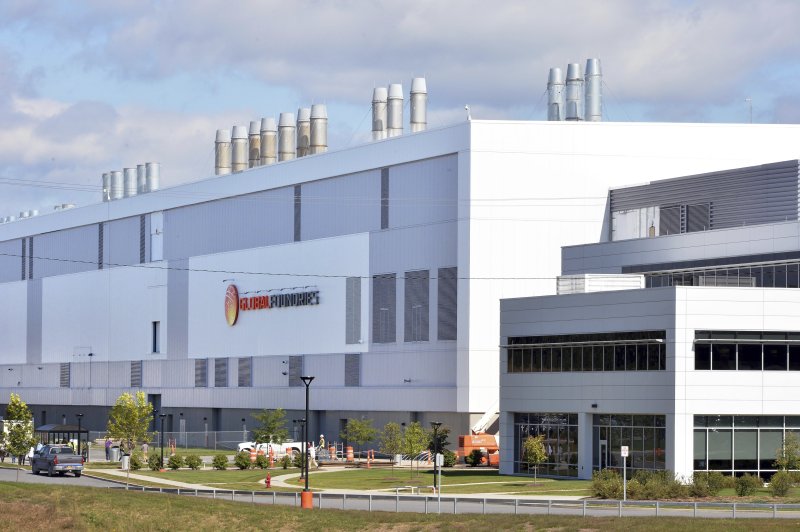
■Japan’s third U.S. investment project: a semiconductor factoryJapan’s Foreign Ministry issued a press release on the 15th clarifying Trump’s remarks about a semiconductor factory in New York. The ministry said, “This is the first semiconductor-related project under the U.S. investment agreement, and it aims to build resilient supply chains in the semiconductor sector, which is strategically important to economic security.” In a post on Truth Social on the 14th, Trump said, “Today, under my leadership, GlobalFoundries (GF) and the Commerce Department, led by Secretary Howard Lutnick, announced a massive $21 billion investment (about 28.2 trillion won) to build two huge new semiconductor manufacturing facilities in Malta, New York.” He stressed, “Under my direction, Japan will provide the funding necessary for this $21 billion investment.”
GF is the world’s fifth-largest U.S. semiconductor foundry, with production sites in the United States, Germany, Singapore and elsewhere. On the day of Trump’s announcement, GF said on its website that it would build two additional semiconductor factories alongside its existing facilities in Malta, New York. According to Japan’s Nikkei on the 15th, the investment will proceed in two phases. First, the company plans to build the first factory for about $10 billion (about 13.43 trillion won) and begin operating it in 2029. It will then invest an additional roughly $10 billion to build a second factory. The two factories will produce logic semiconductors used for computational processing. Each factory will have an annual production capacity of 900,000 wafers, measured by 300-millimeter wafer diameter.
The project will be carried out through a special-purpose vehicle (SPV) established by the U.S. and Japanese governments. The SPV will handle financing, overall project management, and construction, production and technical management, while GF will be responsible for securing staff and sourcing materials. Japanese semiconductor equipment makers, including Tokyo Electron, are expected to participate. Japan’s Foreign Ministry said the two countries plan to ensure stable production of “mature-node” semiconductors at 28 nanometers (one-billionth of a meter) and above, used in cars, industrial machinery and smartphones. That same day, Japan’s Minister of Economy, Trade and Industry Ryosei Akazawa said the project “will allow the two countries to work together to build a robust supply chain,” stressing that it could contribute to U.S.-Japan economic security.
In a separate Truth Social post on the 14th, Trump said, “We are turning investment commitments from Japan, South Korea and Taiwan into massive construction projects,” calling them “agreements that will transform the United States and have an impact for generations.” He said Secretary Lutnick had “secured purchase commitments worth $70 billion to $80 billion from Taiwan for Alaska LNG,” adding, “That represents 30% of the pipeline over the next 20 years, and it is the largest purchase agreement in history.” He also claimed that “Taiwan has agreed to make a $4.4 billion equity investment (about 6 trillion won) in this project.” In an announcement on the 14th, Taiwan’s Ministry of Economic Affairs said state-owned CPC Corporation, Taiwan (CPC) “will purchase 6 million tons of LNG annually and participate in the project’s development once the Alaska LNG development and purchase project is operational.” It added that “the expected investment could reach up to $4.4 billion,” confirming Trump’s remarks.
In an announcement on the 1st, the South Korean government said the Alaska LNG project was still under review and that it had not finalized an investment. Trump, however, mentioned South Korea’s investment again at a campaign rally in Alaska on the 13th and in a Truth Social post on the 14th. In the post, he wrote, “We launched the Alaska LNG project, the largest energy infrastructure project in Alaska’s history,” and added, “The $50 billion from South Korea (about 67 trillion won) is part of the trade and investment agreement I made.”
[email protected] Park Jong-won Seo Hye-jin Reporter