“Not a single blade of grass remains on dry land”... Local governments grapple with fiscal woes
- Input
- 2026-10-15 12:14:20
- Updated
- 2026-10-15 12:14:20
[Financial News] Around 100 days into the ninth popularly elected term, local governments across the country have run into a major obstacle: fiscal distress. Common concerns include declining tax revenues amid a worsening real estate market, rising mandatory spending and the local governments’ share of the cost of nationally funded projects.
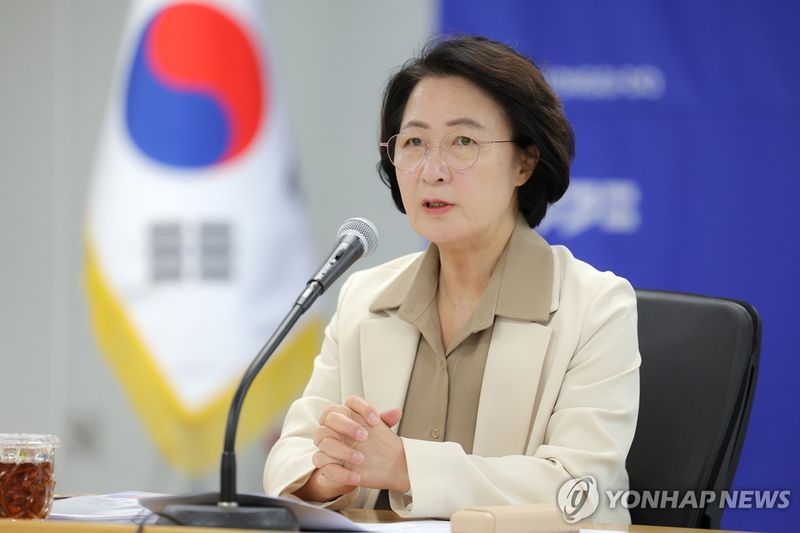
A review of Financial News reporting on the 15th found that Gyeonggi Province officially declared a fiscal crisis after its available funds plunged as the worsening real estate market weakened local tax revenues. Gyeonggi Province Governor Choo Mi-ae said, “There isn’t a single blade of grass left on dry land,” and launched fiscal reforms worth 770 billion won. The province pursued a supplementary budget that would cut spending by 546.5 billion won, and after negotiations, its second supplementary budget bill, which restored 21.6 billion won in livelihood-related funding, was passed on the 12th.
Incheon needs 644.1 billion won for legally mandated and other obligatory spending in the second half of this year, but has only 185.6 billion won in available funds, leaving a shortfall of 458.5 billion won. Acquisition tax revenue is projected to fall by nearly 100 billion won, from an estimated 1.6944 trillion won this year to a forecast 1.5969 trillion won next year. The city launched a fiscal and budget reform task force in July and introduced caps on discretionary projects by division and bureau in August. The Jemulpo, Yeongjong, Seohae and Geomdan districts, which were established that same July, have fixed costs approaching as much as 80% of their budgets, leaving them with almost no funds for their own projects.
At the transition committee stage, Daejeon assessed itself as being “effectively on the verge of default or bankruptcy.” The city plans to secure 178.2 billion won by, among other measures, ending eight of 71 projects costing at least 10 billion won—including the construction of Nara Sarang Park—and placing 29 under long-term review. Mayor Heo Tae-jeong also made official his plan to abolish the “Zero O’Clock Festival.” Sejong’s fiscal budget this year is 2.3536 trillion won, below the 2.8501 trillion won recorded in 2021. South Chungcheong Province expects a fiscal gap of 1.0304 trillion won in the second half alone, while North Chungcheong Province’s debt ratio against its original budget is 18.1%, higher than Gyeonggi Province’s 17.6%.
The Jeonnam-Gwangju Transformation Planning Committee, which serves as the transition committee for the Jeonnam-Gwangju Integrated Special City, said in June that revenue in the second half of this year was expected to be 103.1 billion won and expenditure 503.4 billion won, leaving a shortfall of 400.3 billion won by year-end. The committee said issuing local bonds would also be difficult, as Gwangju’s debt ratio (25.61%) exceeds the Ministry of the Interior and Safety’s 25% threshold for designating a local government as a “local debt caution group.” The total cost of Gwangju Metro Line 2 rose from 1.7394 trillion won to 3.243 trillion won.
Jeju Province cut its planned local bond issuance for next year by 250 billion won compared with this year’s plan. However, managed debt is projected to rise to 1.9566 trillion won by the end of next year and reach 2.0351 trillion won in 2030. This is due to continuing local funding obligations, including the local governments’ share of nationally funded projects.
In Hanam, mandatory spending accounted for 90.4% of the budget in fiscal year 2024, leaving about 9.6% available for policy initiatives. In 2025, the city’s matching funds for projects subsidized by the national and provincial governments rose by 31.7 billion won (25%) from the previous year.
Most local governments have proposed spending overhauls as a response. However, critics say short-term spending cuts alone have their limits. Gyeonggi Province is calling for tax reform that would transfer 5% of national corporate tax revenue to metropolitan local governments and gradually raise the local consumption tax rate from the current 25.3% to 40.3%. Sejong plans to urge the government to introduce a fixed-rate system for the general local allocation tax, among other measures.
[email protected] Jang Chung-sik, Kim Won-jun, Han Gap-su, Hwang Tae-jong, Kim Gyeong-su, Jeong Yong-bok Reporter