'CoreWeave shock' sends Japanese stocks tumbling 4.8%... Is funding for AI investment drying up?
- Input
- 2026-10-15 12:12:49
- Updated
- 2026-10-15 12:12:49
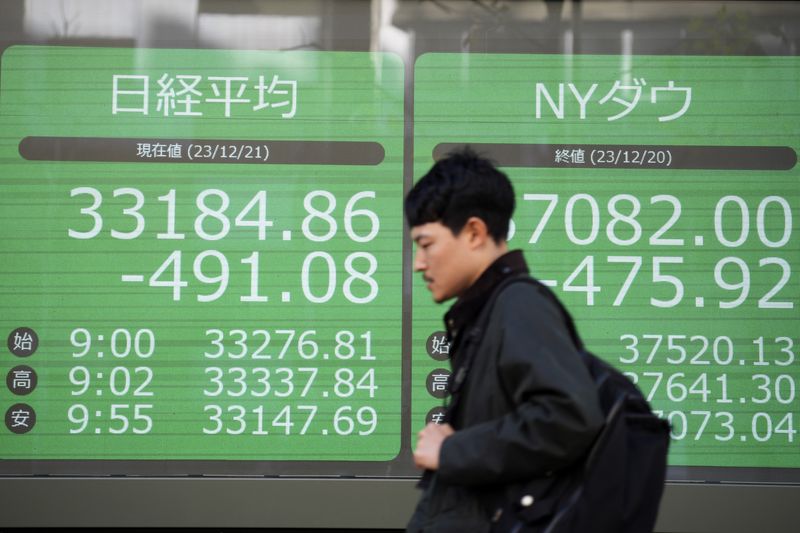
【Financial News Tokyo correspondent Seo Hye-jin】 On the 15th, Japanese stocks were plunging nearly 5% amid credit concerns over U.S. AI cloud company CoreWeave. Fears that investment in AI infrastructure, which requires massive funding, could slow because of financing difficulties weighed on semiconductor and AI-related stocks. U.S. inflation also came in above market expectations, freezing investor sentiment.
The Nikkei 225 Average Stock Price (Nikkei Index) ended the morning session at 64,489.06, down 3,255.23 points (4.81%) from the previous trading day. After opening down 863 points, it extended its losses as selling intensified. If the closing level also falls below 65,000 today, it will be the first time in about a month, since the 17th of last month.
Leading AI and semiconductor stocks drove the decline. Semiconductor testing equipment maker Advantest plunged 13.91%, while SoftBank Group and Tokyo Electron fell 9.36% and 7.29%, respectively. The three stocks alone dragged the Nikkei Index down by more than 2,000 points.
The trigger for the selling was a sharp drop in CoreWeave’s corporate bond prices. CoreWeave leases data centers equipped with AI chips to AI developers and major cloud providers. Yields on bonds maturing in 2032 with coupon rates in the high 9% range surged to 15%, while the company’s share price fell more than 15%. Falling bond prices and rising yields mean investors have begun pricing in correspondingly higher credit risk.
Kazuaki Shimada, chief strategist at IwaiCosmo Securities, told the Nihon Keizai Shimbun, “Credit concerns over CoreWeave had a greater impact than the consumer price index (CPI),” adding, “It was a small crack, but fear spread quickly, leading to a flight from risk assets.”
Kohei Onishi, senior investment strategy researcher at Mitsubishi UFJ Morgan Stanley Securities, said, “With AI and semiconductor stocks recently near their highs, this episode became a trigger for profit-taking.”
Market observers say the factors holding back the expansion of AI investment are shifting from power shortages to financing. Whether the massive investment required for data centers and semiconductors can be secured in time has emerged as a new variable.
BlackRock CEO Larry Fink said at an earnings announcement on the 14th (local time), “For the first time in my 50-year career, I am witnessing a true shortage of capital.” This week, Intel CEO Lip-Bu Tan and Broadcom CEO Hock Tan also cited capital shortages and rising financing costs as challenges ahead.
Kazuyuki Muramatsu, head of the investment division at Nagomi Capital, said, “The bottleneck for AI investment is shifting from power to financing,” adding, “Concerns about financial deterioration are emerging.”
U.S. inflation added to the pressure. The CPI rose 3.7% in September from a year earlier, above the 3.6% market forecast compiled by Dow Jones. After the data was released, expectations for a U.S. interest rate hike this month also briefly strengthened. Concerns over AI investment were compounded by the burden of high interest rates.
However, selling did not spread across the entire market. At least 30% of stocks on the Tokyo Stock Exchange’s Prime Market rose that day. Funds shifted into domestic-demand stocks such as retailers and pharmaceutical companies, as well as defensive stocks.
Yugo Tsuboi, chief strategist at Daiwa Securities Group Inc., said, “Money is not leaving the stock market; it is taking refuge in value stocks and defensive stocks.”
The next turning point will be the earnings announcements by major cloud providers, scheduled one after another at the end of this month. Muramatsu said, “With caution over AI investment elevated, earnings from major cloud providers could change the mood,” and predicted, “The correction could continue until then.”
[email protected] Seo Hye-jin Reporter