KOSPI’s October decline nears 20%... Shareholders squeezed out of bonus sharing also face losses in market rout [Why the Stock Market?]
- Input
- 2026-10-15 11:35:43
- Updated
- 2026-10-15 11:35:43
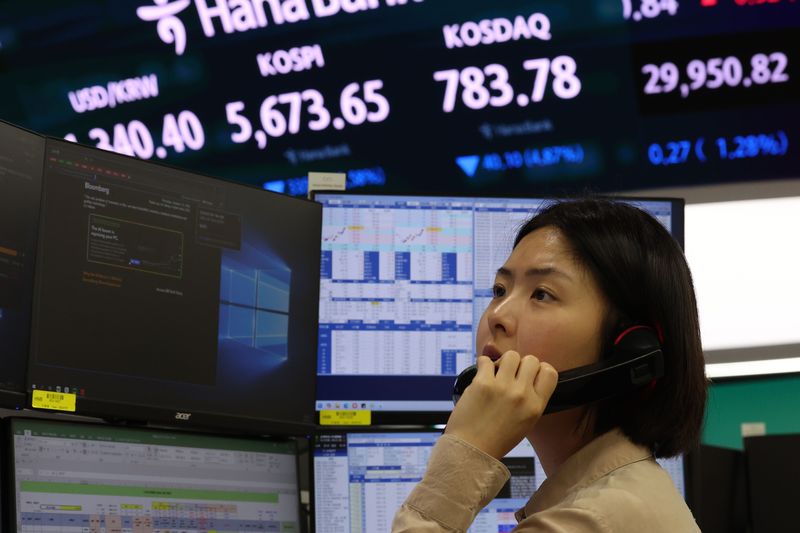
[Financial News] Samsung Electronics and SK hynix plunged intraday by 9% and into the 11% range, respectively, deepening losses for individual investors. As leveraged products also plunged, discontent erupted over how companies allocate funds between performance bonuses and shareholder returns, as well as over investor-protection measures in market policy.
KOSPI down 18% in October... Samsung Electronics and SK hynix plunge together
As of 11:20 a.m. on the 15th, the KOSPI stood at 5,583.17, down 1,254.87 points (18.35%) from its closing level of 6,838.04 at the end of September. Over the same period, the KOSDAQ fell 10.47%, from 855.91 to 766.27. On the day alone, the KOSPI plunged 425.64 points (7.08%) from the previous trading day, while the KOSDAQ fell 57.61 points (6.99%). At the halfway point of October, the KOSPI had lost about one-fifth of its value and the KOSDAQ more than one-tenth.
Through the previous day, the KOSPI’s cumulative decline for October was 12.13%, but it fell a further 474.50 points (7.90%) that day from the previous trading day. The KOSDAQ, which was down 3.74% through the previous day, fell an additional 61.45 points (7.46%) that day. The KOSPI’s intraday low was 5,534.24, and the KOSDAQ’s was 761.35.
“The nightmare of July, the nightmare of October,” a securities industry official said, noting that “investors’ patience with the sharp selloffs that recur in the first month of every quarter is nearing its limit.”
Top semiconductor stocks by market capitalization also plunged. Samsung Electronics was trading at 210,000 won, down 9.48%, while SK hynix was at 1,258,000 won, down 11.35%. Leveraged products fell even further. KODEX Leverage dropped 14.56%, and TIGER Semiconductor TOP10 Leverage fell 19.50%. The declines in the indices and semiconductor stocks translated into even greater losses for leveraged products.
The sharp share-price falls also drew criticism of how companies allocate funds. One securities company official criticized the payment of performance bonuses, saying, “The virtuous cycle can be completed only if that money is used for shareholder returns or investment.” The argument is that companies should explain how they allocate funds among performance rewards, shareholder returns and efforts to secure future competitiveness.
“Who will take responsibility for investors’ losses?”... Warning signs over AI profitability and financing, too
Amid the sharp selloff, investors’ discontent also turned to the way market rules are being advanced. Critics said that when changing rules that directly affect investment, such as delisting criteria, policymakers should carefully consider the impact on existing shareholders, especially when external headwinds have dampened investor sentiment.A securities industry official criticized the tightening of delisting criteria, saying, “The government announced it unilaterally, without any agreement with market participants.” The official continued, “The people harmed by these abnormal decisions are the public, who are investors,” and asked, “Who will take responsibility for investors who have lost money because of leverage and delisting criteria?”
Securities industry analysts cited the financing burden from increased investment in artificial intelligence (AI) and concerns over profitability as factors behind the sharp selloff. Their analysis is that, as investment grows and reliance on external capital increases, changes in interest rates and credit conditions are putting pressure on the share prices of related companies.
Kim Ju-yeon, a researcher at Mirae Asset Securities, said, “With a sharp rise in CoreWeave’s corporate bond yields and a slowdown in Anthropic’s revenue growth becoming evident, doubts have grown about the AI industry’s profitability and the sustainability of investment.”
Kang Jin-hyuk, a senior researcher at Shinhan Securities, said, “As AI capital spending increasingly depends on external capital, its sensitivity to interest rates is also gradually rising.” He added, “As chief executives at Broadcom and other companies have said recently, issues facing individual companies ultimately connect to interest rates, a macroeconomic variable, through capital constraints and profitability.”
[email protected] Choi Doo-sun Reporter