Hair-Loss Medication Side Effects: Don’t Just Put Up With Them or Stop Taking the Medication—The Science of Dose Adjustment to Protect Your Hair [Kim Jin-o’s Hair Loss Escape]
- Input
- 2026-10-15 15:14:06
- Updated
- 2026-10-15 15:14:06
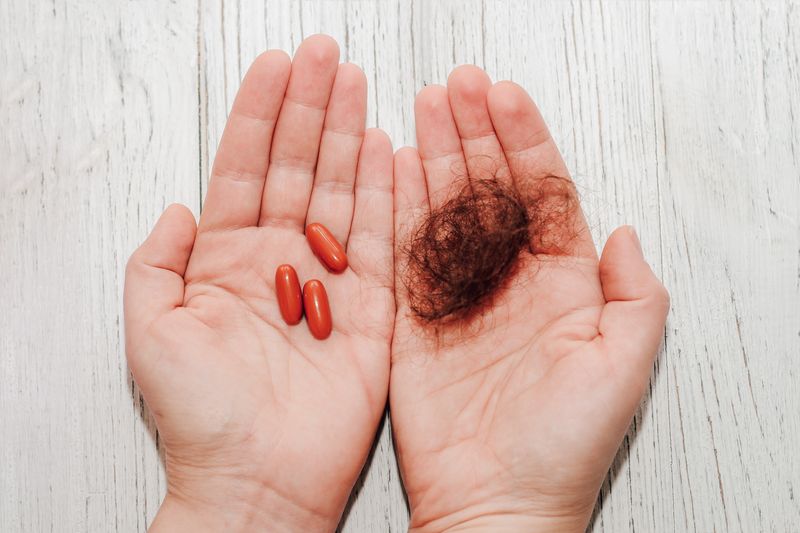
[Financial News] When adverse reactions such as reduced sexual function or chronic fatigue occur while taking hair-loss medications such as finasteride or dutasteride, most patients struggle with whether to stop taking them. There are also unfortunate cases in which people stop treatment altogether on their own and rapidly lose hair they had maintained for years. However, recently published studies show that there is an option between “stopping completely” and “putting up with the side effects.”
Even at one-fifth the dose, hair-loss medication retains at least 80% of its effectiveness... Reduce the dose before stopping
That option is “dose reduction.” Many patients worry that if they halve the standard 1 mg dose of hair-loss medication and take only 0.5 mg, its effectiveness will also be cut in half. But finasteride’s pharmacokinetic properties are not linear. That is because there is a plateau where the curve of the inhibitory response flattens as the dose increases.
According to existing clinical data, finasteride at 1 mg suppresses dihydrotestosterone (DHT)—a substance that causes hair loss in scalp tissue—by about 64.1%, while the lower dose of 0.2 mg maintains a suppression level of 56.5%. In other words, taking just 0.2 mg can preserve about 80% or more of the protective effect of the standard 1 mg dose.
Also noteworthy are the results of a study recently published in the Journal of the American Academy of Dermatology (JAAD), which followed patients who experienced sexual side effects among 5,675 people taking oral finasteride. In the group that continued at the same dose, about 50% of patients saw their side effects improve over time, while the other half continued to experience them. By contrast, in the group that gradually reduced its dose, 75% saw their sexual side effects improve and were able to continue treatment steadily.
This means that simply lowering the dose instead of giving up on the medication altogether can help three out of four people get free of side effects and protect their hair. Some patients whose symptoms persisted even after the first dose reduction also resolved them by reducing the dose further to around 0.2% or switching to a topical medication.
Medications differ in their pharmacological properties... Reduce the dose gradually in consultation with a doctor
When planning a dose-reduction regimen, the half-life and formulation of each medication must be carefully distinguished. Finasteride has a short half-life in the body of 6–8 hours. With an every-other-day regimen, the drug concentration in the blood can drop sharply on days when it is not taken, putting hair follicles at risk of being exposed to DHT without protection. Therefore, finasteride should be taken every day at a consistent time.
Dutasteride, by contrast, has a long terminal half-life of 3–5 weeks and tends to accumulate in the body, so even when taken every other day, serum DHT suppression can be maintained at around 80–85%. Taking it every day is still the ideal way to minimize fluctuations in blood levels, but taking it every other day may also be considered. However, taking either medication only once or twice a week is not recommended, as that will not maintain an effective concentration.
Nevertheless, during the first 3–6 months of treatment, quickly reaching an effective concentration can maximize the results. Therefore, unless there is an unusual adverse reaction to the medication, the rule is to take the standard dose every day. Even a difference in efficacy of just 5–10% can make the standard dose the best option for preserving hair density.
When side effects arise and a patient is at a crossroads over whether to stop treatment, dose adjustment is a rational, evidence-based clinical compromise: accepting a small difference of around 5% in suppression while maintaining medication adherence to protect the hair as a whole. That is why, if side effects are suspected, patients should first discuss a gradual dose reduction that takes the medication’s pharmacological properties into account with their doctor, rather than stopping the medication on their own.

/Chief Director Kim Jin-o, New Hair Hair Transplant Surgery Clinic
[email protected] Kim Hyeon-seon Reporter