AI analyzes long videos and draws on experience ... 24 Naver AI papers accepted at international conference
- Input
- 2026-10-15 11:18:45
- Updated
- 2026-10-15 11:18:45
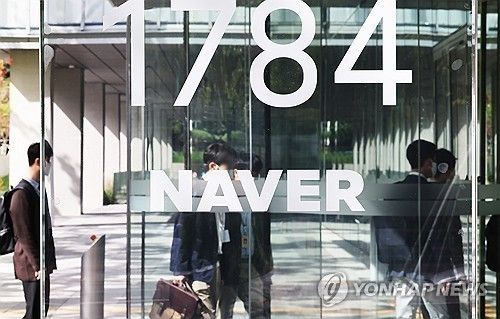
[Financial News] Twenty-four of Naver's artificial intelligence (AI) research papers have been accepted at a leading international natural language processing conference. From technologies that enhance Korean-language AI's reasoning capabilities and find desired scenes in long videos to AI agents that solve new tasks by drawing on past experience, the acceptance marks international recognition for research aimed at improving the performance and practical usefulness of real-world services.
Naver said on the 15th that 24 research papers from technical organizations across Team Naver, including NAVER Cloud and Naver Labs Europe, had been accepted for EMNLP 2026.
EMNLP, regarded alongside ACL and NAACL as one of the three leading conferences in natural language processing, will hold this year's event in Budapest, Hungary, from the 24th to the 29th. Naver plans to present its key research findings there.
The papers accepted this time span a range of fields, including Korean-language AI, multimodal AI, the reasoning processes of large language models (LLMs), and AI agents. In particular, they focus on enabling AI to follow complex instructions accurately, process vast amounts of information efficiently, and use existing knowledge even in new environments.
NAVER Cloud analyzed the problem of performance degradation that can occur when expanding an AI model's capabilities. Adding image-understanding capabilities to a language model can weaken its existing ability to follow instructions. The team proposed a diagnostic metric that can predict this before training. The research aims to preserve existing performance while adding new capabilities to AI.
Research to improve Korean-language AI's reasoning capabilities was also accepted. Noting the shortage of Korean reasoning-training data in specialized fields such as medicine and security, the researchers built synthetic data using English source texts and proposed a way to improve Korean-language performance with it.
In video-understanding technology, the researchers analyzed AI's limitations. Their study of the task of finding specific scenes in videos lasting several hours found that existing AI struggles more with searching long videos for the required segments than with recognizing the scenes themselves. The research could help improve long-form video search and analysis technologies in the future.
Research was also conducted to understand and improve how AI arrives at answers. Naver AI Lab found that processes an LLM uses to solve problems—including understanding the problem, planning and calculation—also appear as distinct components within the model itself. This can be used to analyze AI's reasoning processes and identify ways to improve performance.
Naver Labs Europe focused on research to improve AI agents' problem-solving abilities. Using search-augmented technology, it enabled AI agents to retrieve experience from past tasks and apply it to new ones, improving their ability to handle tasks they encounter for the first time.
Naver plans to incorporate these research achievements into the development of next-generation AI models and services, and to strengthen its global AI competitiveness, particularly in Korean-language AI, multimodal technology and AI agents.
[email protected] Choi Hye-rim Reporter