Home-Buying Sentiment Outside the Capital Region Stirs; Capital Region Sluggish for Second Straight Month
- Input
- 2026-10-15 12:00:00
- Updated
- 2026-10-15 12:00:00
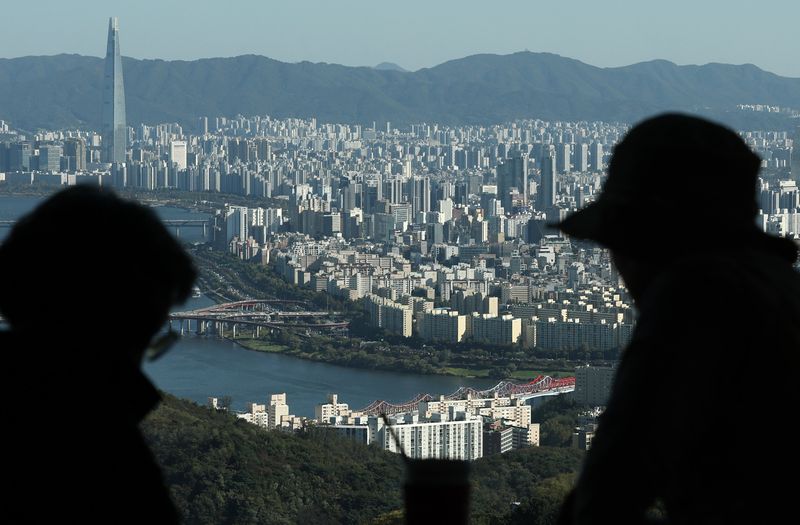
[Financial News] Buying sentiment among homebuyers outside the capital region improved by nearly 2 points in a month, lifting nationwide housing transaction sentiment. The capital region remained in the expansion phase, but its index fell for a second consecutive month, with momentum cooling somewhat. Sentiment in the land market froze further, dropping below the 80 mark.
According to the results of the ‘September 2026 Real Estate Market Consumer Sentiment Survey’ released by the Korea Research Institute for Human Settlements on the 15th, the nationwide Housing Purchase Consumer Sentiment Index stood at 117.3. It rose 0.6 points from August (116.7), and remained in the expansion phase. The survey was conducted from September 21 to October 13.
The difference in sentiment across regions was clear. The index outside the capital region jumped 1.9 points, from 106.5 to 108.4, but remained in the neutral range. The capital region’s index fell 0.7 points, from 125.6 to 124.9. Among cities and provinces, Gangwon recorded the largest increase (16.9 points), followed by Sejong (12.4 points) and Daegu (7.9 points). Jeju plunged 11.1 points, while North Gyeongsang (-7.4 points) and Ulsan (-5.4 points) were also weak.
The slowdown in home-buying sentiment in Seoul is more pronounced. Seoul’s housing transaction index hit a year-to-date high of 139.9 in July, then fell to 132.5 in August and 130.8 in September, a 9.1-point drop in two months. It is also below the 133.4 recorded in September last year. Weekly statistics from the Korea Real Estate Board likewise show that the growth rate of Seoul apartment prices narrowed from 0.13% in the third week of September (as of the 21st) to 0.09% in the fourth week (as of the 28th).
Sentiment among jeonse renters continued to rise. The nationwide Housing Jeonse Consumer Sentiment Index reached 114.4, up 0.9 points from a month earlier and nearing the threshold for the expansion phase (115). The capital region (119.8) and areas outside it (108.3) rose by 0.8 and 1.0 points, respectively. Increases were particularly pronounced in Sejong (5.8 points), South Chungcheong (5.1 points) and Daejeon (4.8 points), while Gwangju (-4.6 points), North Jeolla (-4.0 points) and Jeju (-1.2 points) declined. Compared with a year earlier (106.2), nationwide sentiment for jeonse was up 8.2 points; over the same period, Seoul’s index jumped 10.8 points, from 112.0 to 122.8. According to the Korea Real Estate Board, Seoul apartment jeonse prices also rose 0.16% in the fourth week of September, outpacing the 0.09% increase in sale prices.
Sentiment in the land market grew colder. The nationwide Land Market Consumer Sentiment Index fell 2.9 points, from 79.6 to 76.7, and remained in the contraction phase. The capital region plunged 5.6 points, from 89.2 to 83.6, while areas outside it also lost 2.7 points to 74.0. The declines in Daejeon (-14.8 points), Seoul (-12.5 points) and North Jeolla (-10.7 points) were all in double digits. South Chungcheong (4.3 points), North Gyeongsang (4.2 points) and South Gyeongsang (2.1 points) posted modest rebounds. Seoul’s land sentiment had risen above 100 to 107.5 in August, but returned to 95.0 a month later. The nationwide index was 7.4 points below its level in September last year (84.1).
The nationwide Real Estate Market Consumer Sentiment Index, covering housing and land, rose 0.5 points to 112.0 but remained in the neutral phase. The capital region fell 0.6 points to 118.4 but remained in the expansion phase, while areas outside it rose 1.0 point to 104.9. Gains were led by Gangwon (8.8 points), Sejong (7.2 points) and South Gyeongsang (3.8 points), while declines were led by Jeju (-5.8 points), North Jeolla (-4.5 points) and Ulsan (-2.8 points).
The housing market index, combining home sales and jeonse, rose 0.8 points to 115.9 and remained in the expansion phase. The capital region stood at 122.3, unchanged from August, while areas outside it rose 1.5 points to 108.4. Gangwon (10.2 points), Sejong (9.0 points) and Daegu (4.8 points) posted sharp increases, while Jeju (-6.1 points), North Jeolla (-3.7 points) and North Gyeongsang (-3.4 points) declined.
[email protected] Jeong Gyeong-su Reporter