Ultra-Small Satellite Constellation Captures First Ground-Observation Images ... Just 14 Hours After Nuri (KSLV-II) Launch
- Input
- 2026-10-15 10:13:40
- Updated
- 2026-10-15 10:13:40
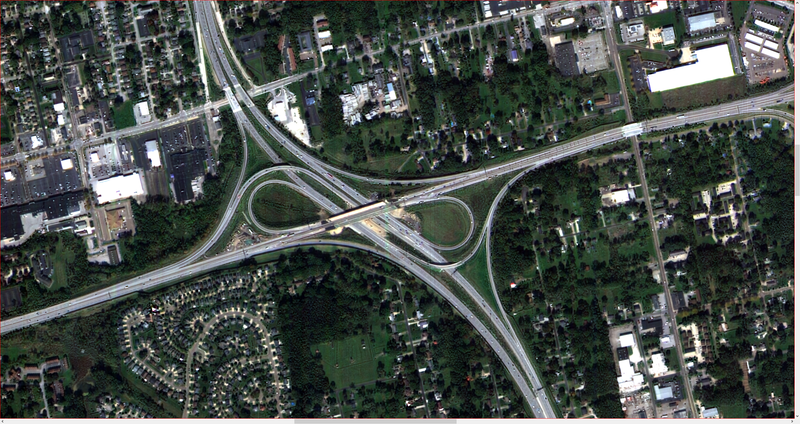
[Financial News] Five satellites in the ultra-small satellite constellation, Nos. 2 through 6, which were carried into space on the fifth launch of Nuri (KSLV-II), successfully captured their first images of the ground and transmitted them to ground stations about 14 hours and 29 minutes after launch.
According to the Korea AeroSpace Administration and the Korea Advanced Institute of Science and Technology (KAIST) on the 15th, the early acquisition of images means that the satellites and their optical payloads are functioning normally shortly after launch. All five first-batch production satellites are currently communicating smoothly with ground stations, and their systems overall, including power generation and attitude control, remain in normal condition. Nuri (KSLV-II) previously completed its fifth launch successfully at 12:25 on the 7th.
This remarkably rapid image capture was possible because automation tailored to constellation operations was applied alongside the early operational know-how gained from previously launched prototype and verification satellites. Drawing on the earlier satellites’ orbital histories and operational data, the team minimized trial and error and maximized the efficiency of operating multiple satellites by automatically carrying out initial checks and stabilization immediately after separation from the launch vehicle.
The Korea AeroSpace Administration and KAIST will complete checks of the payloads based on the initial images received and begin full-scale initial operations. Over the coming months, they plan to optimize image quality through image calibration and validation, and gradually form the constellation by positioning the five satellites at regular intervals.
Next year, once initial operations are complete, operational responsibility will be transferred to the Jeju National Satellite Operation Center. The acquired satellite images are expected to be put to full use in public-sector areas such as national security and disaster response.
Korea AeroSpace Administration Administrator Oh Tae-seok said, “This early acquisition of images is a meaningful achievement that demonstrates the stable on-orbit operation of small satellites mass-produced using domestic technology, building on the technical assets developed through the operation of prototype and verification satellites. We will do our utmost to complete the upcoming initial operations without a hitch and ensure they lead to satellite information services that the public can experience firsthand.”
[email protected] Yeon Ji-an Reporter