Calligraphy by pro-Japanese collaborator, misidentified as the work of an independence activist, belonged to National Museum chief Yu Hong-jun
- Input
- 2026-10-15 10:12:33
- Updated
- 2026-10-15 10:12:33
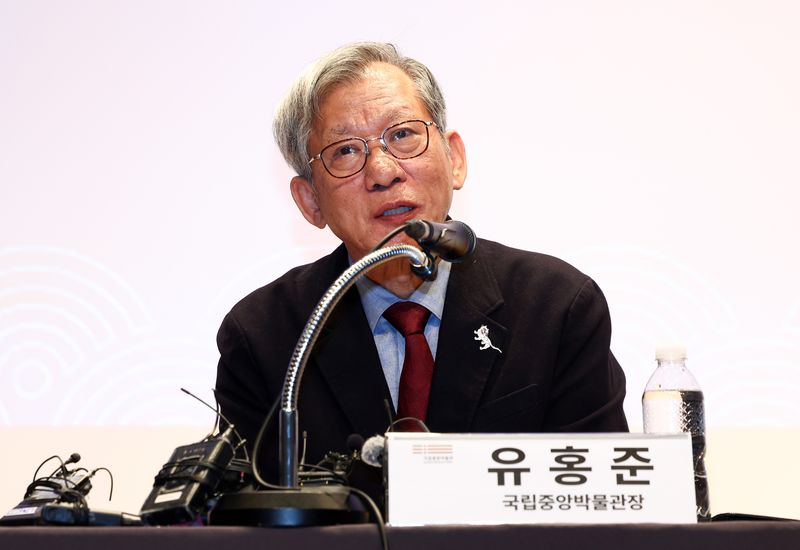
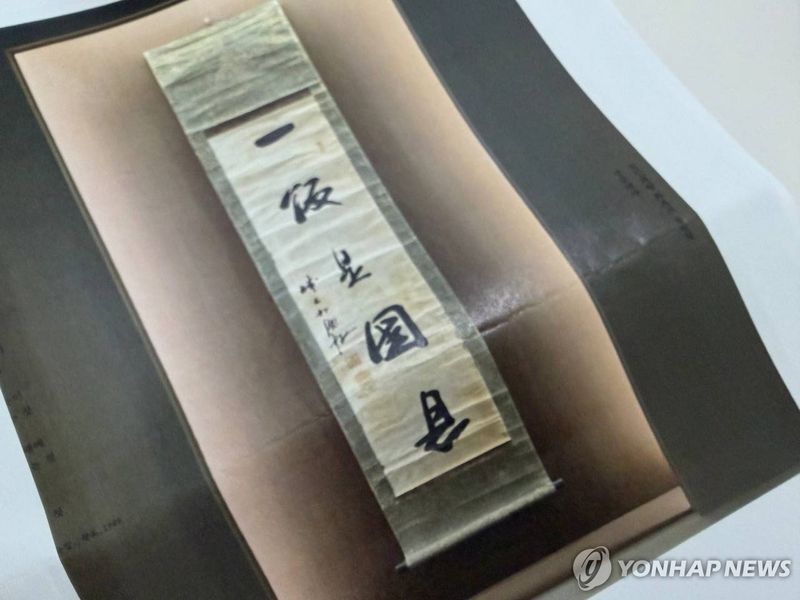
[Financial News] The calligraphic work by a pro-Japanese collaborator that the National Museum of Korea mistakenly presented as the writing of an independence activist before removing it was found to be part of the personal collection of the museum’s director, Yu Hong-jun.
According to Yonhap News Agency and other reports on the 15th, documents the museum provided to Rep. Jeong Yeon-uk of the People Power Party, a member of the National Assembly’s Culture, Sports and Tourism Committee, show that the museum responded to his office’s question about the owner of the calligraphic work by saying, “We borrowed the work on the director’s recommendation. The owner of the work is Director Yu.”
The National Museum of Korea had previously displayed the calligraphic work “Even a Bowl of Rice Is a Blessing from the Nation” at its special exhibition The Korean Table: Food, Nature, and Life. The phrase was spoken by Master Yeonggyu, a commander of Buddhist monk troops during the Imjin War, and the museum presented the work as the writing of patriot Park Won-geun (1912–1950), who was from Boeun, North Chungcheong Province.
After the family raised concerns, however, the museum removed the calligraphic work and began a fresh review. It concluded that the work was by pro-Japanese collaborator Park Jung-yang (1874–1959), who once used the name Park Won-geun.
The museum told Rep. Jeong’s office, “The work came to be used in the exhibition on the director’s recommendation and in accordance with proper procedures,” adding, “Taking into account information relayed by the owner (Director Yu), among other things, we judged it to be a work by Patriot Park.”
The museum added, “The inscription at the end of the work read ‘Korean Park Won-geun,’ so at the time of the exhibition, he was not identified as a pro-Japanese collaborator or as someone listed in the Dictionary of Pro-Japanese Figures.” It said, “Although the work was selected after an internal review, there was not enough cross-checking by experts in relevant fields, including handwriting and the person’s background.”
The museum added, “We will make expert consultations for future exhibition planning more systematic, strengthen the preliminary review process, and expand our pool of experts in modern and contemporary studies to ensure thorough verification of exhibits and prevent this from happening again.”
Meanwhile, Director Yu apologized on the 10th of last month, saying, “Failing to correctly understand the meaning of the artifact was a lack of capability on the museum’s part, as well as a mistake.”
[email protected] Kim Su-yeon Reporter