Energy data for 7.3 million buildings nationwide on ‘one map’... KICT builds DataNet
- Input
- 2026-10-15 09:40:20
- Updated
- 2026-10-15 09:40:20
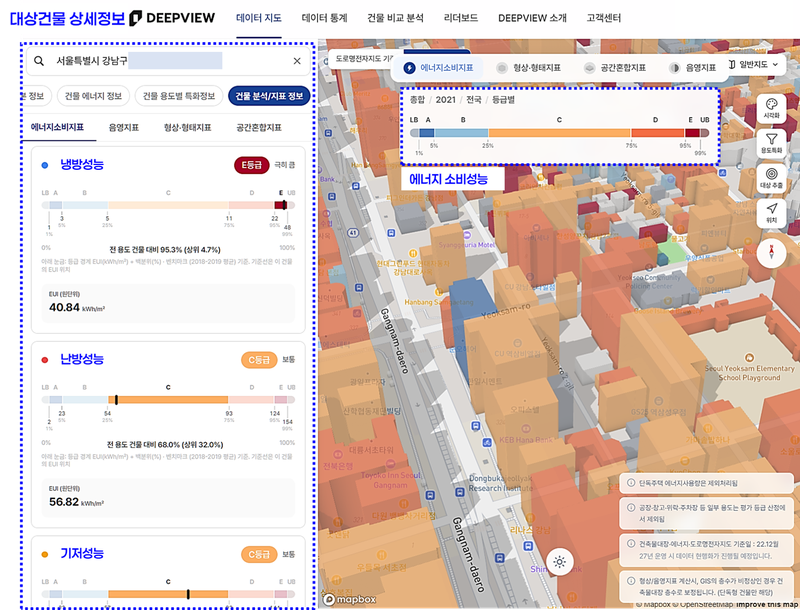
[Financial News] Energy consumption and administrative data for buildings nationwide, previously managed separately by different ministries and agencies, are being brought together at the individual-building level. Thirteen of the 17 data types targeted for integration have already been combined, with an average match rate of 94.8%. The resulting data are being piloted as a map-based web service and are expected to serve as foundational material for carbon-neutrality policies in the building sector.
According to the Korea Institute of Civil Engineering and Building Technology (KICT) on the 15th, a research team led by Kim Deok-u, team leader in the Building Energy Research Division at KICT, has established DataNet, a nationwide system for linking building data covering 7.3 million buildings across the country.
Until now, administrative data related to buildings have been split among various ministries, including the Ministry of Land, Infrastructure and Transport (MOLIT), the Ministry of the Interior and Safety, and the Ministry of Education. The biggest obstacle to linking them was addresses. Both road-name addresses and lot-number addresses are in use, and it is common for several buildings to stand on a single lot, making it difficult to determine which data belonged to which building by simply comparing addresses.
The research team devised a three-step matching technique using the building register as its reference point. First, it matches records directly using address codes. For the remaining data, it standardizes the address text and compares the records again. Finally, it identifies the structural relationships between lots and buildings. The system was designed to distinguish cases where multiple buildings are clustered on one site, such as apartment complexes and campuses.
The linked information spans energy consumption and weather data, commercial districts and stores, business permits and licenses, and geospatial data, as well as information on multifamily housing and educational, medical, and cultural facilities. By category, matching rates were high for medical institution data at 98.4% and business establishment data at 96.7%; weather observations and officially announced individual land prices were linked at 100%. By contrast, building footprint data reached only 79.3%. The overall matching rate across all records was 98.2%.
The energy data underwent a separate cleaning process. Energy use unrelated to buildings, such as street lighting, was excluded, and outliers were flagged. Monthly consumption figures, which are tallied according to meter-reading dates, were recalculated on a daily pro rata basis to align with actual calendar months (from the first day through the last day of the month). The research team calls this process “calendarization.” Another notable feature is that reported monthly consumption was broken down into heating, cooling, and base usage, making it possible to assess each building’s energy performance.
The team also developed new analytical indicators. It created shape and shading indicators that account for building form and shade cast by neighboring buildings. By analyzing how monthly energy consumption rises and falls with outdoor temperatures, the system can reveal each building’s heating and cooling sensitivity and operating characteristics. This lays the groundwork for initially screening buildings nationwide at low cost using only monthly and annual data, and identifying first the buildings most in need of a detailed assessment.
The results are being piloted on DeepView, a web-based visualization system. Users can search the map for buildings that fall short of heating, cooling, or sunlight performance standards, or check energy performance rankings nationwide. The data are managed through a data integration management infrastructure. The system handles only building-level information, not personal information, and sensitive data, such as information on critical national facilities, were filtered out at the source.
About 130 researchers from 16 institutions nationwide have taken part in the project since April 2023, and it is scheduled to be completed this December. By the end of the year, the research team plans to integrate the remaining datasets, improve matching accuracy, and further develop methods for evaluating energy performance by facility type.
KICT President Park Seon-gyu said, “The significance of this research is that it has laid the groundwork for analyzing the energy performance of buildings nationwide by linking scattered building data in one place.” He added, “Going forward, we will actively use the research findings to improve building energy efficiency through data and support carbon-neutrality policies.”
[email protected] Jeong Gyeongsu Reporter