“Young people should speak for themselves, and policy must respond” ... Forum discusses challenges in sex education and protection in the AI era
- Input
- 2026-10-15 09:15:24
- Updated
- 2026-10-15 09:15:24
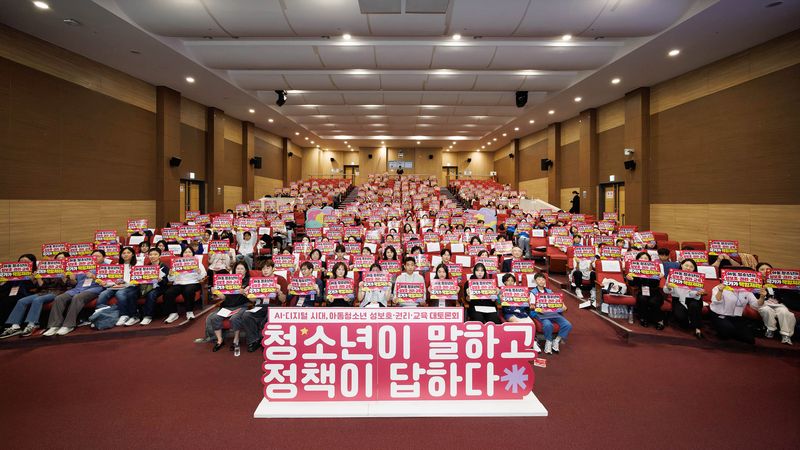
The Korea Association of Youth Sexuality Culture Centers (Hanseonghyeop) said on the 15th that it had held a National Assembly forum on the theme “Sexual Protection, Rights and Education for Children and Adolescents in the AI and Digital Era” at the National Assembly Members’ Office Building on the 14th. About 250 people attended, including young people, staff from youth sexuality culture centers across the country, and representatives of government, research institutions and civil society.
At the first session of the forum, nine participants, from elementary school students to older adolescents, shared their experiences and views on AI-generated images, digital sex crimes, peer culture, dating and sex education in schools. The young people stressed the need for sex education that addresses their real questions about dating, consent, contraception and digital relationships. They also shared experiences of receiving support after being victimized by digital sex crimes and called for expanded counseling and support so that young people seeking help would not be left isolated.
The following discussion examined ways to make sex education for young people more effective and strengthen the role of relevant organizations. Park Eun-ha, a professor in the Department of Social Welfare at Yongin University, cited a 2024 survey in City A, which found that young people scored just 31.7 out of 100 on sexual knowledge. She said that, given that young people mainly obtain information about sex from schools and peers, sex education should go beyond simply conveying facts to include relationships, communication and digital skills.
Lee Dong-jin, co-chair of Hanseonghyeop, pointed out that the 57 youth sexuality culture centers nationwide serve 1.8 million to 2 million children and adolescents each year, but under current law their establishment is optional rather than mandatory. He proposed expanding their education and counseling functions, developing youth participation programs into national programs, introducing AI-based counseling services on sexuality and relationships, and amending relevant laws.
The young people and experts who took part in the discussion also identified ongoing sex education linked to schools, public counseling services that young people can easily access, and stronger support for victims of digital sex crimes as key priorities.
Lee Myung-hwa, standing representative of Hanseonghyeop, said, “Young people’s voices must lead to substantive policy changes and not stop at declarations,” adding, “Since the sexual protection, rights and education of children and adolescents, are public services for which the state must take responsibility, we must strengthen the legal basis for youth sexuality culture centers and establish a sustainable support system.”
The forum was organized to share the results of activities by Sayfluencer, a youth sexuality culture club supported by Organon Korea, and discuss future policy directions. Sayfluencer is a participatory club where young people identify and act on issues related to sexuality culture, and has been operating since 2023.
[email protected] Jeong Sang-hee Reporter