Completion of Jeju’s agricultural water network delayed by four years ... progress stands at just 61.3%
- Input
- 2026-10-15 09:14:40
- Updated
- 2026-10-15 09:14:40
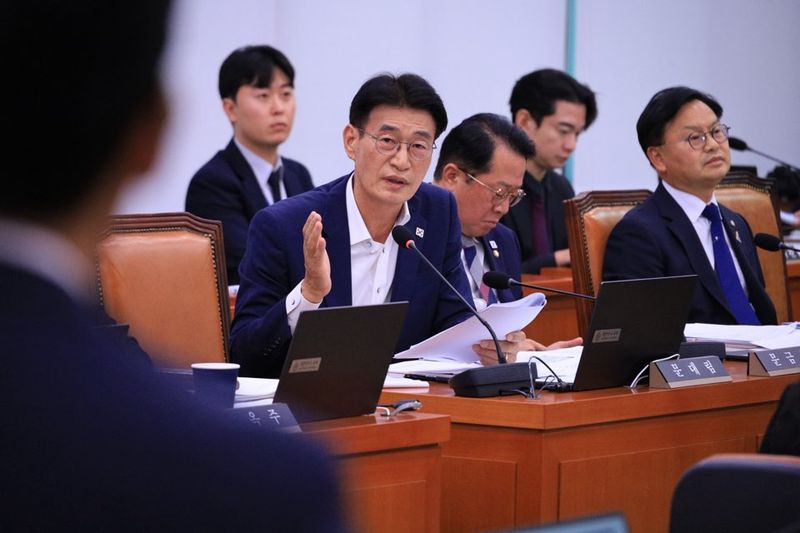
【Financial News Jeju = Reporter Jeong Yong-bok】 With completion of Jeju’s regional agricultural water network pushed back by four years, the progress rate presented at a parliamentary audit stood at just 61.3%. Concerns were raised that Jeju urgently needs to improve its water storage and supply system to cope with drought, as it relies on groundwater for 93.9% of its agricultural water.
According to Rep. Moon Dae-rim of the Democratic Party of Korea (Jeju City Gap), a member of the National Assembly’s Agriculture, Food, Rural Affairs, Oceans and Fisheries Committee, he raised the delay in completing the Jeju Integrated Regional Agricultural Water Project and the island’s reliance on groundwater at the Korea Rural Community Corporation’s audit the previous day, and called for measures to secure alternative water sources.
The Jeju Integrated Regional Agricultural Water Project was launched in response to the severe drought of 2013. It aims to connect agricultural water supply facilities that are separated by region and provide a stable supply to areas facing water shortages.
The master plan was drawn up in 2018, and the project was originally scheduled for completion in 2024. Its completion target has since been pushed back four years, to 2028.
Jeju Province has put the project’s total cost at 158.4 billion won. It will invest 124.2 billion won in national funding and 34.2 billion won in local funds to build 58 wells, 56 storage tanks, 472 km of transmission and supply pipelines, and automated management systems, among other facilities.
The progress rate presented at the parliamentary audit was 61.3%. A total of 41 wells, 37 storage tanks and 191.2 km of pipelines had been installed. Jeju Province previously announced plans to add eight wells, four storage tanks and about 35 km of transmission and supply pipelines this year, and to begin pilot water deliveries in areas where facilities are in place.
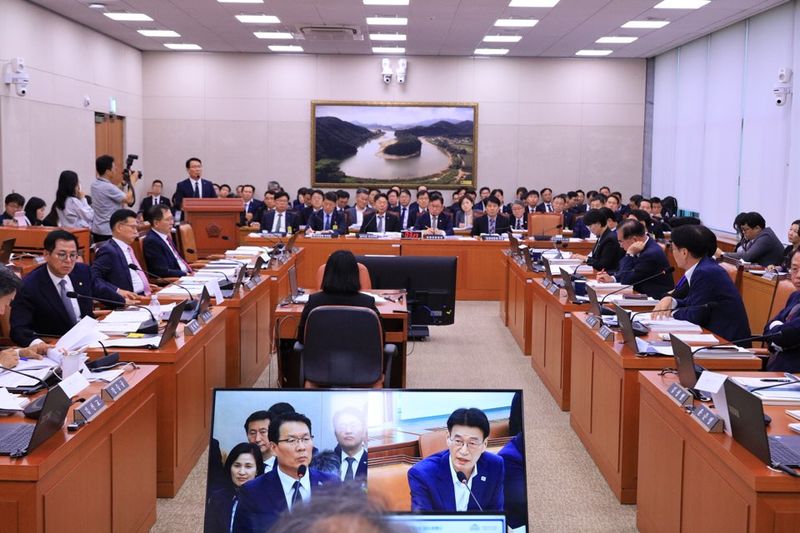
The delay matters because Jeju’s agriculture relies heavily on groundwater.
According to data presented by Rep. Moon, groundwater supplies 93.9% of Jeju’s agricultural water. The island has few rivers that flow steadily year-round, leaving agriculture highly dependent on wells. If drought lowers groundwater levels, it could also affect the availability of water for farmland.
The risk of long-term drought was also raised. Rep. Moon said that in the government’s 2023 “Assessment of the Impacts of Climate Change on and Vulnerability of Agricultural Production Infrastructure,” Jeju was rated Grade 1—the highest level of drought vulnerability—for the period from 2031 to 2070.
Rep. Moon stressed, “Some agricultural wells in western Jeju are experiencing falling groundwater levels and saltwater intrusion,” adding, “We need to improve the efficiency of existing wells and expand storage facilities.”
He noted in particular that although about 380,000 tonnes of groundwater for agricultural use are drawn each day, the rate of water delivered is low. This rate refers to the share of water abstracted and supplied that reaches the point of use and is used effectively.
As an alternative, he proposed expanding the scale of agricultural water storage facilities. Citing local views that existing facilities holding 100–500 tonnes are insufficient to cope with prolonged drought, Rep. Moon called for consideration of installing large storage tanks with capacities of 3,000–5,000 tonnes.
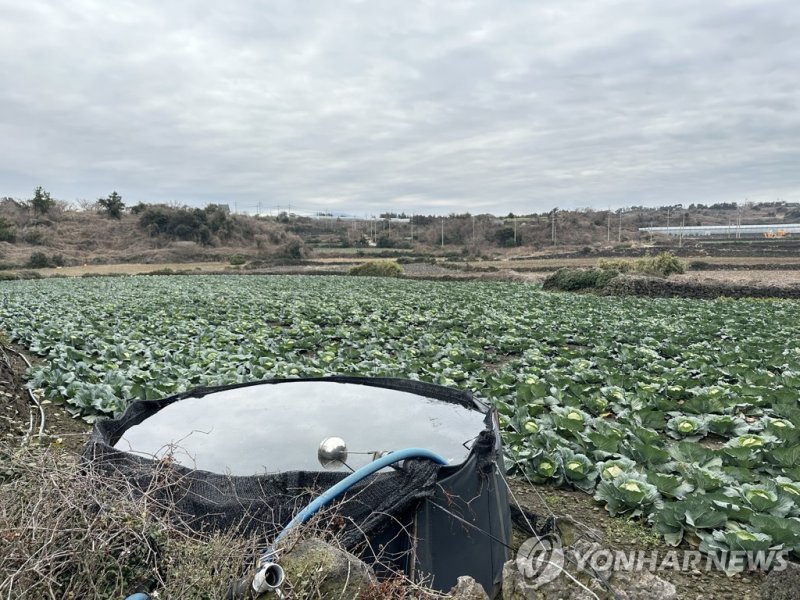
He also proposed creating small reservoirs using existing wells. A plan had previously been considered to build a reservoir with a capacity of 30,000 tonnes in the Aewol-eup area of Jeju City, and the Korea Rural Community Corporation was asked to conduct a comprehensive review of permitted and actual well withdrawals, groundwater levels, appropriate storage capacity and project costs.
The possibility of installing agricultural groundwater dams was also raised. A groundwater dam is a facility that stores groundwater by installing an underground cutoff wall to block water flow, allowing the water to be drawn when needed.
However, a detailed survey must come first if one is to be built in Jeju, taking into account the volcanic rock geology, groundwater flows and the possibility of seawater intrusion. Rather than calling for the installation of a facility outright, Rep. Moon urged a survey to identify sites suitable for groundwater dams.
In response, Korea Rural Community Corporation President Kim In-jung said, “We will work to ensure we can make a significant contribution to easing and resolving Jeju Province’s water problems.”
The project also needs to be considered in conjunction with Jeju Province’s existing water management policies. Under its comprehensive agricultural water plan, the province is working to repair aging pipelines, make use of spring water and improve its supply system. An important task is not only to build a regional supply network, but also to determine how efficiently the groundwater already secured can be distributed and used.
Rep. Moon called for “building a sustainable water management system” and urged the Korea Rural Community Corporation to “consult with the relevant agencies and present specific review findings and an implementation plan.”
[email protected] Jeong Yong-bok Reporter