“690 billion won for M&A and capital increases, zero in dividends” ... Hanwha Life’s “value-up dilemma” [fn Market Watch]
- Input
- 2026-10-15 10:48:49
- Updated
- 2026-10-15 10:48:49
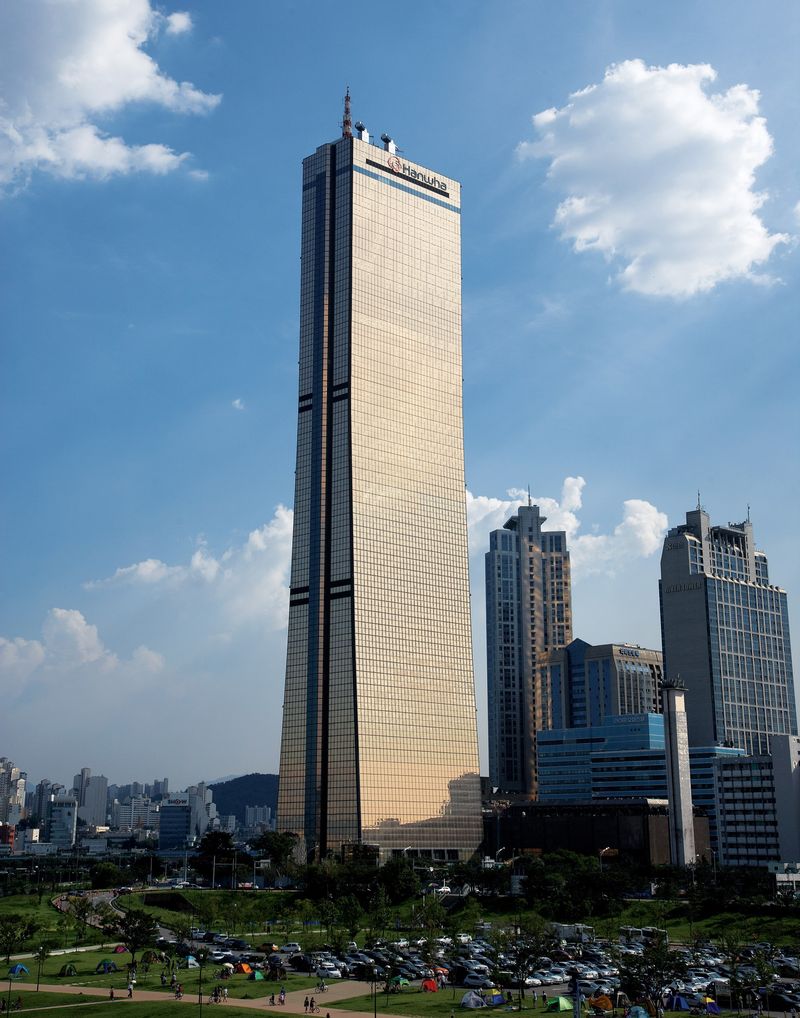
[Financial News] Hanwha Group’s financial affiliates are facing a test of their corporate value-enhancement strategies ahead of the Korea Exchange’s first publication of its list of companies with low price-to-book ratios (PBRs). Some in the investment banking industry say Hanwha Life and Hanwha General Insurance have been identified by the securities industry as long-term low-PBR companies, and may have difficulty qualifying for a special exemption from the list’s publication even if they disclose value-up plans.
According to financial investment industry sources on the 15th, the Korea Exchange’s first publication of its list of low-PBR companies on November 2 is fast approaching, but Hanwha Life’s strategy for enhancing shareholder value remains stalled. Hanwha Corp. said on a conference call following its announcement of a spin-off on January 14 that it was reviewing a corporate value-enhancement plan for Hanwha Life. However, the company has yet to set either specific medium- to long-term shareholder-return targets or a timetable for announcing them.
A Hanwha Life official said, “We are exploring various ways to enhance corporate value,” adding, “It has not yet been decided when or in what form we will announce a plan.”
By contrast, the company is moving ahead with growth investments. At a board meeting on the 30th of last month, Hanwha Life approved the acquisition of management control of Acuon Capital, owned by EQT, a global private equity fund manager. It will acquire a 50.54% stake for 440 billion won through a joint investment with Centroid PE. Hanwha Life and its wholly owned subsidiary, Hanwha Asset Management Co., Ltd., will each contribute 250 billion won to a 500-billion-won rights offering by Hanwha Investment & Securities. Hanwha Life’s direct investment commitments alone total 690 billion won, as part of a strategy to strengthen an integrated financial business spanning insurance, securities, asset management and credit finance.
Earnings are also improving. Hanwha Life’s consolidated net profit for the first half rose 96.0% from the same period a year earlier to 904.5 billion won. Its standalone net profit also surged 183.9% to 510.2 billion won. Hanwha General Insurance likewise posted net profit of 215.3 billion won. However, after resuming its year-end dividend for 2023, Hanwha Life did not pay year-end dividends for either 2024 or 2025.
The main factor constraining dividends is the capital regulation specific to the insurance industry. At the end of the first half, Hanwha Life’s standalone surrender value reserve, including the amount scheduled to be added, stood at 7.3045 trillion won, equal to 97.3% of retained earnings (7.5069 trillion won). Because the surrender value reserve is excluded from distributable profits, the company faces structural difficulty securing funds for actual dividend payments even when its accounting profits rise.
The burden of managing capital soundness also continues. At the time of its earnings announcement in August, Hanwha Life forecast its solvency ratio under the K-ICS framework at the end of the first half at 167%.
The K-ICS ratio based on shareholders’ equity stood at 58.8% at the end of the first quarter, below the company’s year-end management target of 60%. Financial authorities plan to introduce a 50% basic capital ratio requirement starting next year, while applying transitional measures through the end of 2035. Hanwha Life thus faces the challenge of pursuing growth investments, managing capital soundness and expanding shareholder returns at the same time.
Publication of the low-PBR list presents an additional burden for Hanwha Financial. The Korea Exchange generally selects for publication KOSPI-listed companies that have ranked in the bottom 25% of their respective industries by PBR for six consecutive recent half-year periods. Companies may be exempt from inclusion in the list for one year if they disclose a corporate value-enhancement plan containing measures to improve their PBR by the 22nd. However, companies that have met the long-term low-PBR criteria over the latest 12 half-year periods are excluded from the special exemption. Last month, KB Securities classified both Hanwha Life and Hanwha General Insurance as long-term low-PBR companies.
Jung Min-gi, a researcher at Samsung Securities, said, “(For Hanwha Life,) securing dividend visibility must come first,” and assessed, “I believe stabilizing the basic capital ratio and changing the regulations on surrender value reserves to achieve that will be prerequisites for a rerating.”
[email protected] Kim Hyun-jung Reporter