Takaichi loses first cabinet minister after defending aide over “I cut budgets because they didn’t support me” remark
- Input
- 2026-10-15 08:48:25
- Updated
- 2026-10-15 08:48:25
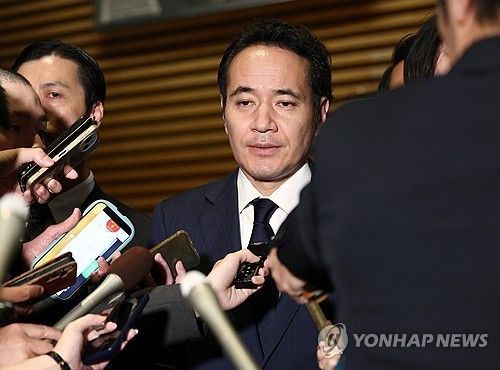
【Financial News, Tokyo = Special Correspondent Seo Hye-jin】 Japanese Prime Minister Sanae Takaichi accepted the resignation of a close ally in her cabinet, who was embroiled in controversy over remarks about “budget retaliation” and allegations of election-law violations. Yana Kazuo, the agriculture minister who said he had cut road budgets for areas that did not support him, was effectively forced out less than a month after taking office. He is the first cabinet minister to fall under Takaichi’s administration.
Japanese media reported on the 15th that Takaichi accepted Yana’s resignation the previous day. He had joined the cabinet for the first time in the reshuffle on the 17th of last month, less than a month earlier. The prime minister acknowledged responsibility for appointing him, saying, “I cannot overlook a situation in which he is unable to focus on Diet deliberations and agricultural, forestry and fisheries administration.”
The controversy began with remarks at a local Liberal Democratic Party meeting last May. Yana said he had “drastically cut” this year’s road budgets for Nasukarasuyama City and Nakagawa Town in Tochigi Prefecture. The heads of the two municipalities had backed rival candidates in the February House of Representatives election. Criticism poured in after the remarks were taken to mean that he had penalized areas that did not support him by cutting their budgets.
Yana withdrew the remarks and apologized, but denied ever asking for actual budget cuts. It has not been confirmed whether any retaliatory cuts were made. However, reports that he had inquired with the Ministry of Land, Infrastructure, Transport and Tourism about road budgets for the areas brought the fairness of budget allocation into question.
Masaki Taniguchi, a professor at the University of Tokyo, told the Yomiuri Shimbun, “It could be perceived as distorting public administration for political retaliation,” and called for an investigation at the cabinet level.
The allegation of election-law violations became a decisive factor in his future. Yana’s side had provided supporters with free shuttle-bus transportation during a previous House of Representatives election. The practice could violate the Public Offices Election Act, which restricts providing benefits to voters.
Yana said he had checked with the election commission in advance, but the commission said it had no record of an inquiry. He eventually changed his account, saying he may have asked about how to account for the costs rather than whether the practice was legal. An additional allegation emerged that campaign workers who urged people to vote by phone had been paid.
At the outset of the controversy, Takaichi insisted that Yana remain in office, telling him to “keep working and show results in return.” Yana had previously been disciplined over the failure to report political funds connected to the former Abe faction, but Takaichi had appointed him after recognizing his expertise in agricultural policy. They were close enough that she praised him on the campaign trail as “my bag of wisdom.”
Nikkei identified Takaichi’s reluctance to reverse her own personnel decision as a reason for the delayed response. Citing a close aide to the prime minister, the newspaper reported: “It was a mistake in the initial response. They tried to keep the wound small, but made it deeper.”
The Asahi Shimbun also said power had become concentrated in the prime minister’s hands while internal checks had weakened. A former official told the newspaper, “If you say, ‘The prime minister decided everything,’ it is difficult for people around the prime minister to point out problems.”
Policy work was also disrupted. The Sankei Shimbun reported that Ministry of Agriculture, Forestry and Fisheries staff were tied up responding to the allegations and preparing answers for the Diet, and that visits to flood-hit areas were also canceled. The opposition criticized the fact that Diet discussions of key agricultural issues, including rice prices, had been sidelined by the minister’s explanations.
The pressure could mount in the House of Councillors. The ruling coalition partners, the Liberal Democratic Party and the Japan Restoration Party, do not hold a majority there. Ten opposition parliamentary groups decided to submit a censure motion if Yana did not resign. Nikkei reported that “concerns that passage of the motion would disrupt Diet deliberations influenced the prime minister’s decision to accept his resignation.”
The Asahi Shimbun forecast that the opposition, galvanized by the incident, could also affect the passage of bills related to consumption-tax cuts and reducing the number of seats in the House of Representatives. The Democratic Party for the People made Yana’s resignation a precondition for deliberations on the tax-cut bill. The dispute is expected to continue even after the minister is replaced.
Yuichiro Tamaki, leader of the Democratic Party for the People, called for further deliberations, saying, “The suspicion that political intervention could lead to arbitrary changes in budget allocations has not been dispelled.”
[email protected] Seo Hye-jin Reporter