Container ship sinks in Strait of Hormuz as Iranian attacks again squeeze crude oil shipments
- Input
- 2026-10-15 03:54:04
- Updated
- 2026-10-15 03:54:04
According to Singapore’s Maritime and Port Authority (MPA) on the 14th, the Singapore-flagged container ship GFS Pride was struck by an unidentified projectile in the Strait of Hormuz, caught fire and then sank. All 21 crew members were safely evacuated, and there were no injuries.
The Maritime and Port Authority of Singapore criticized the attack in a statement, saying, “Such attacks, carried out without any provocation, cannot be justified and violate international law.”
Pakistan’s maritime authorities issued a navigational warning to nearby vessels, saying containers from the sunken ship were floating in the sea. Another Singapore-flagged container ship, GFS Giselle, was also struck by an unidentified projectile that day, damaging its hull. The vessel reached a safe anchorage, and no crew members were injured.
The Islamic Revolutionary Guard Corps claimed that GFS Pride struck a sea mine, exploded and sank. However, maritime security company Marisks said there was no independent evidence that a mine caused the sinking.
Marisks assessed that Iran’s claim was “part of psychological warfare intended to sow fear in the Strait of Hormuz and heighten uncertainty, thereby discouraging commercial shipping.”
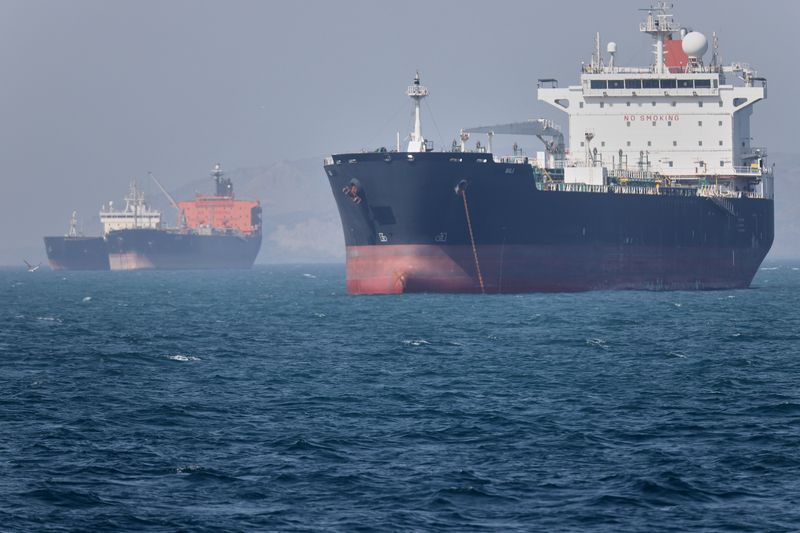
According to the United Kingdom Maritime Trade Operations (UKMTO), at least 20 vessels have been attacked this month in and around the Strait of Hormuz, the Persian Gulf and the Gulf of Oman. Most were oil tankers. The UN’s International Maritime Organization (IMO) said attacks this month had left two crew members missing and 12 injured.
Iran’s expanding attacks are also affecting crude oil shipments, which had been recovering thanks to U.S. naval escort operations. According to commodities data analytics firm Kpler, crude oil exports through the Strait of Hormuz averaged 8.5 million barrels per day during the week ending on the 12th. That was about 40% below normal levels before the Iran war.
With the U.S. military escorting oil tankers through the Strait, crude oil exports recovered to prewar levels last September, but have recently turned downward again as Iranian attacks have increased.
Total crude oil exports from the Middle East, including rerouted shipments through pipelines connected to the Gulf of Oman and the Red Sea, stood at just 14 million barrels per day. That was about 20% below prewar levels.
Daily shipping volumes have also become more volatile. According to Kpler, 6 million barrels of crude oil passed through the Strait of Hormuz on the 9th, but the volume fell by half to 3 million barrels on the 12th.
Iran is stepping up attacks on commercial vessels as crude oil exports through the Strait of Hormuz recover thanks to U.S. escort operations.
[email protected] Lee Byung-chul, correspondent Reporter