AI detects cracks in car bodies as 204 robots weld: Inside Hyundai Motor Company's new Pune plant in India [On-site Report]
- Input
- 2026-10-15 13:00:00
- Updated
- 2026-10-15 13:00:00
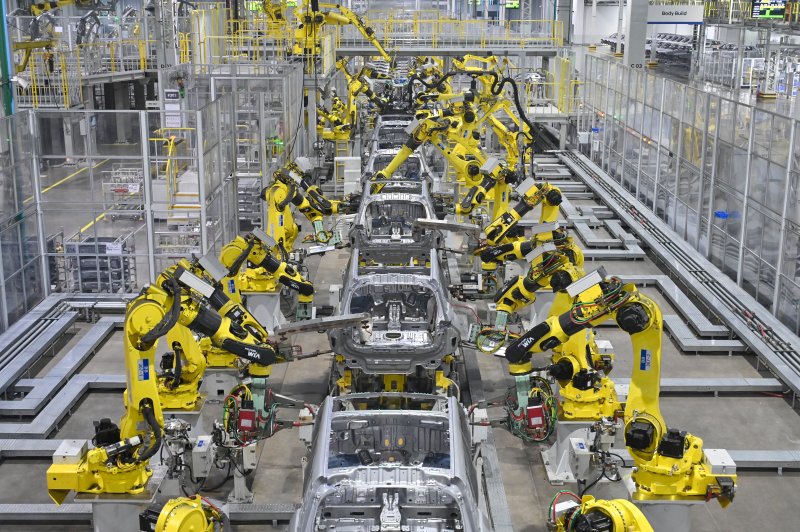
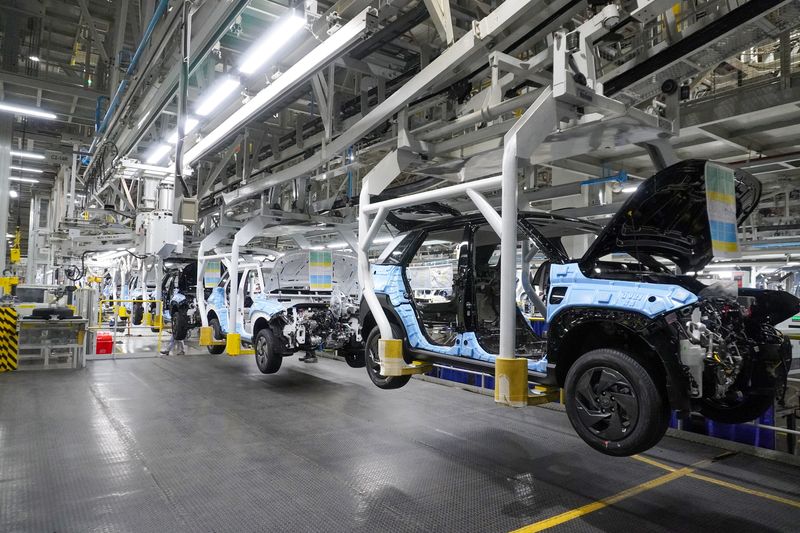
[Pune, India — Kim Dong-ho, Reporter] At one corner of the body shop, AI inspects car body panels stamped out by a massive press. Infrared sensors and cameras detect tiny cracks and surface defects that are easy to miss with the naked eye. Nearby, four robot arms were busily welding the body of Hyundai Motor Company's small sport utility vehicle (SUV), the all-new Venue. Including four auxiliary robots that hold parts in place, all eight robots moved as one. The plant, once a U.S. production facility for General Motors (GM), has been transformed into a Hyundai smart factory.
■ AI detects cracks as 204 robots weld car bodies
Visited on the 14th (local time), Hyundai Motor Company's Pune plant in Maharashtra, India, stood out for its large-scale automated equipment and precision quality inspection systems. Hyundai Motor Company acquired the plant from GM at the end of 2023, retaining the existing buildings' basic structure while extensively replacing the production equipment.A large 5,400-ton press was installed in the pressing process. It processes steel sheets supplied by Hyundai Steel Company, POSCO, Indian steelmakers and others to make panels that form the vehicles' exterior and frame. The press line has an annual capacity equivalent to 230,000 vehicles.
Quality control methods have also changed. An AI-based panel crack detection system combines infrared sensors with image inspection to identify defects. QR codes are marked on each panel so its production time and work history can be tracked. Safety systems are also in place to restrict equipment operation if a worker enters a hazardous area.
Inside the body shop, orange robot arms moved in succession, fitting panels together and welding them. The number of robots has risen from six when GM operated the plant to 204 Hyundai WIA robots today. In the 49,600-square-meter body shop, robots handle all welding. The welding automation rate is 100%.
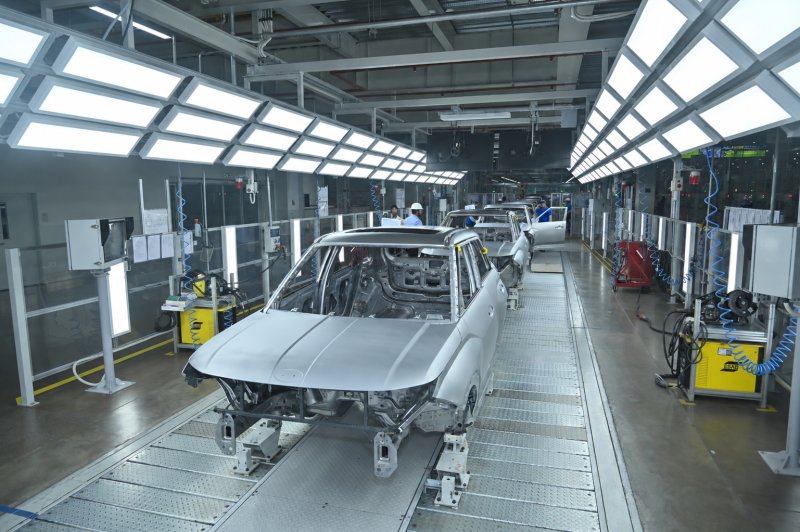
In the inspection area, an optical 3D scanner and a coordinate measuring machine (CMM) checked the quality of the car bodies. The scanner examines the shape of the entire body, while the CMM verifies precision by taking contact measurements at key points. The two machines complement each other, with one vehicle a day inspected as a sample. The system goes beyond simply detecting errors by feeding inspection results back into improvements to the production process.
Hyundai Motor Company manager Lee Du-hyeong explained, “We inspect the entire car body with a 3D scanner and precisely measure key areas with a CMM, with the two complementing each other,” adding, “Our goal is to link inspection results to actual process improvements and achieve an error rate of 3%.”
■ GM plant undergoes major overhaul...320,000 vehicles to be produced by 2030
Hyundai Motor Company is developing its Pune plant into a base for expanding in the Indian market. It plans to increase its annual finished-vehicle production capacity from the current 170,000 to 250,000 in 2028 and 320,000 in 2030. The plant currently produces the all-new Venue, and its facilities have been built with future production of new SUVs and hybrid vehicles in mind.The body shop has also introduced a system to automate the loading of 10 types of large components. Workers used to move the heavy parts themselves, but robots now handle the task. More robots are planned if production volumes increase in the future.
Spare space for producing new models remained throughout the site. However, the use of the former GM plant's layout places some constraints on the spacing between equipment, according to the company. Hyundai Motor Company has applied digital design and a production equipment management system to address this.
The Pune plant has applied automation technology not only to body production but also to painting and final assembly. In the painting process, lighting is used to inspect surface defects. In final assembly, a smart-tag system that enables vehicles and equipment to exchange information helps reduce assembly errors.
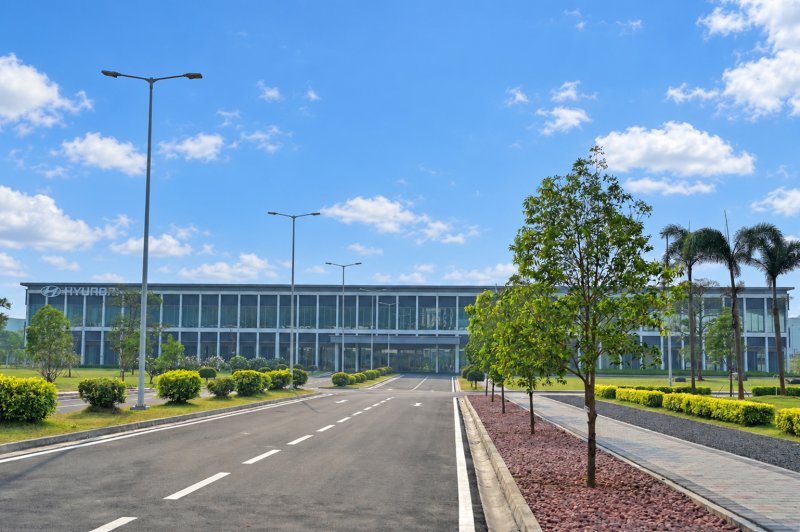
The Pune plant site covers 1.21 million square meters, about the size of 166 soccer fields. A Hyundai Motor Company representative said, “We supply vehicles produced here to the Indian domestic market while also exporting them through nearby Mumbai Port to around 30 countries, including in Latin America, the Middle East and Africa.” The representative added, “Once the Pune plant expansion is complete, Hyundai Motor Company's annual production capacity in India, together with the Chennai plant, will exceed 1.1 million vehicles.”
[email protected] Kim Dong-ho Reporter