Hyundai Motor stakes 21 trillion won on India, investing 4.2 trillion won in AI and new businesses
- Input
- 2026-10-15 13:00:00
- Updated
- 2026-10-15 13:00:00
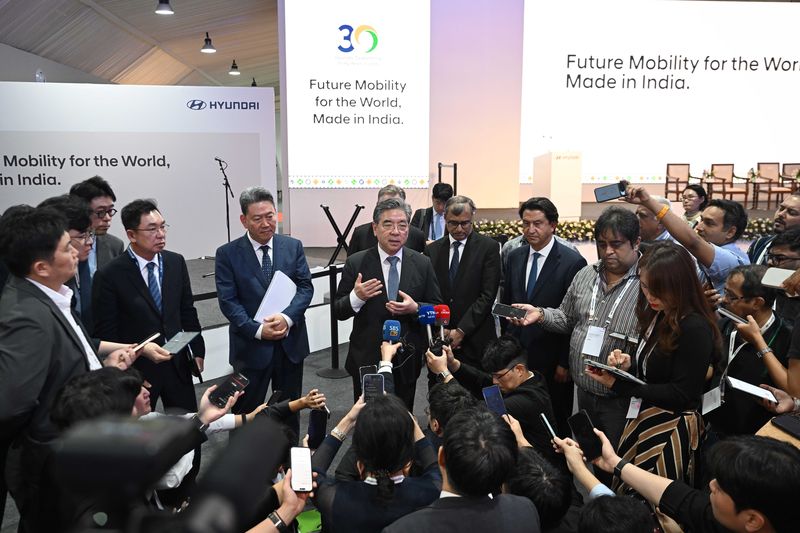
[Pune, India = Reporter Kim Dong-ho] Hyundai Motor Group will spend about 60% of the $15.5 billion (approximately 20.8 trillion won) it plans to invest in India—about 12.48 trillion won—on expanding and upgrading production facilities. It also plans to allocate about 4.16 trillion won to new businesses, including artificial intelligence (AI) and startups, as it seeks to develop India from a vehicle production base into a key hub for future industries. In particular, the group plans to quickly increase the Pune Plant’s annual production capacity to 320,000 units and step up the introduction of new models, including electric and hybrid vehicles, to accelerate its recovery in market share in India.
■ 12.5 trillion won for production facilities... 4 trillion won also going to AI and new businesses
Hyundai Motor Group Vice Chairman Jaehoon Chang said at a press conference held after the opening ceremony for the Pune Plant in Maharashtra, India, on the 14th (local time), “Around 60% of the total investment will go toward upgrading and expanding aging production facilities,” adding, “About 20% will go toward entering new industries, including AI, venture investment and startups.”Based on Hyundai Motor Group’s announced investment of $15.5 billion for 2026–2032, investment in production facilities will amount to about $9.3 billion (12.48 trillion won), while investment in AI and new businesses will total about $3.1 billion (4.16 trillion won). The remaining roughly $3.1 billion is expected to be invested primarily in research and development (R&D).
The investment plan centers on strengthening the existing vehicle production base while broadening the group’s business scope. To that end, Hyundai Motor Group plans to establish HMG India, a dedicated group-level investment entity in India.
Chang explained, “Since investment at the group level is needed not only in finished vehicles and mobility at Hyundai Motor and Kia Corporation but also in areas such as energy and AI, we plan to establish HMG India to build up our expertise,” adding, “We also plan to carry out government relations and public relations activities.”
Hyundai Motor Group President Seo Kang-hyun also said, “Since India has strengths in IT, we are looking at both technology investment and open innovation,” adding, “We will also pursue group-level investment in energy-related electricity and power issues.”
He added, “Alongside Kia Corporation’s production expansion, investments by group companies such as Hyundai Transys and Hyundai Glovis will also follow,” and said, “We plan to strengthen local research capabilities and driving tests, and expand R&D investment to incorporate technologies suited to conditions in India.”
Hydrogen is also included among the group’s future investment areas. Chang said, “We want to start using hydrogen in mobility and extend its use to industry and energy,” adding, “In consultation with the central and state governments, we will look at not only passenger cars but also commercial vehicles such as buses and trucks, as well as locomotives.”
■ Quickly expanding Pune capacity to 320,000 units... strengthening electrification and exports
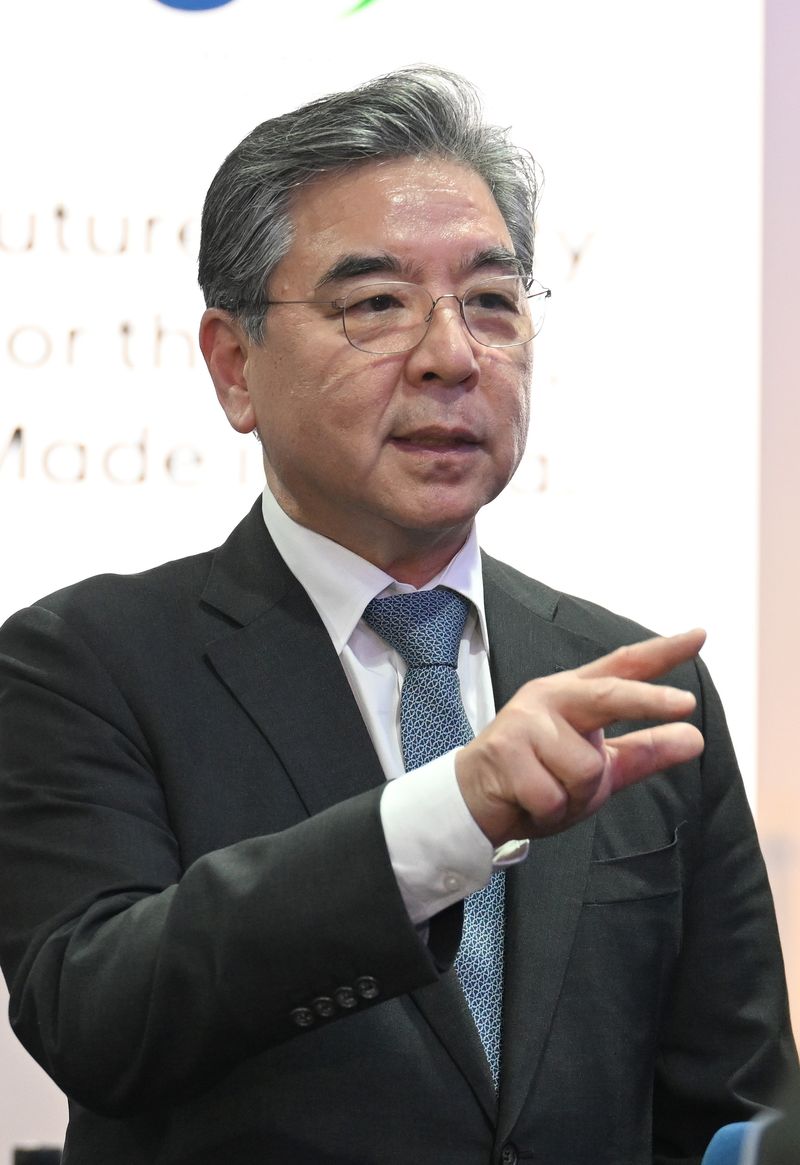
The group is also moving to expand its production hubs more quickly. Asked about the possibility of building a plant in a third location in India, Chang said, “First, we will quickly increase the Pune Plant’s production capacity from 170,000 to 320,000 units,” adding, “We will make the fullest use of the group’s production capacity of 1.1 million units and introduce competitive models.”This means the group intends to make better use of its existing production facilities rather than specify a site for an additional plant. Chang emphasized, “India is our most important growth market and a strategic market, so we plan to focus on it.”
Hyundai Motor India Limited (HMIL) CEO Tarun Garg said, “We had initially planned to increase the Pune Plant’s annual capacity to 250,000 units, but raised the target to 320,000,” adding, “It will also provide a good base for hybrid production.” The company also aims to increase the share of locally sourced parts from the current level of about 83% to 92%.
Hyundai Motor has already invested 7,000 crore (about 980 billion won) in Maharashtra and plans to invest an additional 4,000 crore (about 560 billion won). Investment by its suppliers also amounts to 4,600 crore (about 644 billion won). At least 18,000 jobs have been created through Tier 1 and Tier 2 suppliers.
Eco-friendly vehicles, including electric and hybrid models, are also a key lever in recovering market share. Hyundai Motor President José Muñoz said, “This year, India became Hyundai Motor’s second-largest market after North America,” adding, “We will raise the share of sales accounted for by eco-friendly vehicles—including electric and hybrid vehicles, CNG vehicles and hydrogen fuel-cell vehicles—to 50% by 2030.”
Hyundai Motor plans to have four electric vehicle models by 2029 and invest in localizing charging infrastructure and its battery supply chain. HMIL CEO Garg said, “Battery packs and power electronics components have already been localized, and we are also looking at battery cells,” adding, “We will grow not only in the domestic market but also in export markets.”
The share of Hyundai Motor’s India production that is exported has risen from 20% five years ago to 24% today. The target going forward is 30%. On its market share target, Chang emphasized, “It will depend on how quickly the Indian market grows, but we will increase our share by introducing a range of models, including electric vehicles, faster than anyone else.”
[email protected] Kim Dong-ho Reporter