“A leap toward becoming a global eco-city”: Goseong, South Gyeongsang, secures a spot among South Korea’s candidates for Ramsar Wetland City certification
- Input
- 2026-10-14 22:10:05
- Updated
- 2026-10-14 22:10:05
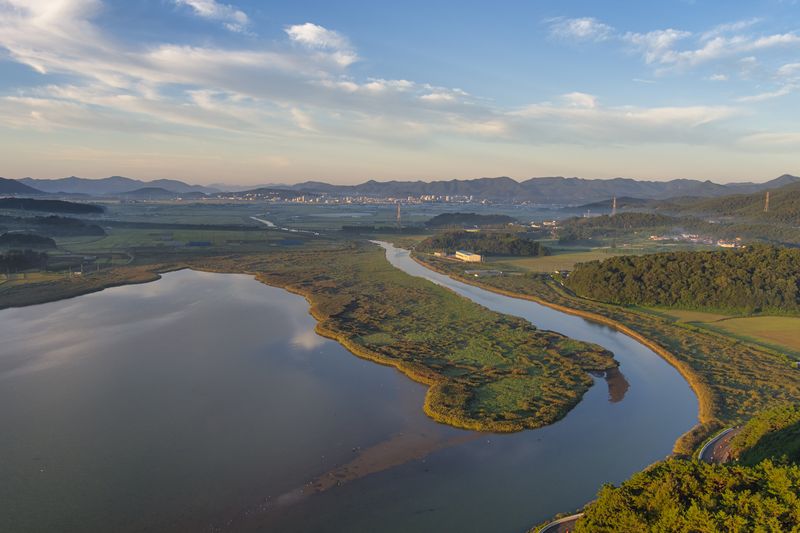
[Financial News] Goseong County, South Gyeongsang, has secured the opportunity to take a step toward becoming a global eco-city after being selected as a domestic candidate for the fourth round of Ramsar Wetland City certification applications, organized by the Ministry of Climate, Energy and Environment. According to Goseong County on the 14th, three regions nationwide were named as domestic candidates: Goseong County, North Gyeongsang’s Yeongyang County, and Goyang, Gyeonggi Province.
Madongho Wetland, one of Goseong’s signature ecological resources, was officially registered last August as South Korea’s 27th Ramsar Wetland. Goseong County’s selection as a candidate reflects the high marks given not only to the wetland’s outstanding ecological value, but also to the county’s policy direction of establishing wetland conservation and water-management systems across the region, and its sustainable development strategy based on community participation.
The county plans to marshal its administrative resources toward submitting Korean- and English-language certification applications under the Ramsar Convention by November 20 and securing final official certification as a Ramsar Wetland City at the 2028 Conference of the Contracting Parties to the Convention.
Official certification as a Ramsar Wetland City would give the county a powerful global brand as an “internationally recognized eco-city.” In particular, the county would be able to use the international certification logo exclusively to promote local agricultural, livestock and fishery products and specialty goods, greatly enhancing the brand value and market competitiveness of products made in Goseong County. The county plans to link agricultural heritage experiences using local traditional dumbeong (ponds) and rice-paddy wetlands with vulture ecology experiences, so that wetland conservation leads directly to increased resident incomes, rather than serving only as environmental protection. In addition, major infrastructure within the Madongho ecotourism zone is scheduled for completion and opening in October 2027, and the resulting boost to the local economy from attracting ecotourists is expected to gain momentum.
Goseong County Governor Ha Hak-yeol said, “The selection as a domestic candidate for Ramsar Wetland City certification is a meaningful achievement made possible by the ecological value of Madongho Wetland and the efforts of the residents who have protected it.” He added, “With Madongho Wetland at the center, we will connect major wetlands throughout Goseong and work with residents to create a sustainable wetland-city model that drives ecotourism and increases residents’ incomes.”
Ramsar Wetland City certification is a scheme under which the Conference of the Contracting Parties to the Ramsar Convention certifies places where local communities play an exemplary role in wetland conservation and wise use. To date, 74 cities in 27 countries around the world have received certification. In South Korea, nine cities, including Changnyeong, Suncheon, Jeju and Gimhae, have been certified.
[email protected] Park Ji-hyun Reporter