[Editorial] Confusion over the Yellow Envelope Act persists; the need for supplementary legislation is pressing
- Input
- 2026-10-14 18:40:53
- Updated
- 2026-10-14 18:40:53
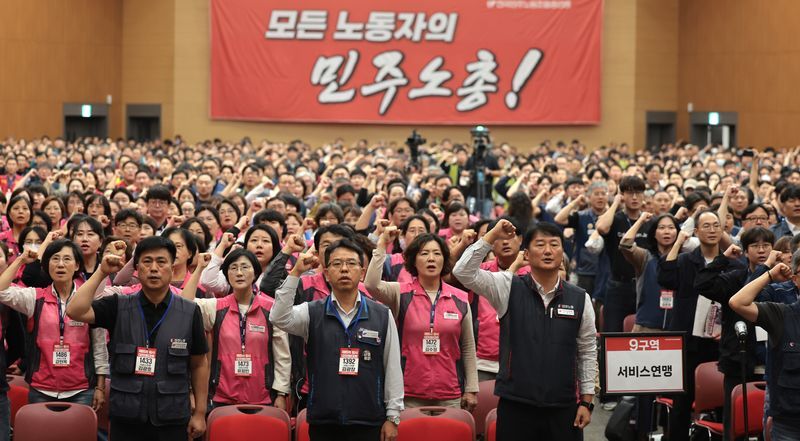
Since the Yellow Envelope Act took effect last March 10, 1,229 unions have sought to bargain with 460 prime-contractor workplaces. But only three, including Hyundai Steel, have completed the signing of collective agreements. Most companies are refusing to bargain or seeking a determination from the Labor Relations Commission. This was an expected outcome, since prime contractors cannot meet every demand from subcontractor unions that is unrelated to their core business.
Last September, the Ministry of Employment and Labor issued guidelines stating that “N% performance bonuses” and management decisions such as building or relocating factories are difficult to regard as matters subject to mandatory bargaining or strikes. The guidelines followed President Lee Jae Myung’s order to establish specific criteria for matters subject to labor disputes, after the Samsung Electronics union said it would make the construction of a semiconductor plant in the Honam region a bargaining agenda item.
The Labor Ministry’s guidelines are only reasonable. It makes no sense for unions to intervene in major management decisions, such as relocating a factory, because unions are not the ones responsible for running businesses. Labor groups are demanding that the guidelines be scrapped, but that is unreasonable. They also argue that the guidelines narrowly recognize prime contractors’ employer responsibilities and require them to bargain only over working conditions they effectively determine.
The opposition, by contrast, is pushing for the law to be amended to further narrow the scope of companies’ responsibility. It also argues that the concepts remain ambiguous despite the Labor Ministry having prepared three related guidelines and manuals to date. Companies are likely to feel the same way.
The Yellow Envelope Act failed to satisfy either labor or management from the outset, and that remains the case. At least it is fortunate that, at President Lee’s direction, the government issued guidelines barring unions from intervening in management activities. Beyond that, confusion continues. The guidelines are not binding, leaving parties with no choice but to seek rulings from the Labor Relations Commission or the courts. After the law has been in force for about a year, its problems should be reviewed and supplementary legislation pursued.
According to a Korea Enterprises Federation survey, four in 10 companies believe Labor Relations Commission rulings do not comply with the law and guidelines. Asked why, 52% reportedly answered that “compliance with public-law obligations, such as those under the Occupational Safety and Health Act, is being used as grounds for recognizing employer status.” In other words, other legal obligations that prime contractors owe to subcontractors are being cited as grounds for recognizing them as employers. If companies’ perceptions and claims are correct, the Labor Relations Commission has relied on improper grounds in its rulings.
The Yellow Envelope Act, launched without resolving labor-management conflicts and controversy, has indeed exposed a number of problems in practice. The government must know full well that granting all of the unions’ demands would turn the country into a hotbed of labor disputes. At least it was right to exclude management decisions, wages and performance bonuses from the subjects of bargaining.
There are still many problems, however. Amending the law is the only way to resolve them. In particular, ambiguous provisions in the guidelines must be clearly delineated in the text of the law. This would also prevent the Labor Relations Commission from making the mistake of relying on other laws in its rulings.