Yonsei University to solve 90-year-old cosmic mystery of dark matter with AI
- Input
- 2026-10-14 17:11:09
- Updated
- 2026-10-14 17:11:09
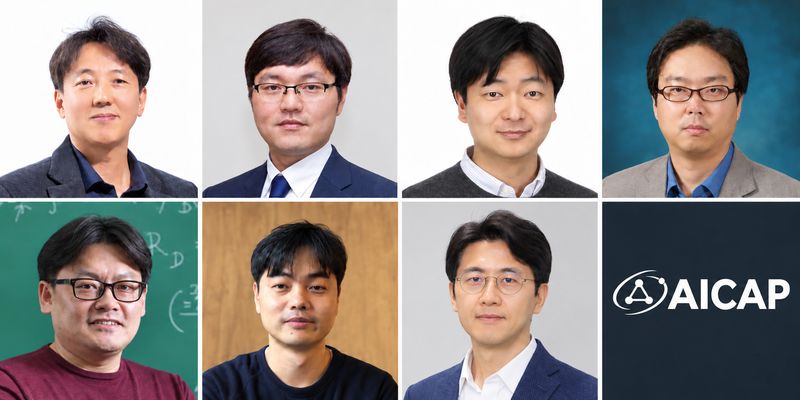
The project is a large-scale interdisciplinary initiative led by Yonsei University, with Sejong University and Kyung Hee University participating as partners. The research team will make extensive use of AI technology to unravel the mystery of dark matter, which accounts for about 85% of all matter in the universe but has remained unidentified for more than 90 years since its existence was first proposed in the 1930s.
Researchers around the world have continued experiments to detect dark matter directly, increasing detector performance by at least 10 billionfold, but have yet to achieve officially recognized results. To solve this challenge, the research team has proposed a new approach that combines, within a single AI inference framework, data from astrophysics, which observes the universe at the scale of galaxies, and particle physics, which studies collision signals inside detectors.
The core research method is a technology called “simulation-based inference.” It involves modeling real physical phenomena through computer simulations, then training an AI neural network on those simulations to precisely estimate physical properties that are difficult to observe directly. In effect, AI connects the different data formats of the two disciplines through a common language.
With public funds invested in the project, plans are also underway to return the research outcomes to society and develop talent. The research center will make the large-scale training datasets and AI models developed during the research fully available to the public as open source. It also plans to hold an annual summer school for undergraduates, giving a total of 240 students the opportunity to analyze real-world data over six years, and to train at least 15 interdisciplinary PhD-level researchers with expertise spanning all three fields.
The AI technologies developed through this research are expected to extend beyond basic science and into industries across the board. Professor Ji Myeong-guk of Yonsei University said, “The AI methodologies developed in the search for dark matter can be applied directly to every field that uses simulations, including new-material design, climate forecasting, and medical image analysis,” and emphasized, “There is something this research will leave behind even before the answer is found.”
[email protected] Kim Man-gi Reporter