From a girl who faced racism to a judge holding perpetrators accountable for genocide: Nobel Peace Prize laureate Navi Pillay [Hong Chae-wan's Global Profiles]
- Input
- 2026-10-17 05:00:00
- Updated
- 2026-10-17 05:00:00
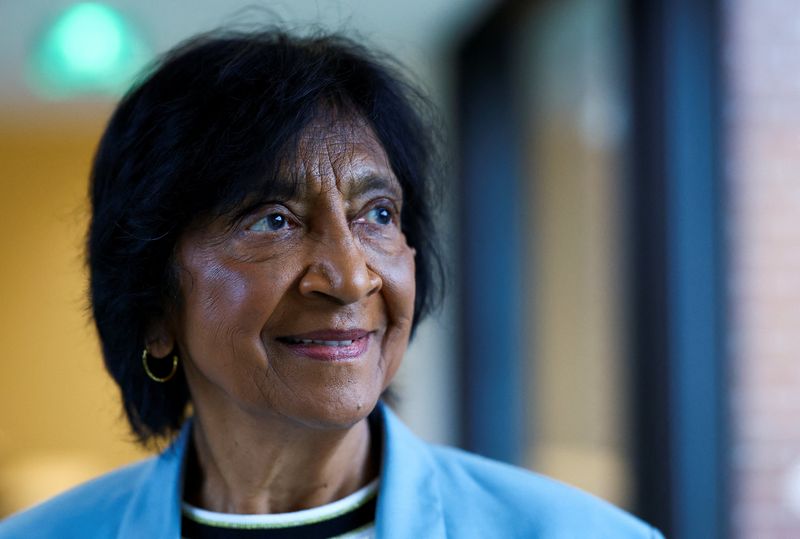
The Nobel Committee named Pillay this year's laureate on the 9th (local time) for her contributions to peace and the advancement of international law. Amid political pressure on international judicial bodies and judges, the award sent a message about the need to uphold the laws and institutions that hold people accountable for crimes. The committee warned that the international legal order was under severe pressure and cautioned against the spread of power politics at the expense of respect for legal frameworks and justice.
Breaking through barriers of race and gender to enter the courtroom
Pillay was born in 1941 in Durban, South Africa, to a family of Indian-origin Tamils. The daughter of a bus driver, she experienced racism firsthand under Apartheid (racial segregation). Even after becoming a lawyer, race and gender remained barriers she had to overcome.In 1967, she became the first non-white woman to open her own law practice in her home region of Natal. Her legal work focused on protecting the rights of people prosecuted or imprisoned for resisting the system of racial discrimination. She defended anti-Apartheid activists and worked to improve conditions for prisoners on Robben Island, where political prisoners were held. At a time when the state used the law as an instrument of discrimination, she argued for the rights of the oppressed in the courtroom.
In 1995, after Apartheid ended, she became the first non-white woman to serve as a judge on South Africa's High Court. That same year, she was elected a judge of the International Criminal Tribunal for Rwanda (ICTR), expanding her work onto the international stage. The lawyer who had fought discrimination in her own country now heard testimony from genocide survivors and held perpetrators accountable.
Recognizing wartime sexual violence as genocide... holding perpetrators accountable
The case that secured Pillay's place in the history of international justice was the trial of Jean-Paul Akayesu in Rwanda. Akayesu, mayor of the Rwandan commune of Taba, was charged with responsibility for killings, sexual violence and other crimes committed during the 1994 genocide.In September 1998, the ICTR convicted Akayesu of genocide and crimes against humanity, among other offenses. It was the first time an international tribunal had convicted an individual of genocide, and the first ruling to recognize that rape could constitute genocide.
The key was the finding that sexual violence could be used as a means of destroying a particular group. Sexual violence committed with the intent to destroy, in whole or in part, a particular ethnic group could constitute genocide. Rather than treating the harm women suffered during war as isolated personal incidents, the ruling addressed it in the context of acts aimed at destroying an entire group.
Pillay was one of the three judges who took part in the ruling. She played an important role in ensuring that sexual-violence charges were added to the indictment and addressed in the judgment, including by further questioning witnesses about testimony of sexual violence that emerged during the trial.
She later served as president of the ICTR from 1999 to 2003 and as a judge of the International Criminal Court (ICC) from 2003 to 2008. From 2008 to 2014, she served as UN High Commissioner for Human Rights, leading the international community's human rights agenda.
Lawyer who led Gaza inquiry... Israel pushes back
Pillay's work has also extended to the issue of Gaza in recent years. The Independent International Commission of Inquiry under the UN Human Rights Council, which she chaired, announced its findings last September that Israel had committed genocide against Palestinians in the Gaza Strip.The commission examined acts set out in the Genocide Convention, including killings; causing serious bodily or mental harm; imposing conditions of life calculated to bring about the physical destruction of a group; and preventing births. Based on statements by Israeli leaders and other evidence, it found that there was genocidal intent and called on countries to take measures to prevent genocide. This was the finding of an independent commission of inquiry and is distinct from a final judgment by an international court.
At the time, Israel's Foreign Ministry categorically rejected the findings, calling the report distorted and false. Later, despite Pillay receiving the Nobel Peace Prize, Prime Minister Benjamin Netanyahu's office denounced the Nobel Committee, saying it had lost its moral compass. Even after the award, her efforts to hold those responsible for events in Gaza legally accountable faced political attacks.
US sanctions against ICC hours after Nobel announcement
The crisis in international justice, a cause to which Pillay had devoted her life, was evident even immediately after the award announcement. On the 9th, just hours after the announcement, the United States announced sanctions against the ICC itself. It went beyond previously imposing individual sanctions on judges and officials, making the court as an institution a target of sanctions.In response, Pillay appeared via video link at an event at the Nobel Peace Center and criticized the US sanctions, saying they were unacceptable. Then, on the 13th, she called on the United States to return to its role of protecting human rights and freedom.
A gap remains between a legal finding that a crime has been committed and actual punishment. Even when an international court issues an arrest warrant, justice becomes harder to achieve if countries fail to cooperate in enforcing it or put pressure on judicial institutions. Pillay's award honors a lawyer who has stood against racism and genocide, while also raising the question of who will uphold the international justice system she has defended, and how.
[email protected] Hong Chae-wan Reporter