Spaceliintech launches next-generation space pharmaceutical experiment module to ISS
- Input
- 2026-10-14 16:29:58
- Updated
- 2026-10-14 16:29:58
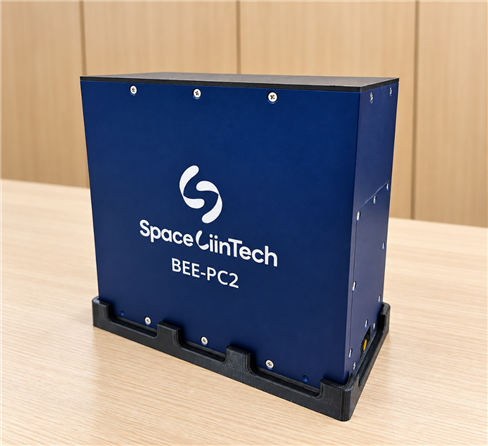
[Financial News] Spaceliintech, a company specializing in space pharmaceuticals, announced on the 14th that it had successfully launched its AI-based next-generation space pharmaceutical experiment module, BEE-PC2, to the International Space Station (ISS) on the 13th.
BEE-PC2 was successfully launched at 6:33 a.m. Eastern Time on the 13th (7:33 p.m. Korea time), aboard SpaceX's Falcon 9 rocket from Cape Canaveral Space Force Station in Florida, United States. The launch is being carried out under NASA's CRS-35, a commercial resupply mission to the ISS.
This mission is a follow-up to BEE-PC1, the first space pharmaceutical experiment on the ISS conducted by Spaceliintech and the first of its kind in South Korea, last year. The company plans to lay the groundwork for commercial contract research organization (CRO) services for domestic and international pharmaceutical and biotechnology companies.
The core experiment aboard BEE-PC2 is the co-crystallization of a target protein and a small-molecule compound being considered as a drug candidate. Its aim is to grow crystals of protein-compound complexes, as well as protein-only crystals, in the microgravity environment of space and, after retrieving them, assess their potential use in drug development through structural analysis.
Following Spaceliintech's 12U-class space pharmaceutical satellite BEE-1012, which headed into space on the 7th aboard the fifth Nuri launch, the BEE-PC2 launch is the second space pharmaceutical mission to take place within a week. Spaceliintech is developing in parallel the ISS-based BEE-PC series and the standalone satellite-based BEE-1000 series.
The strategy is to use the ISS-based platform for drug development research, including protein crystallization experiments and detailed structural analysis using recovered samples, while using the standalone satellite platform to validate long-term exposure to the space environment, autonomous operation, and the potential to scale up pharmaceutical crystallization and manufacturing processes.
Yoon Hak-soon, CEO of Spaceliintech, said, “If BEE-PC1 last year was the first demonstration to confirm the potential of South Korea's space pharmaceutical technology, BEE-PC2 is an important step in developing that technology into a service that can be put to practical use in the pharmaceutical and biotechnology industries.”
[email protected] Yeon Ji-an Reporter