Robots inspect tunnel ceilings instead of people... Korea Authority of Land & Infrastructure Safety expands support for ‘K-Testbed’
- Input
- 2026-10-14 15:54:19
- Updated
- 2026-10-14 15:54:19
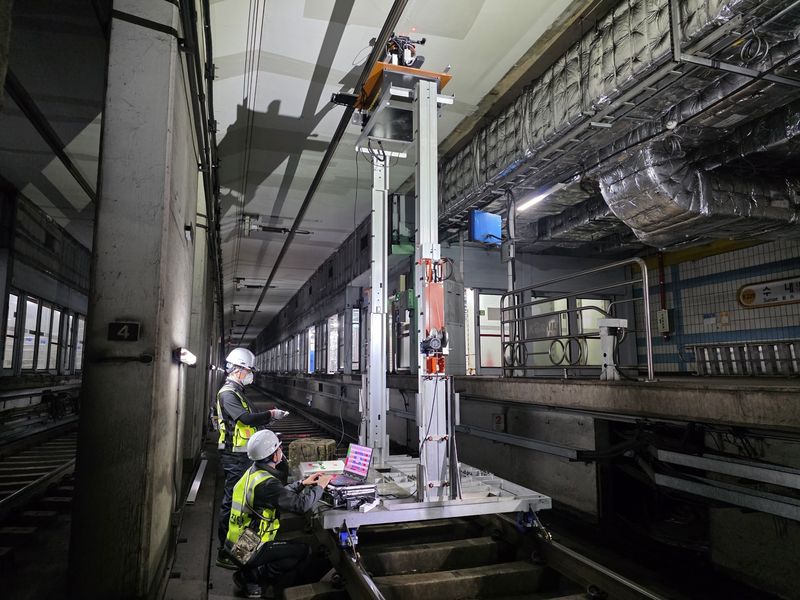
The Korea Authority of Land & Infrastructure Safety said on the 14th that it had conducted a ‘K-Testbed’ for tunnel inspection equipment under development by a private company at Bundang Tunnel on the Suin-Bundang Line in Seongnam, Gyeonggi Province.
The test section was Bundang Tunnel, between Seohyeon Station and Jeongja Station. The ‘wireless remote rebar scanning and concrete delamination and void inspection equipment for the crown of large-cross-section tunnels’ was deployed at the site to assess its performance and potential for practical use.
The equipment is designed to replace the existing method of having workers climb onto elevated work vehicles to inspect tunnel ceilings with a remotely operated robot. It scans the locations of rebar inside the ceiling and checks for concrete delamination and voids. If successfully deployed at the site, it is expected to reduce the risks of working at height and improve the accuracy of infrastructure inspections.
The company developing the equipment obtained data on its suitability for use in the field through this demonstration. The Korea Authority of Land & Infrastructure Safety expects the data to be used to improve the equipment’s performance and reliability.
K-Testbed is a program that supports public institutions and others in providing test sites to private companies so they can verify whether technologies or equipment under development are suitable for use in the field. This demonstration was made possible through the K-Testbed platform, which connects companies with partner institutions.
Park Chang-geun, head of the Korea Authority of Land & Infrastructure Safety, said, “We plan to expand the provision of testbeds to support private companies’ technology development and innovative growth.”
[email protected] Choi Ga-young Reporter