[Exclusive] Korea Aerospace Industries (KAI) estimates KF-21 Boramae sales at over 14 trillion won; targets annual revenue of 10 trillion won
- Input
- 2026-10-14 16:37:13
- Updated
- 2026-10-14 16:37:13
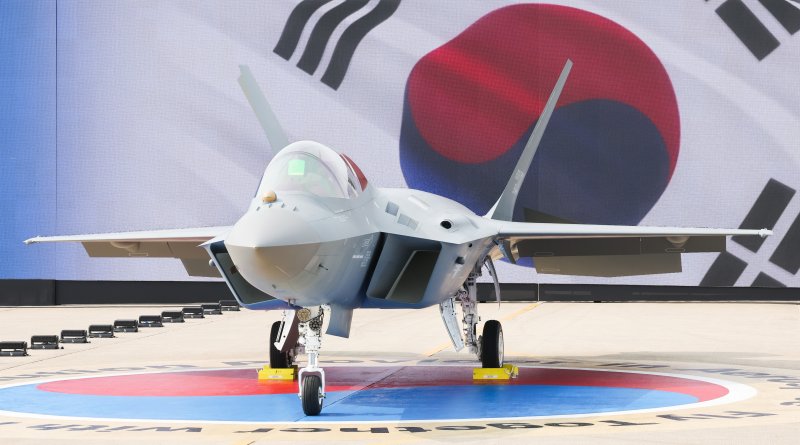
[Financial News] Korea Aerospace Industries (KAI) expects sales to exceed 14 trillion won by 2032 on the back of mass production of the KF-21 Boramae, Korea’s homegrown supersonic fighter. It has also set a goal of increasing sales, led by the KF-21, to more than 10 trillion won annually by 2030.
According to Cheon Ha-ram, a Reform New Party lawmaker on the National Assembly’s National Defense Committee, KAI has estimated its projected sales for the next 10 years. Starting at 5.7 trillion won this year and rising by 1 trillion won each year, sales are expected to reach 10.4 trillion won in 2030.
Mass production of the KF-21 Boramae is behind KAI’s confidence in this clear upward sales trend. The KF-21 is seen as an asset capable of meeting domestic and overseas demand because it is an independent fighter platform. It can replace aging fighter jets and also provides a basis for upgrades and further development to meet demand.
KAI estimates that revenue from KF-21 Boramae mass production will total 4.358 trillion won from this year through 2028 and 10 trillion won from 2029 through 2032. In other words, it could generate more than 14 trillion won in sales from the KF-21 alone over the seven years from this year through 2032. This reflects expectations that the aircraft could be adopted not only by South Korea but also by other countries as their next-generation fighter. That is why KAI set a total defense sales target of 12.9 trillion won for 2032.
The South Korean military plans to field a total of 120 aircraft by 2032. The initial production contract for 20 aircraft, signed in 2024, was worth 1.96 trillion won, while the additional production contract for 20 aircraft signed in June last year was worth 2.4 trillion won. Together, the two contracts are worth in the 4-trillion-won range. If the remaining 80 aircraft are also delivered, the total project value is expected to reach 12 trillion won.
KF-21 sales could grow further if overseas exports also materialize. Indonesia, a co-development partner on the KF-21, is currently the most likely export destination. Talks are underway on an initial contract for 16 aircraft, and the possibility of winning orders for up to 48 has also been raised.
The Philippines and Malaysia are also being mentioned. The Philippines plans to acquire 40 multirole fighters and has previously purchased KAI’s FA-50. Malaysia plans to acquire 36 next-generation fighters to replace aging aircraft. There is speculation that each country could buy 20 to 30 KF-21s. The United Arab Emirates (UAE) is also reportedly interested in local production of the KF-21.
Debate is also growing over Hanwha Group’s attempted takeover, alongside expectations that the KF-21 will drive sales. The government and political circles are taking a cautious stance, while opposition within KAI is intensifying. KAI’s labor union traveled from Sacheon, South Gyeongsang Province, to Seoul that day and staged a protest against privatization in front of the Blue House.
At the same time, there are many voices saying that the development of the K-defense industry should also be considered, as global defense companies are growing in scale to boost their competitiveness. At the National Assembly National Defense Committee’s parliamentary audit of the Defense Acquisition Program Administration (DAPA) the previous day, DAPA Commissioner Lee Yong-cheol said, "There is also the aspect of improving international competitiveness through economies of scale."
[email protected] Kim Yun-ho Reporter