Bank of Korea (BOK) Governor Shin Hyun-song: “AI boom and Middle East war are fueling price pressures; we will use monetary policy appropriately”
- Input
- 2026-10-14 14:57:52
- Updated
- 2026-10-14 14:57:52
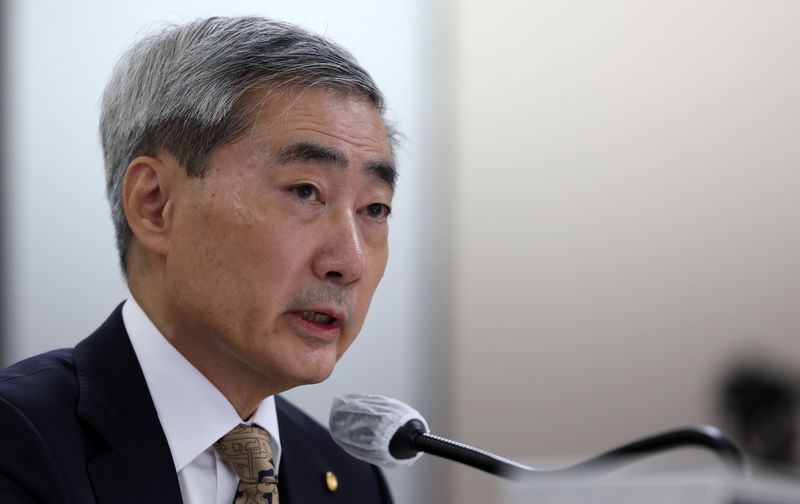
[Financial News] BOK Governor Shin Hyun-song said, “It is important to stabilize prices amid mounting upward pressure by conducting monetary policy appropriately.” He pointed to the AI (artificial intelligence) investment boom and the Middle East war as the two factors driving prices higher, and said Korea was at the most important point where these forces intersect.
At a CNN “Global Perspectives” panel discussion held in conjunction with the International Monetary Fund (IMF) annual meeting in Bangkok, Thailand, on the 14th (local time), Governor Shin said, “The large-scale AI investment boom and the Middle East war are intersecting in diametrically opposed directions, increasing inflationary pressure.”
Governor Shin said, “The two factors are working in opposite directions in terms of economic activity, but the positive effects of the AI economy are outweighing the negative impact of the Middle East war.”
Referring to the price stability target (2% consumer price inflation), Governor Shin said, “We will uphold this principle without wavering.” He added, “The most important thing for a central bank to bear in mind is that rising prices hit low-income households the hardest. That is why we need to bring prices down, and it is important to conduct monetary policy appropriately to achieve that.”
Governor Shin also stressed the importance of financial stability and cautioned against excessive debt.
Citing the financial crises experienced by Asian countries, including Korea, in the late 1990s, he warned, “We need to be able to rein in excessive leverage—that is, investment financed through borrowing—and excessive risk-taking before they spiral out of control. Responding too late, after risks have accumulated, is like bursting a bubble.”
Governor Shin said, “Korea’s Financial Vulnerability Index (FVI) is at its (relatively stable) long-term average level (around 46),” adding, “Since safeguarding financial stability is one of our core responsibilities, we are keeping a close eye on (this indicator).”
Asked about the possibility of downside risks to the economy amid a boom in semiconductor exports, he replied, “It depends on how long large-scale AI investment continues.”
Citing the fact that major institutions had raised their forecasts for Korea’s economic growth this year to the high 3% range, Governor Shin said, “We expect more than $1 trillion in investment over the next three to four years, and it will have a positive impact on the Korean economy as well.”
Governor Shin noted, however, that “Korea is indeed seeing a clearly pronounced K-shaped economic pattern,” and warned against the entrenchment of K-shaped polarization across industries, regions, social strata and generations amid strong economic growth.
[email protected] Jung Sang-gyun Reporter