“Beyond mere food, into collectibles” ... Food companies compete to lock in customers with quirky merchandise
- Input
- 2026-10-19 14:10:03
- Updated
- 2026-10-19 14:10:03
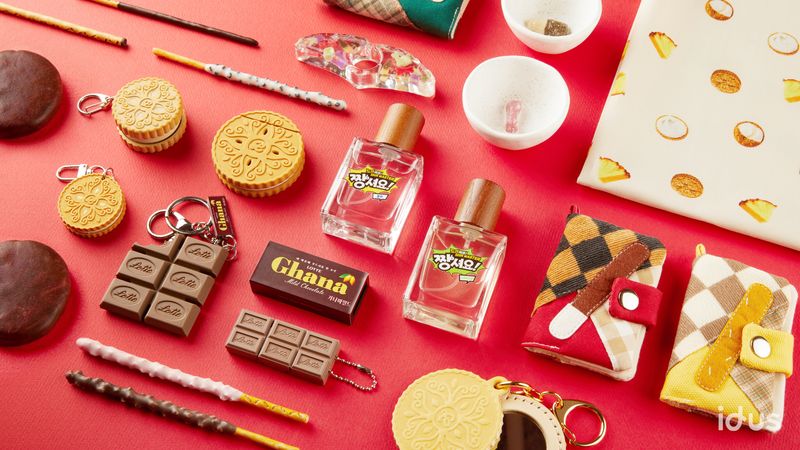
[Financial News] Food companies are investing heavily in merchandise marketing in collaboration with popular intellectual property (IP), going beyond simply selling products. By leveraging IP with powerful fanbases, they can both enjoy the lock-in effect of keeping loyal customers and raise the average transaction value by selling limited-edition, specially planned products instead of relying on single-item purchases.
According to industry sources on the 19th, food and beverage companies have recently continued to launch IP collaborations and quirky merchandise that appeal to consumers’ desire to collect. With a little over a month to go before Pepero Day, Lotte Wellfood Co., Ltd. has kicked off its seasonal marketing in earnest. It unveiled a lineup of 10 seasonal packages in collaboration with its global ambassador, the group Stray Kids (SKZ), as well as Sanrio Characters and Ganadi. It also released a variety of merchandise, including SKZ tarpaulin bags and key rings, Ganadi hand mirrors, and Sanrio Characters shopping bags, targeting a broad range of consumers, from idol fans to character enthusiasts.
Samlip, which sparked a craze with Pokémon sticker seals, has now teamed up with Tamagotchi, the nostalgic Japanese hit game. By including Tamagotchi sticker seals in its Samlip Hoppang buns, released ahead of the winter peak season, the company is once again stoking consumers’ desire to collect.
As mechanical keyboards, whose feel and sound make typing enjoyable, have gained popularity among people in their 20s and 30s, merchandise in the form of keycaps modeled on companies’ own products has also begun appearing one after another. In June, Sempio won a favorable response with keycaps featuring the design of its popular beef jerky brand Jilleo. Lotte Chilsung Beverage Co., Ltd. had also previously introduced related merchandise. The company drew attention with custom items reflecting individual tastes, such as miniature bottles that visitors could design themselves as “My Own Saero Miniature Bottle,” and “Saero keycaps” they could make by combining the keycaps they wanted.
IP collaborations are also heating up in the restaurant franchise sector. Mom’s Touch collaborated with the popular Japanese anime Demon Slayer: Kimetsu no Yaiba to release character LED acrylic stands and key ring sets. The merchandise proved so popular on social media (SNS) that people rushed to stores before they opened to get it. No Brand Burger has also launched packaging in collaboration with the popular game Animo and plans to run a pop-up store at its Hongdae location in Mapo-gu, Seoul, through the 20th, offering visitors a variety of interactive experiences.
The reason the food and beverage industry is focusing on IP marketing is that it is difficult to stand out in a fiercely competitive market through taste alone or by simply launching new menu items. Distinctive merchandise featuring IP can attract fans and turn them into regular consumers of the brand.
An industry official assessed: “As competition among new products in the food and beverage market intensifies, customer-attraction marketing that leverages the proven power of IP has become essential. The prevailing strategy is to go beyond revenue from simply selling food and beverages and encourage fans to buy limited-edition merchandise, boosting both average transaction value and profit margins.”
[email protected] Park Gyeong-ho Reporter