Seoul’s commute gets an “express fix” ... easing bus and subway congestion
- Input
- 2026-10-14 14:06:41
- Updated
- 2026-10-14 14:06:41
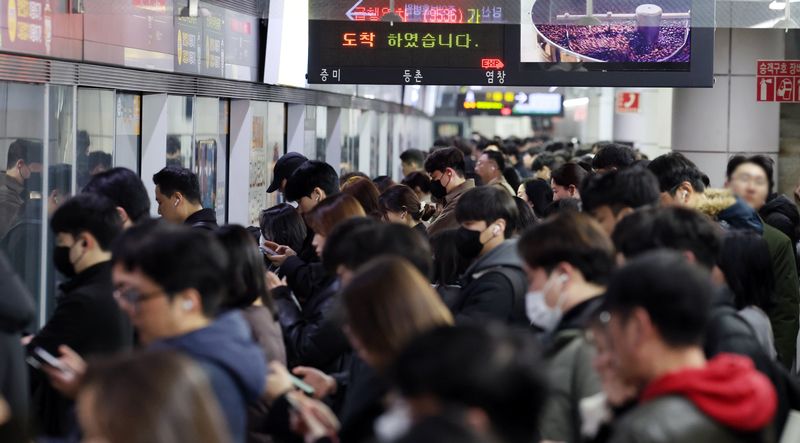
The Seoul Metropolitan Government announced the ‘Seoul Public Transportation Express Operations Plan’ on the 14th. The key is to reduce congestion and travel times during commutes by adjusting how existing public transportation operates, without introducing new vehicles or establishing new routes.
For the first time since Line 9 opened, the ratio of express to local trains will be adjusted to match demand at different times of day. From 5:40 a.m. to 7 a.m., the ratio of express to local trains in the upbound direction from Gaehwa Station to VHS Medical Center station will change from 1:1 to 2:1. Two express trains will run consecutively, followed by one local train.
The start of the concentrated deployment of trains during the morning commute will also be moved 50 minutes earlier, from 6:30 a.m. to 5:40 a.m. The period of concentrated service during the evening commute will shift from 4:30–7 p.m. to 4–6:30 p.m.
Under the changes, the number of train runs in the morning will increase by eight. At Dongjak Station, between 7 a.m. and 8:30 a.m., the interval between express trains will be shortened from 6 minutes 20 seconds to 6 minutes in the upbound direction, and from 8 minutes 40 seconds–13 minutes to 6 minutes 20 seconds–8 minutes in the downbound direction.
As a result, peak crowding on downbound express trains during the morning commute is expected to fall from the current 192.5% to 172.1%, a decrease of 20.4 percentage points; in the upbound direction, it is expected to drop from 182.3% to 174.2%, a decrease of 8.1 percentage points. Peak crowding on downbound trains during the evening commute is also expected to improve, falling from 180.5% to 160.3%.
The Seoul Metropolitan Government initially pursued the purchase of additional trains to ease crowding on Line 9, but the plan was disrupted by delivery delays from the manufacturer. After canceling the order last April, it developed a plan to improve the efficiency of the existing fleet. The city expects the operational changes to improve transport capacity by an amount similar to introducing 24 new train cars (four trainsets). It says the plan will save about 66 billion won in purchase costs and several years, without buying additional vehicles.
A ‘median-lane trunk express bus’ service will also be piloted on four routes to shorten commute times for residents of Seoul’s outlying areas. Some existing trunk bus services will be converted to express service during the morning commute and will stop only at major stops.
The trial routes are Express Route 150 (Dobong Bus Depot–City Hall Station), Express Route 370 (Gangdong Bus Depot–Chungjeongno Station), Express Route 470 (Sangam Bus Depot–City Hall Station) and Express Route 605 (Gangseo Bus Depot–Yeongdeungpo Station). Two vehicles will be assigned to each route, which will run three times a day: once in the early morning and twice during the morning commute.
The city expects express buses to make an average of 45.8% fewer stops than regular buses and to cut travel times by about 10%. The plan is to distribute demand by having long-distance commuters take express buses, while passengers traveling to intermediate stops or making short trips use regular buses.
The Seoul Metropolitan Government will complete preparations, including revising operating plans and providing advance notice, during October, and implement both measures at the same time starting November 16. It will then analyze demand for the express buses and the effectiveness of the service to consider whether to expand the routes.
Yeo Jang-kwon, head of the Seoul Metropolitan Government’s Transportation Office, said, “The key to this plan is to carefully analyze residents’ travel patterns and focus transportation services where they are needed during commuting hours,” adding, “We will improve the efficiency of existing public transportation so that residents can feel the benefits of reduced congestion and shorter travel times.”
[email protected] Lee Seol-young Reporter