Jeju Taxi Operating Rate at 43% After 9 p.m.; Airport Late-Night Subsidy Up 68%
- Input
- 2026-10-14 14:12:56
- Updated
- 2026-10-14 14:12:56
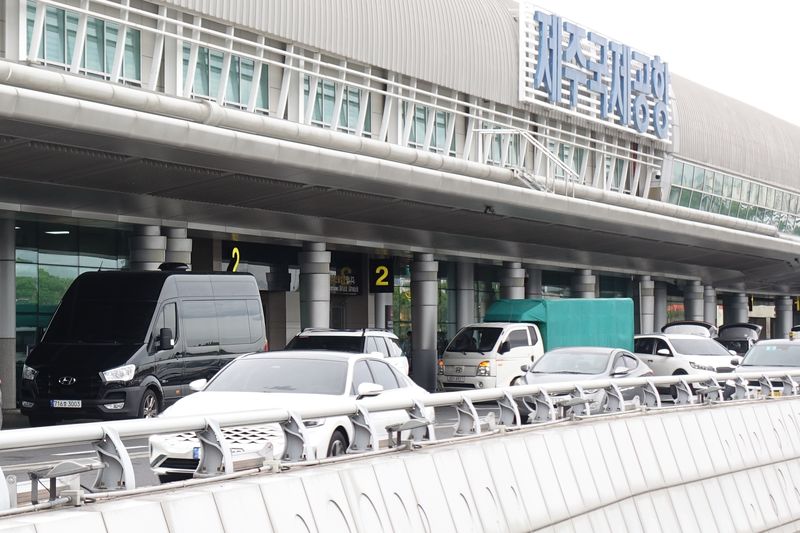
【Financial News, Jeju—Jung Yong-bok】With the taxi operating rate in Jeju at about 43% after 9 p.m., Jeju Province will raise the subsidy for late-night airport trips by 68.2% ahead of the opening of the National Sports Festival.
Jeju Special Self-Governing Province said on the 14th that it will raise the subsidy for taxis carrying passengers from Jeju International Airport between 9 p.m. and 1 a.m. the following day, from 2,200 won to 3,700 won per trip for one month, from the 15th through November 14. That is an increase of 1,500 won, or 68.2%, over the previous amount.
The subsidy is paid to taxis that take part in late-night airport service and is separate from the fares paid by passengers. Jeju Province plans to encourage taxis operating or waiting in the city to travel to the airport and boost late-night transport capacity.
The main causes of the late-night transportation shortage are considered to be the aging of taxi drivers and their reluctance to work at night.
Of the 5,241 taxi drivers in the province, 2,036 are aged 65 or older, accounting for 38.8%. The taxi operating rate also drops to about 43% after 9 p.m. Jeju Province has provided a 2,200-won subsidy to taxis operating late-night airport service since 2016, but the shortage of taxi supply continues.
Late-night demand for transportation persists because passengers need time to collect their luggage and make their way out even after the airport's last flight arrives. When flights are delayed, in particular, arriving passengers tend to converge at certain times, repeatedly leading to longer waits for taxis.
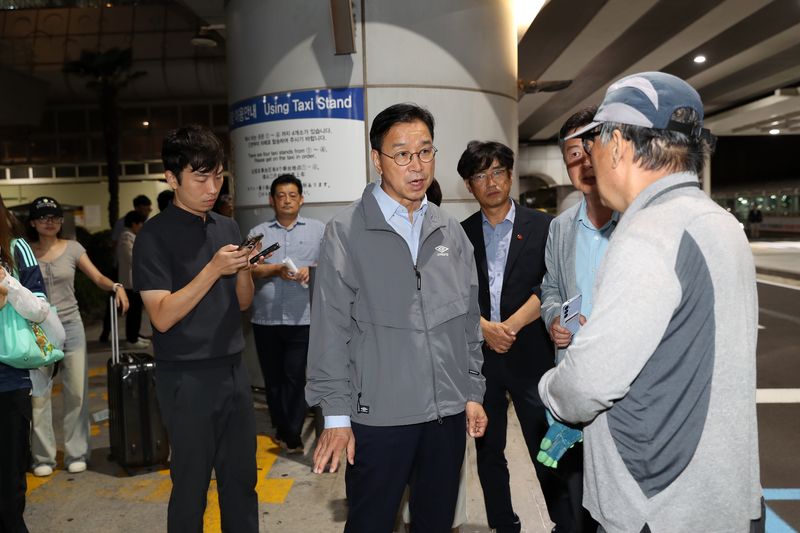
Jeju Governor Wi Seong-gon also visited Jeju Airport on the night of September 9 and personally inspected the taxi stand and bus stop operations after the arrival of the last flight. Raising taxi subsidies and expanding late-night bus service were among the measures considered to address the inconveniences observed at the scene.
The measures also prepare for increased transportation demand during the 107th National Sports Festival, which will be held in Jeju from the 16th to the 22nd. Jeju Province plans to install signs directing passengers to the airport taxi stand this month in cooperation with Korea Airports Corporation. The higher late-night operating subsidy will initially apply for one month, and the province is considering expanding support starting in 2027.
Alongside the expansion of taxi supply, gaps in late-night bus service will also be addressed. Jeju City late-night buses that stop at Jeju Airport currently run 26 times a day, from 10 p.m. until 12:25 a.m. the following day. However, intercity express bus services are limited in both destinations and operating hours: Route 800-1 to downtown Seogwipo departs at 11 p.m., while Route 151-1 to Moseulpo departs at 10:30 p.m.
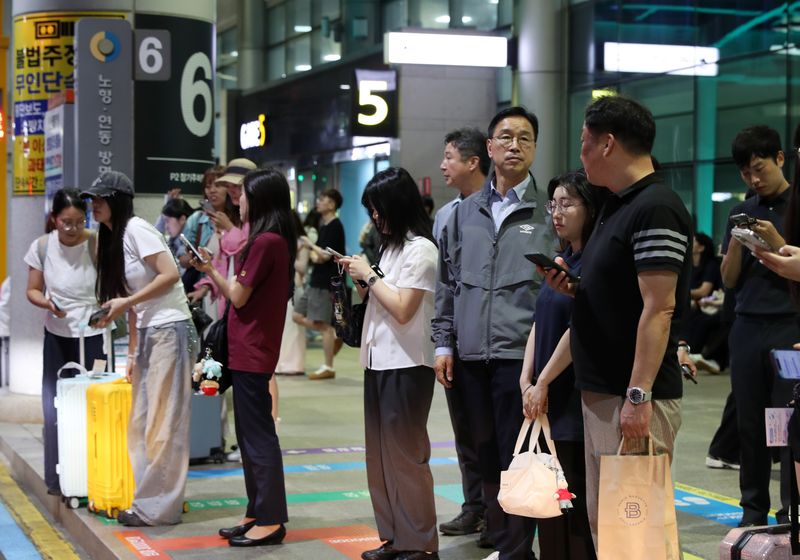
Concerns have been raised that remote areas such as Seongsan, Hangyeong and Namwon lack public transportation for passengers arriving in Jeju late at night. Jeju Province plans to add three express bus routes in November: along Dongilju-ro toward Jocheon, Gujwa and Seongsan; along Seoilju-ro toward Aewol, Hallim and Hangyeong; and along Beonyeong-ro toward Pyoseon and Namwon. The buses are scheduled to depart the airport at around 10:40 p.m.
However, the increase in intercity services will take effect after the National Sports Festival ends. Since expanding late-night taxi supply will be a key response during the festival, it will be necessary to determine whether the number of taxis actually operating increases and passenger wait times decrease.
The emergency transportation system for sudden flight delays will also be expanded. Previously, charter buses were deployed when severe weather left large numbers of passengers stranded at the airport. Going forward, charter buses will also be dispatched in emergencies when late-night arrivals bunch together because of flight delays or other factors, making it difficult to transport them using only taxis and regular route buses.
The key question is whether the higher subsidy will actually lead to an increase in taxi supply. Analyzing the number of taxis arriving at the airport, passenger wait times and demand for late-night buses based on the results of the one-month trial will help determine whether continued expansion of support is justified.
Kang Min-cheol, director of Jeju Province’s Transportation and Aviation Bureau, said, “We have drawn up measures to improve taxi and bus services to reduce transportation difficulties for people using Jeju Airport at night,” adding, “We will continue to improve transportation at the airport so people can get around without difficulty even late at night.”
[email protected] Jung Yong-bok Reporter