“What’s the point of making 100 trillion won?” Retail investors stuck with Samsung Electronics and SK hynix shares are “angrier than disappointed”
- Input
- 2026-10-14 14:45:30
- Updated
- 2026-10-14 14:45:30
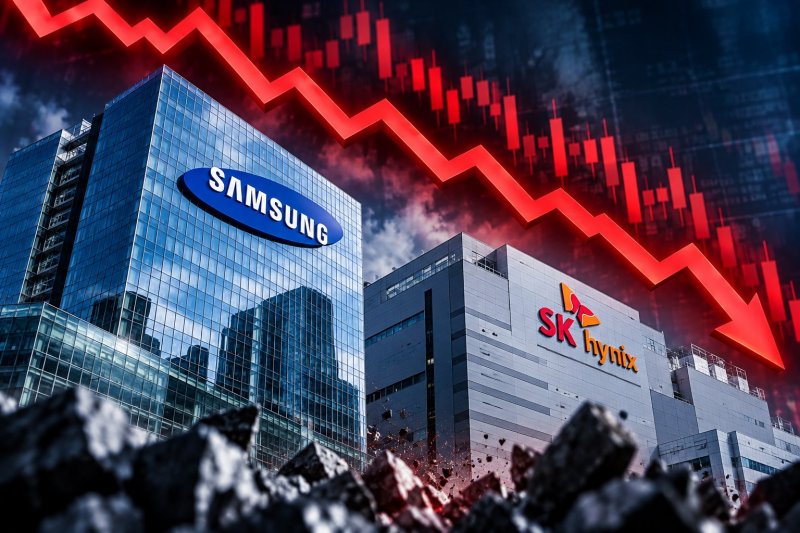
[Financial News] Recent sharp declines in Samsung Electronics and SK hynix shares have also shaken South Korea’s stock market. Samsung Electronics continues to improve its performance, including posting record results, and SK hynix is also expected to report record results, but individual investors appear to be growing increasingly anxious.
Investors who entered the stock market amid hopes of a semiconductor industry recovery and increased investment in artificial intelligence (AI) say they find it hard to understand why record-breaking results and stock prices are moving in opposite directions.
475 trillion won wiped off Samsung Electronics and SK hynix in the past five trading days
According to the exchange on the 14th, the combined market capitalization of Samsung Electronics and SK hynix fell by about 474.9573 trillion won over the past five trading days (October 6–13). That amounted to 64% of the approximately 744 trillion won decline in the KOSPI’s total market capitalization over the same period. In effect, the sharp fall in the two large-cap semiconductor stocks that have led South Korea’s stock market drove down the value of assets across the market. What is particularly confusing investors is the gap between record results and share-price performance. Expectations of stronger demand for high-bandwidth memory (HBM) as the AI industry expands, as well as an improving memory market, have persisted. Samsung Electronics, the leading stock in South Korea’s market, posted operating profit of more than 107 trillion won in the third quarter, an unprecedented achievement, yet its share price fell sharply instead of reflecting the improved results.
As expectations that strong results would also lift share prices falter, investors face a choice: whether to hang on, trusting in companies’ growth potential, or to prepare for further declines and limit their losses.
Retail investors voice frustration despite high hopes; reactions range from worry to anger
Investor A, who bought near the peak, said, “News reports keep coming out day after day about record results, yet the share price is plunging. What on earth should I believe in when I invest?” A added, “I thought a company making good money would be reflected positively in its share price, but seeing my account shrink so much in just a few days is disheartening.” A continued, “Individual investors hold on, trusting the earnings outlook, but when foreign investors’ selling pours in, the share price slides helplessly. Instead of just repeating that results are good, we need a convincing analysis of why the share price has fallen this far.”Investor B said, “I’m torn between thinking that the steep drop in the share price could make this a good time to buy at a low price and worrying that my losses could grow if it falls further. Averaging down could lower my purchase price, but it’s hard to put in more money blindly when there’s no telling when the decline will end.”
He added, “This time, I realized that strong results and the timing of a rise in the share price are separate matters. Rather than buying more based only on a vague hope of a rebound, I plan to first reassess foreign investors’ selling pressure and the outlook for the sector.”
The sharp decline once again highlighted the weight and influence of large-cap semiconductor stocks in South Korea’s market. As the two stocks wavered, the KOSPI’s total market capitalization also fell sharply, and investor sentiment among individuals could weaken as well.
A securities industry official said, “If semiconductor companies continue to post earnings growth, their share prices may reflect that again.” The official added, “With market expectations for the pace of increased AI investment and the sustainability of the memory market now higher, it is important whether actual results meet those expectations.” The official continued, “Even if results improve, share prices can fall if they fail to meet market expectations or doubts about future growth increase.”
[email protected] Kang Jung-mo Reporter