Jo Jae-ho, director of Hallym University Chuncheon Sacred Heart Hospital: “Expanding every department isn’t the answer”... Betting on brain, emergency and trauma care [Interview]
- Input
- 2026-10-14 13:40:47
- Updated
- 2026-10-14 13:40:47
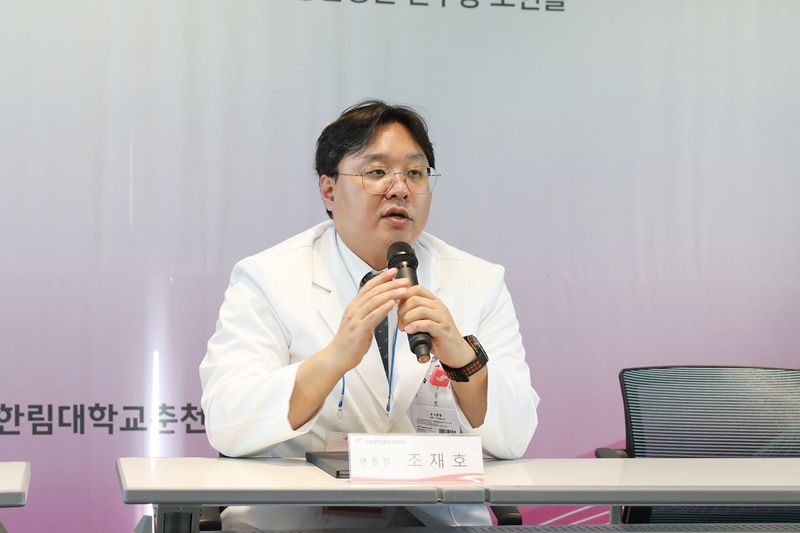
Jo Jae-ho, director of Hallym University Chuncheon Sacred Heart Hospital (pictured), sees “connection” as the answer for regional healthcare. Jo, who took office last month as the hospital’s 23rd director, redefined regional self-sufficient healthcare at a media day marking his inauguration, held on the 14th at Dohun Hall in the hospital’s research building. As Jo describes it, regional self-sufficient healthcare means taking responsibility through to the end for conditions that can be treated locally. Patients with complex or rare conditions are promptly connected to the best-suited hospital through a nationwide medical network that includes hospitals affiliated with Hallym University Medical Center. Once acute treatment is complete, they are sent back to local medical institutions to continue their recovery and care.
He added that the hospital’s four main development priorities are strengthening its capacity for critical and essential care, establishing a regional self-sufficient healthcare system, enhancing the competitiveness of its research-focused hospital, and fostering AI and digital healthcare.
All-in on brain, emergency and trauma care... Safeguarding essential healthcare in Gangwon
Director Jo made clear his commitment to “selectivity and focus.” “A university hospital’s role is not to expand the scale of every department, but to take proper responsibility for the healthcare that the local community needs,” he said. The hospital’s focus areas are neurological conditions, critical emergency care, fractures and trauma, and joint and musculoskeletal disorders. Demand for these services is high in Gangwon, where the population is aging rapidly, and they are areas in which the hospital has built up expertise.
Since being designated a regional emergency medical center in 2016 and having its designation renewed three times, Chuncheon Sacred Heart Hospital has handled critical emergency cases in western Gangwon. Over the past three years, it treated an annual average of around 28,400 emergency patients. Of the 19,387 patients transported by 119 emergency services from 2023 to 2025, 6,992 went on to receive inpatient care. This year, the hospital had recorded 22,890 emergency room visits through the end of September.
Director Jo said the hospital would further develop its multidisciplinary collaboration system so that emergency patients can move seamlessly from diagnosis through surgery and intensive care after arriving. The goal is to become the hospital Gangwon residents can trust and turn to first when they face an emergency.
He also weighed in on the debate over the roles of national and private university hospitals. “Regional healthcare cannot be completed by strengthening just one institution, whether a national or private university hospital,” Director Jo said. He stressed that “it is important to divide and connect roles based on each institution’s functions and expertise, rather than its founding body or size.”
The hospital plans to strengthen its role as an “open regional hub hospital” by promoting referrals and back-referrals with local hospitals, clinics and public health institutions. Patients who have completed treatment will return to hospitals and clinics in their neighborhoods, and if they need specialized care again, they will be connected directly to a university hospital.
Gangwon’s first research-focused hospital... “Research findings, put to work for patients”
Last year, Chuncheon Sacred Heart Hospital became the first medical institution in Gangwon Special Self-Governing Province to be selected for the Ministry of Health and Welfare’s first cohort of certified research-focused hospitals. Over the past three years, it secured 41.2 billion won in research funding and produced 463 papers, filed 193 patent applications and registered 88 patents, and completed 11 technology transfers. The hospital plans to make active use in patient care and regional collaboration of technologies it has developed, including an AI model for predicting preterm births and a remote multidisciplinary consultation platform for cerebral hemorrhage.
“We will focus on the healthcare that the region truly needs and become a hospital that patients choose for its expertise, not its size,” Director Jo said. “We will fulfill our role through a network linking local medical institutions with specialist hospitals nationwide, so Gangwon residents can receive the care they need at the most appropriate place.”
[email protected] Myeong-jin Jeong, Medical Correspondent Reporter