Group caught over overseas leak of core semiconductor inspection equipment technology
- Input
- 2026-10-14 14:17:04
- Updated
- 2026-10-14 14:17:04
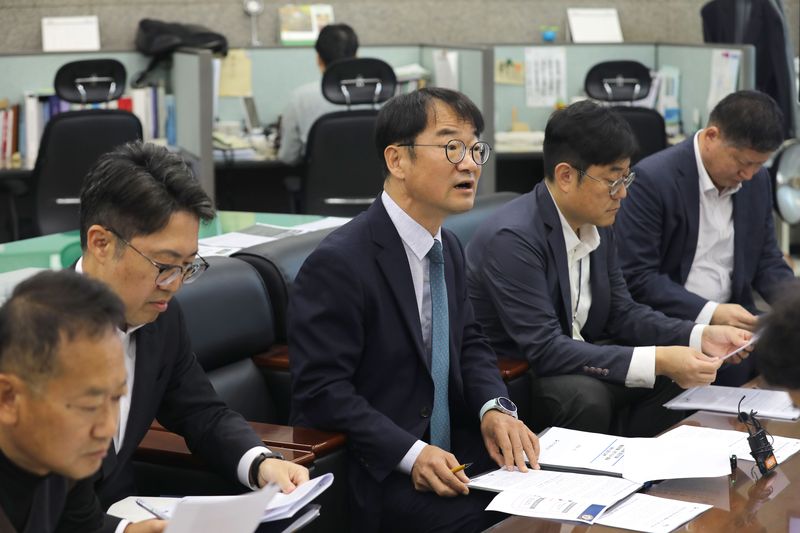
The Ministry of Intellectual Property’s Special Judicial Police for Technology Leakage (Technology Police) and the Serious Crimes Prosecution Division 2 of the Daejeon District Prosecution Office said on the 14th that they had indicted A, 45, a former employee of the victim company, while in custody on charges of violating the Unfair Competition Prevention Act and the Industrial Technology Protection Act. They also indicted accomplices B and C, both 40, without detaining them. This is the first case in which the Ministry’s Technology Police arrested a suspect in an overseas technology leak case and the Prosecution Service indicted them.
Changed jobs after being lured by an offer of “double the salary” ... prototypes also sold
According to the Technology Police, A and the others conspired with the victim company’s local distributor overseas and set up a manufacturing company there in November 2023. They are accused of using the victim company’s blueprints and technical materials for its “core semiconductor inspection technology” without authorization to manufacture products and supply them to overseas markets through February this year.
The investigation found that they moved to the overseas company in November 2023 after D, 58, a former executive of the victim company who had fled overseas, offered to pay them “double their previous salaries.” They were found to have used the stolen technology to produce prototypes in December 2025 and supply them to overseas markets.
The stolen technology, a “Probe Card,” is a key piece of equipment used to test semiconductor chips for defects while they are still on a wafer. U.S. and Japanese companies had long monopolized the market, but after the victim company successfully localized the technology, it also developed HBM inspection equipment and supplied it to major global semiconductor companies, making it a key national asset. The victim company estimates that losing overseas markets as a result of this leak could result in annual revenue losses amounting to 40 billion won.
Tracked through domestic parts supply chain ... doctored blueprints uncovered
The investigation began in July 2025 after the National Intelligence Service provided intelligence. When the suspects stayed overseas to evade the investigation, the Technology Police worked with the NIS and found indications that the overseas manufacturing company they had established was using South Korea’s parts supply chain for design and procurement. In July this year, investigators searched a domestic design company linked to the case and seized altered and re-edited blueprints belonging to the victim company.
The source and company name had been deleted, and the documents had been doctored to look like materials from the overseas company the suspects had joined. However, specialist investigators with hands-on experience in the semiconductor industry used detailed analysis to clearly establish that the victim company’s technology had been altered and copied. An Interpol Red Notice has been issued for D, the mastermind, who is evading the investigation.
Vice Minister Jeong Yeon-woo of the Ministry of Intellectual Property said, “The overseas leakage of core technologies deals an irreparable blow to companies and the national economy.” He added, “We will respond firmly to technology-leakage crimes while pursuing improvements to relevant systems so that foreign corporate entities can also be punished.”
Targeted leaks aimed at HBM inspection technology on the rise
Meanwhile, with demand for HBM semiconductors surging amid the recent boom in the artificial intelligence (AI) industry, overseas competitors’ attempts to steal inspection technology that determines HBM yields and quality are becoming increasingly sophisticated. The case is also seen as a targeted leak aimed at South Korea’s semiconductor inspection equipment ecosystem, which has emerged as a key part of the global semiconductor supply chain.
[email protected] Kim Won-jun Reporter