Jeju Second Airport Conflict Mediation Council Plan Approved; Participation by Both Sides Uncertain
- Input
- 2026-10-14 14:00:09
- Updated
- 2026-10-14 14:00:09
【Financial News | Jeju = Reporter Jeong Yong-bok】 A council tasked with designing a process to gather residents’ views on the Jeju Second Airport, which has been mired in opposing camps’ conflict for 11 years, cleared a hurdle to formation after a month of difficulties. However, the actual participation of stakeholders on both sides and how the results of deliberation will be reflected in policy remain challenges.
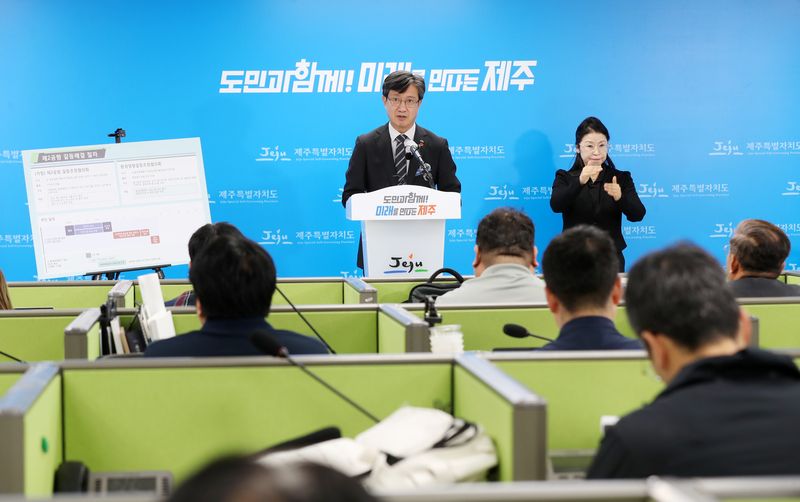
According to Jeju Special Self-Governing Province on the 14th, the ninth-term Jeju Island Social Pact Committee, chaired by Ko Seung-han, held its 12th plenary meeting at Halla Hall in the provincial government building that day and deliberated on and approved the “Plan to Form and Operate the Jeju Second Airport Conflict Mediation Council.”
The approval came 29 days after the committee put off its review on September 15, citing the need for further consultations to ensure the participation of stakeholders on both sides. Jeju Province plans to officially launch the council this month based on the approval.
The council will have around 13 members in total, including about four stakeholders, seven mediators and about two relevant public officials. The stakeholders may include residents of the planned airport site and people recommended by the groups for and against the project. The mediators will work from a neutral position to coordinate stakeholders’ views and design the deliberation process.
The council’s main function is not to decide whether to build the airport. It will share key issues, including aviation demand, environmental concerns, and harm to residents and compensation, and establish methods and procedures for gathering residents’ views. The results of the discussions will be delivered to the provincial governor.
Deliberation is a process of examining issues and forming opinions based on sufficient information and discussion. Unlike a simple poll asking people to choose for or against, the process must first be designed to determine what information residents will receive, whose views will be gathered, and how.
The problem is that the formation of the council itself has become a source of conflict. Groups supporting construction of the Second Airport held a rally outside the Jeju provincial government building on September 9, saying the conflict mediation council could delay the project and calling for it to proceed swiftly through the statutory process. Some figures on the supporting side claimed their demands had not been adequately reflected in the council’s formation process.
Although the operating plan has been approved, whether groups on both sides will actually participate and the selection of individual members have yet to be finalized. Securing the participation of stakeholders with differing positions remains the first priority.
Controversy also continues over the legal basis and role of the conflict mediation body. On September 8, Jeju Province announced three main measures to resolve the Second Airport dispute, proposing to handle both general conflict mediation and mediation of conflicts arising during the environmental impact assessment through a single council.
However, questions were raised about the authority of local government conflict mediation bodies in relation to national projects, as well as the possibility of jointly operating bodies with different legal foundations. Jeju Province subsequently changed its approach and decided to form separate councils for Second Airport conflict mediation and environmental impact conflict mediation.
At the Jeju Special Self-Governing Provincial Council’s administrative audit on the 12th, the issues included the reasons for changing the operating approach, its legal validity, criteria for the participation of stakeholders on both sides, and how minority opinions would be handled.
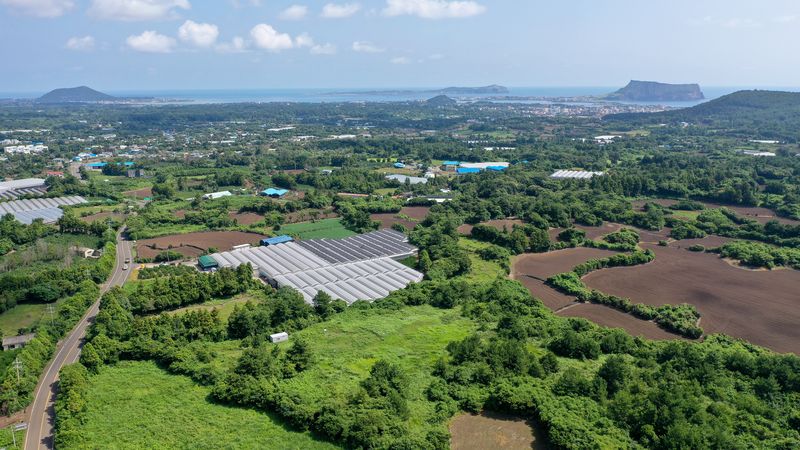
The Second Airport is a national project that has been mired in conflict for 11 years since the government announced the site in November 2015. In September 2024, the Ministry of Land, Infrastructure and Transport announced a master plan to build one runway, passenger and cargo terminals, and other facilities on about 5.51 million square meters in Seongsan-eup, Seogwipo. The total cost of the first phase is 5.4532 trillion won.
The master plan has been finalized, but further steps remain, including an environmental impact assessment and approval from the Jeju Special Self-Governing Provincial Council.
Jeju Province plans to designate the project for focused assessment and expand cross-checks by expert agencies once the Ministry of Land, Infrastructure and Transport submits its draft environmental impact assessment. The aim is to carefully examine environmental issues raised so far, including lava caves, groundwater recharge channels and groundwater impacts, as well as the risk of bird strikes. The province also plans to finish gathering residents’ views before seeking the provincial council’s approval of the environmental impact assessment.
However, how to gauge residents’ views has not yet been decided. Several options, including a residents’ referendum and an opinion poll, have been raised, but further consultations are needed on the specific method, its legal effect and the process for incorporating the results into final policy.
In a written response to the National Assembly made public on September 29, Minister of Land, Infrastructure and Transport Hong Ji-seon said the ministry would support Jeju Province’s deliberative process and actively accept the views gathered from residents. However, the council’s recommendation itself is not a legal procedure that determines whether the government proceeds with the project.
Jeju Province plans to operate the council and consult with the Ministry of Land, Infrastructure and Transport in parallel, with the goal of gathering residents’ views by the first half of next year.
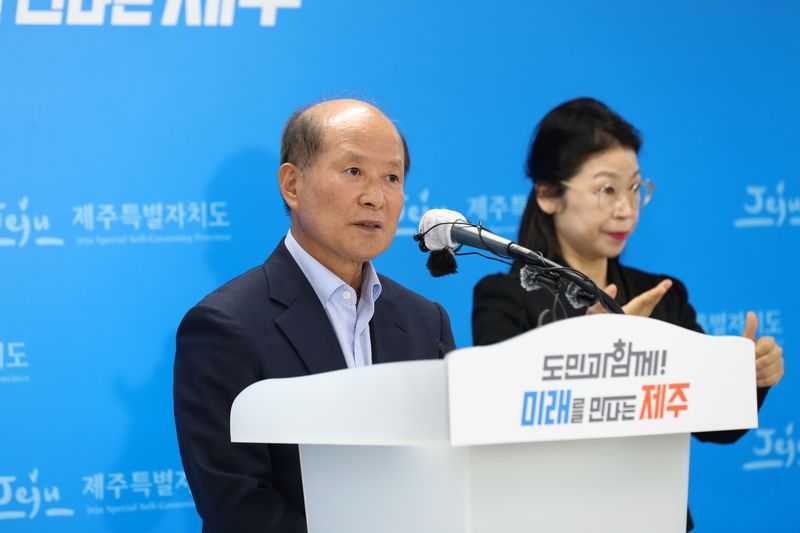
Ko Seung-han, chair of the Jeju Island Social Pact Committee, said, “We approved the plan after reviewing the participation of various stakeholders and the suitability of the operating plan,” adding, “I will do what is needed to ensure the council operates fairly and helps ease conflict.”
Lee Chang-heum, Jeju Province’s deputy governor for climate and economy, said, “We will actively support residents’ right to know and their right to self-determination,” adding, “We will consult with the Ministry of Land, Infrastructure and Transport to ensure the results of deliberation are respected as an important basis for policymaking.”
The effectiveness of the council’s launch depends on the participation of stakeholders on both sides, the disclosure of objective information, and agreement on how residents’ views will be gathered. To resolve the conflict that has persisted for 11 years, it will be important not only to form the council but also to clarify how the results of its discussions will be reflected in actual policy decisions.
[email protected] Jeong Yong-bok Reporter