“If I collapse, who’ll pay the mortgage?” ... The suffocating fear that sets in on the endoscopy bed [An Adult’s Wrong Answer Notebook]
- Input
- 2026-10-14 20:00:00
- Updated
- 2026-10-14 20:00:00
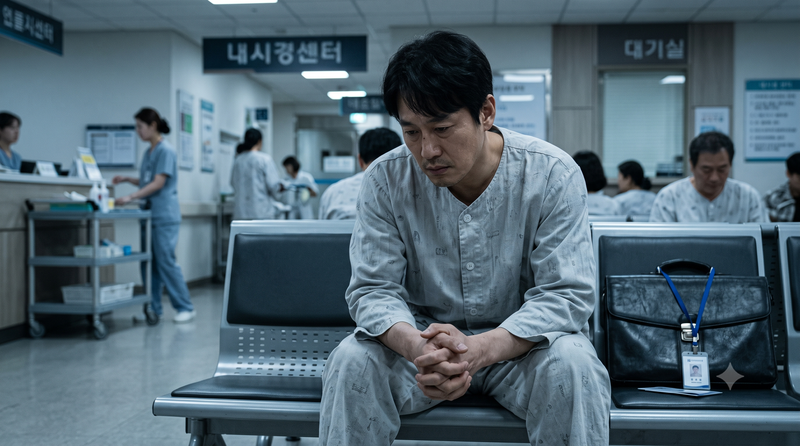
[Financial News] It’s 9 p.m. on a Wednesday in mid-October. A smartphone alarm goes off. “From now on, do not consume anything, including water, in preparation for your health screening tomorrow.”
A hand about to open the refrigerator out of habit pauses, and its owner sits down on the living-room sofa. Before hunger comes a vague sense of anxiety. Words such as “suspected fatty liver” and “watch your cholesterol levels,” written in red on last year’s health screening results, rise like ghosts.
“I’ve been tired even after sleeping lately. Could something be wrong with my liver?” “I’ve had heartburn for a few days. It can’t be something wrong with my stomach, can it?” Caught up in one ominous thought after another, a sudden fear begins to take hold as the small, soft breaths of a seven-year-old son sleeping peacefully in the quiet living room reach one’s ears.
◇ The contradiction of keeping up with the car’s engine oil while neglecting one’s own body
Health care among South Korean men in their 40s and 50s is marked by a strange contradiction. They change the engine oil in the car that carries their families every 5,000 km, using expensive synthetic oil, and rush to the repair shop at the slightest noise, yet completely neglect their own bodies until the red warning light comes on.They are highly sensitive to the returns in their stock accounts and the size of their apartments, yet don’t even think to check their blood pressure or liver numbers until the HR department sends a reminder. Every morning, they toss down a handful of the unidentified supplements their wives have set out for them and simply tough out the grind of the day as if those pills were a cure-all that would protect their health.
◇ On the endoscopy bed, the weight of “responsibility” is more frightening than death
On the day of the health screening, after changing into a loose gown amid the cold, unfamiliar smell of the hospital, the usually self-assured Manager Kim is nowhere to be seen. Especially during those brief, chilling 10 seconds when he lies curled up for a sedated endoscopy and the anesthetic flows into his vein. The fear that flashes through breadwinners’ minds is not “death itself.”
“If I collapse here, who’ll make the mortgage payments, with so many years left?” “Who’ll take care of our son, who starts school next year?”
Waking from the anesthesia in a daze, the first thing he watches for is the slightest change in the doctor’s expression. Only after hearing, “Everything looks fine except for mild gastritis,” does he let out the breath he had been holding and feel relieved. It is a terrifying realization: if I get sick, my family’s everyday life will collapse. For men in their 40s and 50s, health is not a personal desire to “live a long life,” but a desperate sense of duty to protect the “core infrastructure” that, as the family breadwinner, must never break down.
◇ Supplements taken to stay alive: Your body is the best blue-chip stock
As they leave the hospital, they promise, “Starting this year, I’ll really cut back on drinking and exercise.” But our sad reality is that by afternoon we’re back in front of a monitor, having to face our boss’s reprimands and a torrent of work with no defenses.
But if you’re clutching your empty stomach on Wednesday night, worrying about tomorrow’s endoscopy, there’s one thing I want to tell you. More than the stocks and real estate you’ve amassed through backbreaking work, your two legs and heart that keep going without faltering are the finest blue-chip stocks your family must never see delisted.
You have a polyp removed and return to work without a moment’s rest. You may seem foolish, but thanks to that dogged sense of responsibility, your family is living through another warm and safe day. This weekend, instead of looking at the stock screen on your smartphone, give your own shoulders—the ones that have quietly borne the burden—a warm pat for once.
[email protected] Jeon Sang-il Reporter