Seoul Superintendent of Education Geun-sik Chung: “Local education funding and teacher quotas should reflect actual demand”
- Input
- 2026-10-14 10:53:27
- Updated
- 2026-10-14 10:53:27
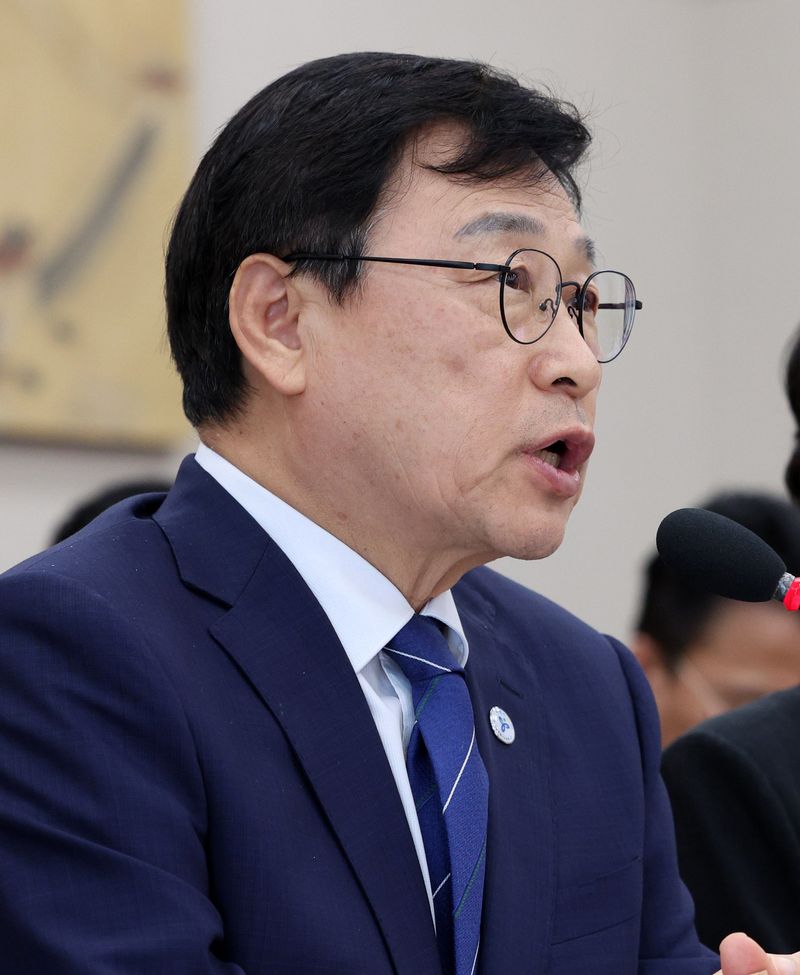
[Financial News] Seoul Metropolitan Superintendent of Education Geun-sik Chung attended the National Assembly Education Committee’s parliamentary audit on the 14th, presented a vision for the future of Seoul education, and strongly urged the National Assembly to ensure that the actual needs of the education field are reflected in the government’s push to revise the local education finance grant system and in the calculation of teacher quotas.
Superintendent Chung, who heads the Korean Council of Superintendents of Education, and the 17 metropolitan and provincial offices of education nationwide have consistently opposed the government’s proposed reforms to the local education finance grant system, including adjustments to the share linked to domestic tax revenues, and called for their complete withdrawal, saying they “undermine the foundations of educational autonomy and future education.” The opening remarks at that day’s parliamentary audit likewise came amid these ongoing concerns and responses from the education community.
In his opening remarks, Superintendent Chung referred to the “Basic Education for All, Happy Collaborative Education” initiative announced in July and said, “Even amid the AI and digital transformation, the climate crisis, a declining school-age population and educational polarization, public education will take full responsibility for the fundamentals to ensure that no student is left behind in learning and growth.”
He outlined five key priorities for the Seoul Metropolitan Office of Education: “customized education,” including strengthening the basic academic skills safety net centered on the Seoul Learning Diagnosis and Growth Center, integrating early childhood education and care, and expanding special education; “education for future competencies,” including organizing AI and digital education and strengthening reading, discussion, writing and ecological transition education; “building an educational community,” including expanding school autonomy and protecting teachers’ educational activities; “safe and happy schools,” including mental health support and a relationship-recovery deliberation program; and field-oriented “outreach administration.”
In particular, Superintendent Chung expressed concern about a decline in education funding amid discussions on reforming the current grant system and called on the National Assembly to play an active mediating role. He said, “Please give careful consideration to ensuring that the proposed reform of the local education finance grant system, now under discussion, reflects actual education costs and future educational needs in a balanced way, rather than focusing only on changes in the school-age population.” He stressed, “Even if the number of students falls, the value of each and every student’s life never diminishes.”
He continued, “What schools have to take on—in areas such as basic academic skills, mental health, special education and the improvement of aging facilities—is actually increasing,” and urged, “I earnestly ask for your attention and support so that teacher quotas, too, are calculated based on actual educational needs rather than simply on population figures.”
Finally, Superintendent Chung added, “Seoul education will find answers on the ground through action rather than words, and through trust rather than results.” He continued, “I will take each and every point you raise today as a foundation for making Seoul education even stronger in the years ahead.”
[email protected] Kim Man-gi Reporter