Kang Kyung-wha’s blunt remarks leave the Unification and Foreign Affairs ministries “taken aback”: “North Korean landmine was no accident”
- Input
- 2026-10-14 10:35:55
- Updated
- 2026-10-14 10:35:55
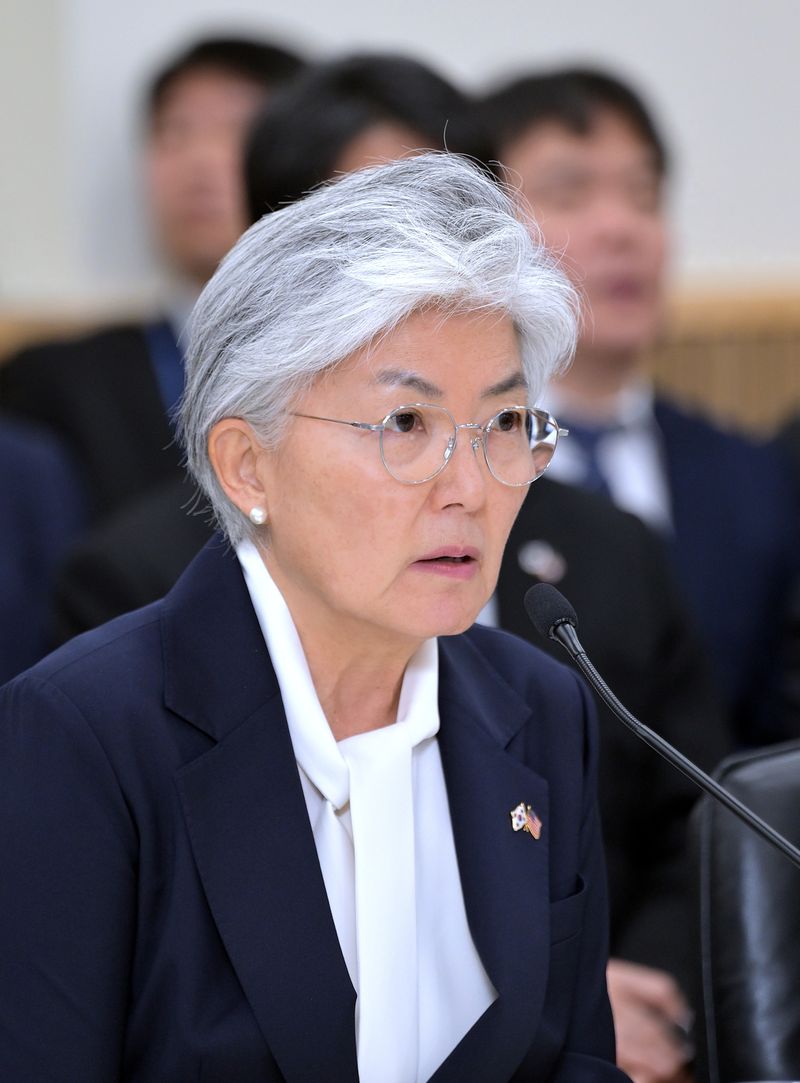
In particular, Ambassador Kang said the explosion of a North Korean landmine in the Demilitarized Zone (DMZ) “was clearly no accident,” taking a position diametrically opposed to that of the presidential office and the Ministry of Unification. The issue is expected to escalate into a political dispute.
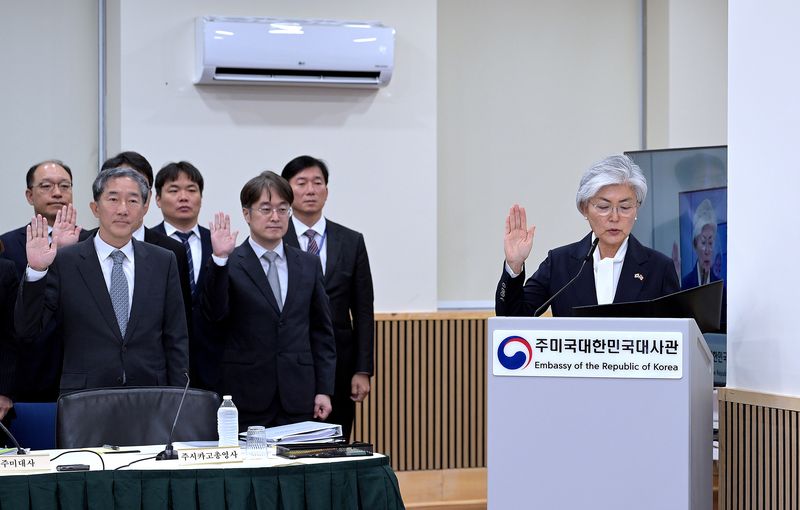
At a parliamentary audit held at the South Korean Embassy in Washington, D.C., on the 12th (local time), Ambassador Kang said that the North Korean mines had not been washed away but had been deliberately planted by North Korean troops. This conflicts with the phrase “an accident” used by Unification Minister Chung Dong-young and President Lee Jae-myung.
Ambassador Kang also identified intelligence cooperation as the most difficult outstanding issue in South Korea-U.S. relations. She said, “The concerns raised by the U.S. side have not yet been sufficiently addressed, and there are also limits to high-level communication with the White House.” Minister Chung’s remarks about “North Korean nuclear facilities in Kusong” have been cited as the direct trigger for the latest friction. In March, Chung mentioned the Kusong area of North Pyongan Province as a possible site for North Korea’s uranium enrichment facilities at the National Assembly Foreign Affairs and Unification Committee. The U.S. government reportedly viewed this as a leak of classified information shared between South Korea and the United States, and subsequently took steps to restrict the sharing of intelligence on North Korea.
Ambassador Kang said Minister Chung called her after his remarks about Kusong and that the information was conveyed to the U.S. side through the regular consultation channel. However, Ambassador Kang said, “I do not believe the intelligence cooperation issue has been resolved to the level the U.S. side expects.” As a result, restrictions on intelligence sharing, which have continued for more than six months since the Kusong remarks, have still not been fully lifted.
A conservative opposition source criticized President Lee Jae-myung, saying, “President Lee fueled tensions between South Korea and the United States by shielding Minister Chung Dong-young.”
The concern is that if the person who made the remarks continues to serve as a minister, the United States could conclude that South Korea does not sufficiently acknowledge the seriousness of the issue.
However, some analyses suggest that replacing Minister Chung alone would not have been enough to avoid the friction altogether. Multiple issues reportedly converged, including the Foreign Ministry’s inadequate early response to the “Coupang incident.” Foreign Minister Cho Hyun failed to accurately grasp the seriousness of the matter, saying early this year, at the outset of the Coupang incident, that the U.S. side had not mentioned Coupang.
But contrary to Foreign Minister Cho’s initial assessment, pressure mounted from all sides, including when 54 Republican members of the U.S. House of Representatives sent a joint letter of protest to Ambassador Kang in April. Ambassador Kang has consistently warned of the seriousness of tensions between South Korea and the United States, including by speaking bluntly after returning to Korea temporarily in July that the Coupang issue between the two countries would become a long-term issue.
[email protected] Kim Kyung-soo Reporter