Tightening Oversight of ‘Fake Ambulances’ ... Real-Time GPS Data Transmission to Be Required for Private Ambulances
- Input
- 2026-10-14 10:21:41
- Updated
- 2026-10-14 10:21:41
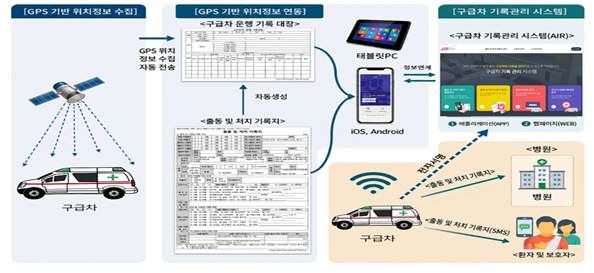
The Ministry of Health and Welfare said it will require private ambulances to transmit operational data in real time using the Global Positioning System (GPS), starting on the 14th, in accordance with the Enforcement Rules of the Emergency Medical Services Act promulgated on July 13.
Accordingly, emergency patient transport service providers and the social welfare corporation Daehan Inmyeong Gujodan, which operates ambulances, must transmit in real time to the Ambulance Record Management System (AiR), operated by the National Emergency Medical Center, the information collected by each ambulance’s driving record device.
Until now, authorities checked operating practices and whether rules had been violated by comparing GPS records stored in vehicles with operation documents after the fact. This approach had limitations in quickly identifying inappropriate operation.
Under the new system, each ambulance’s location, route, operating hours and other information will be collected and managed in real time. The government plans to use the data to verify whether ambulances are being operated appropriately and support inspections by local governments.
The system is currently at the stage of collecting and accumulating operational data. In 2027, a feature is scheduled to be added that will analyze the data, automatically detect cases of suspected abnormal operation and notify officials at the relevant authorities. The aim is to quickly identify operations requiring inspection and make oversight more effective.
The government is also working to improve the system so that ambulance insurance coverage can be checked at all times. All ambulances must have liability and comprehensive insurance, but checking insurance certificates during periodic inspections makes it difficult to detect in real time circumventions such as policies being canceled after an inspection.
The Ministry plans to consult with relevant organizations, including the Insurance Development Institute and insurance companies, on linking insurance enrollment data, and to improve the system so that insurance coverage can be checked at all times through the Ambulance Record Management System.
Lee Jung-gyu, the Ministry of Health and Welfare’s Director General for Public Healthcare Policy, said, “This measure is significant because it establishes a basis for electronically checking and managing ambulance operations, making oversight of ‘fake ambulances’ more effective.” He added, “We will continue to enhance the system and closely inspect inappropriate operation to build a patient transport system that the public can use with confidence.”
[email protected] Jeong Sang-hui Reporter