[Exclusive] Soccer and baseball account for 70% of Asian Games military-service exemptions... Government retained system despite considering abolition
- Input
- 2026-10-14 10:23:37
- Updated
- 2026-10-14 10:23:37
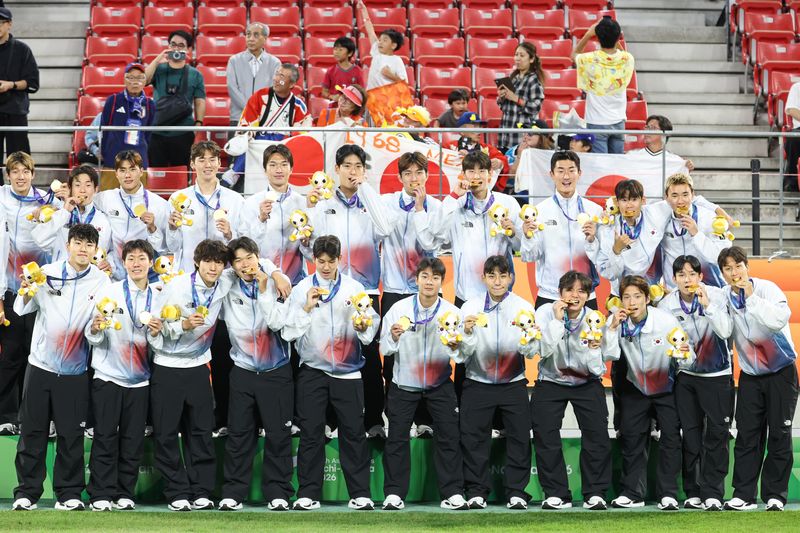
[Financial News] Seven out of every 10 athletes who received special military-service status through the Asian Games played soccer or baseball, a report found. The benefits were particularly concentrated in certain team sports: in soccer, for example, 20 players received the benefit for winning a single gold medal. The government was also aware of concerns about fairness and even considered abolishing the system altogether, but ultimately decided to retain it, the report confirmed.
According to documents obtained from the Military Manpower Administration on the 14th by Rep. Kim Byung-joo of the Democratic Party of Korea, a member of the National Assembly’s National Defense Committee, a total of 98 athletes were assigned as sports personnel through the 2018 Asian Games in Indonesia and the 2023 Asian Games in Hangzhou. Of these, 40 played soccer and 28 played baseball, meaning that athletes in those two sports alone accounted for 68 recipients (69.4%) of special military-service status.
By Games, 29 of the 41 athletes assigned in 2018—20 soccer players and nine baseball players—were concentrated in those two sports (70.7%). In 2023, 39 of the 57 assigned athletes—20 soccer players and 19 baseball players—also came from those sports (68.4%). The pattern of soccer and baseball accounting for about 70% of all beneficiaries was repeated.
A similar pattern emerged at this year’s Aichi-Nagoya Asian Games. Of the 56 athletes who newly met the requirements for assignment as sports personnel, 20 played soccer and 16 played baseball, together accounting for 64.3%. Including eight basketball players and four 3x3 basketball players brings the total to 48, or 85.7% of all 56.
The gap between individual and team sports was also pronounced. According to the Military Manpower Administration’s sport classifications, team-sport athletes made up 80.5% of those assigned as sports personnel at the 2018 Asian Games, rising to 89.5% in 2023. In individual sports, one athlete’s gold medal leads to one assignment, whereas in team sports such as soccer and baseball, a single gold medal can result in as many as 20 athletes being assigned.
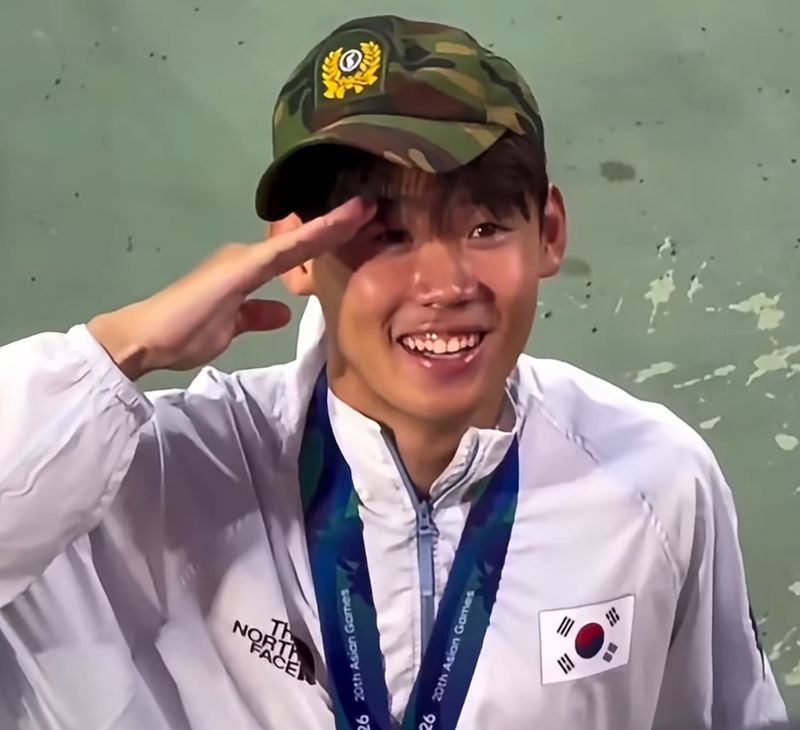
This is not the first controversy surrounding special military-service status. The government has been pursuing reforms to the system for more than a decade. In 2013–2014, it considered introducing a points system under which athletes would accumulate results from international competitions and qualify for assignment as sports personnel after reaching a set score. The plan was put on hold because the government judged that it would be difficult to fundamentally resolve the controversy over preferential military-service treatment.
The introduction of a points system was discussed again in 2018–2019. It was not adopted because the cycles and frequency of international competitions vary greatly by sport, making it difficult to establish fair standards, and because the change could instead increase the number of athletes assigned.
In 2019, the government even considered abolishing the system altogether. After criticism intensified over the selection process for the national baseball team at the 2018 Asian Games and differences in playing standards between professional and amateur players, the Ministry of National Defense, the Military Manpower Administration and the Ministry of Culture, Sports and Tourism formed an interagency task force. After about a year of discussions, it considered whether to abolish the system entirely, but ultimately decided to keep it.
At the time, the government cited fairness in comparison with other alternative-service programs and the possibility that less popular sports could suffer as reasons to retain the system. It also took into account a July 2019 survey of the general public and active-duty service members, in which support for keeping the system ranged from 47% to 66%. As a result, the existing structure, in which benefits are concentrated in team sports, remained fundamentally unchanged. Under the current system, athletes qualify for assignment as sports personnel if they win an Olympic bronze medal or higher, or a gold medal at the Asian Games.
Rep. Kim criticized the system, saying, “The special military-service system, introduced in 1973, has remained in place for 53 years, deepening the imbalance as benefits are disproportionately concentrated in certain team sports such as baseball and soccer.” He asked, “When even members of BTS, who have brought great honor to the country on the world stage, faithfully fulfill their military duties, do the public and young people really consider it fair for large numbers of athletes to receive military-service exemptions for winning a single Asian Games gold medal?”
He went on to emphasize, “The Ministry of National Defense and the Military Manpower Administration have considered numerous reform proposals—including fairness in comparison with the Olympics, disparities among sports and a shift to a points system—but have left the system untouched. They must immediately undertake a fair, comprehensive overhaul in line with the spirit of the times and young people’s expectations, including abolishing or scaling back the Asian Games exemption.”
[email protected] Kim Kyung-min Reporter