Caution over U.S. stocks resurfaces.... Citi withdraws overweight call on U.S. equities: “Overheating warning light is on”
- Input
- 2026-10-14 15:19:12
- Updated
- 2026-10-14 15:19:12
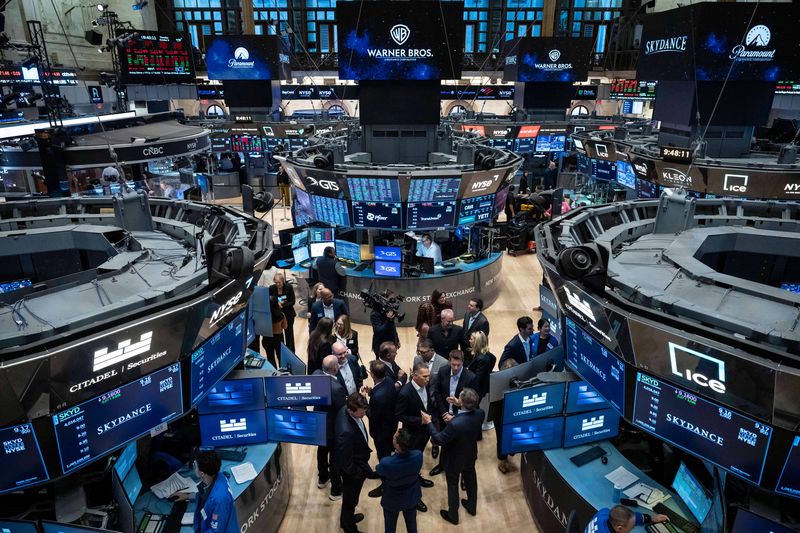
[Financial News] Global investment bank Citigroup withdrew its overweight recommendation on U.S. equities, saying signs of overheating in the New York stock market were becoming pronounced. It judged that key indicators of spreading optimism—including increased borrowing to invest and rising investor expectations—had reached levels seen at past market peaks.
On the 13th (local time), Citigroup withdrew its existing “overweight” recommendation on U.S. equities and closed its long position in the S&P 500 Equal Weight Index. Concluding that the market was overheated, it began reducing its exposure to U.S. equities.
Citigroup said that investor sentiment had become excessively optimistic during the recent market rally, leaving the market vulnerable even to minor negative news.
“We have decided to reduce some risks,” it said. The bank judged that risk appetite across the market had become excessive.
Citigroup noted that its proprietary POLLS indicator had recently risen to levels similar to those seen when past market peaks formed. It viewed the increase in investors’ use of borrowed money to invest as a sign that market-wide risk appetite had become excessive and the market overheated. Accordingly, Citigroup also closed its long position in the S&P 500 Equal Weight Index.
Rising interest rates weigh on markets
Although market outlooks on Wall Street are divided, concerns are growing that rising interest rates—which are likely to increase at least once more by year-end—could hurt stocks by burdening corporate financing and household consumption.In a statement released alongside earnings results that day, JPMorgan Chase CEO Jamie Dimon also cited large fiscal deficits, persistent inflation, high asset prices and geopolitical instability as key risks to the market, warning that “it will be more painful if interest rates rise 1%.”
The International Monetary Fund (IMF) also warned in its World Economic Outlook (WEO) that a slowdown in artificial intelligence (AI) investment could shock the broader economy and trigger market volatility and sharp declines. It forecast that in such a scenario, U.S. GDP would contract directly by 0.8%, while Asian technology exporters such as South Korea would suffer direct declines of up to 0.4%.
There were concerns that if expectations for returns on AI investment faltered, asset prices such as stocks would plunge and financial conditions worsen, spilling over into the real economy by further dampening consumption and investment. IMF Chief Economist Silvana Tenreyro said that day, “The resilience of the global economy is reaching its limits,” adding, “We must move beyond simply responding to crises and rebuild fiscal space and resilience on the supply side.”
IMF warns AI investment slowdown could quickly spill over into the real economy
Despite these concerns, Goldman Sachs raised its investment recommendation on global equities to “overweight,” saying the recent market correction had made stock valuations more attractive. It viewed the recent decline in share prices as an investment opportunity. Citigroup, too, did not shift to a bearish outlook predicting a broad decline in the U.S. stock market. It did, however, lean toward the view that the stock rally was becoming increasingly vulnerable to negative market signals. It judged that there was no need to sell large amounts of stock immediately and move into safe-haven assets.
All three major U.S. stock indexes plunged that day.
The Dow Jones Industrial Average fell 180.45 points (0.35%) from the previous session to close at 51,670.10. The S&P 500 fell 1.79 points (0.02%) to 7,805.45, while the Nasdaq Composite dropped 41.52 points (0.15%) to close at 27,204.38. Rebecca Walser, chief investment officer (CIO) at Walser Wealth Management, said, “High expectations can be a risk factor for every company during earnings season.” Following losses the previous day, shares of Micron Technology (-3.62%), SK hynix ADR (-3.19%) and Western Digital (-1.61%) also fell that day.
The Philadelphia Semiconductor Index fell for five consecutive trading days. The Philadelphia Semiconductor Index (SOX), a key gauge of the semiconductor sector, closed down 0.2% at 12,208.8. Its cumulative decline over that period was 7.6%; this was its first five-session losing streak since late July. The index closed that day 16.7% below its 52-week high. Of its 30 constituents, 22 had fallen more than 20% from their highs.
[email protected] Lee Seok-woo, International Affairs Correspondent Reporter