Just 4 of Jeju’s 172 rural village heads are women... Six villages change their operating rules
- Input
- 2026-10-14 09:52:53
- Updated
- 2026-10-14 09:52:53
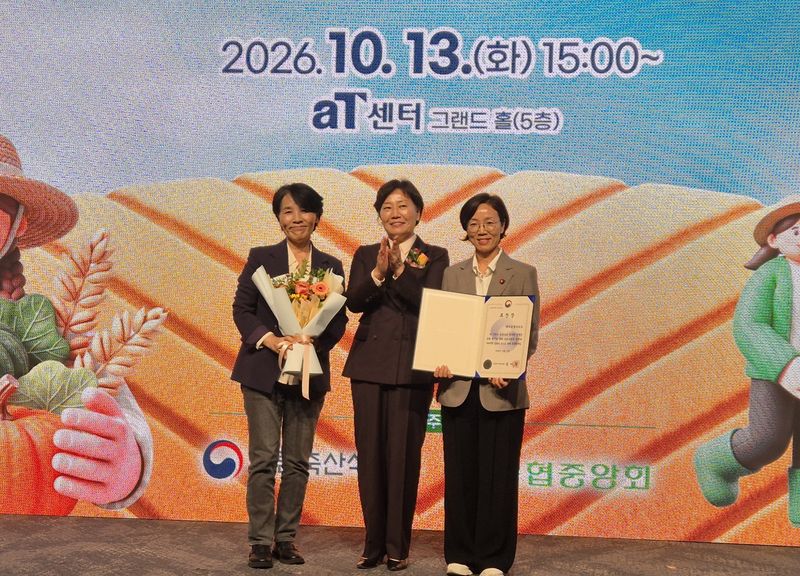
【Financial News, Jeju | Reporter Jung Yong-bok】 Just four of the 172 village heads in Jeju’s eup- and myeon-level areas are women. The work of six rural villages to revise their operating rules to expand women’s participation in village decision-making has been selected as a national model for gender equality in rural areas.
According to Jeju Special Self-Governing Province on the 14th, its “Building Gender-Equal Villages in Jeju” project was selected as an exemplary case in the local-government category of the Ministry of Agriculture, Food and Rural Affairs’ “2026 Rural Gender Equality Best Practices Competition.” Jeju Province received a ministerial commendation from the ministry at the fifth Women Farmers’ Day ceremony, held on the 13th at the aT Center in Yangjae-dong, Seoul.
A key part of the award-winning work was revising village operating rules to expand resident participation. Since 2019, Jeju Province has provided training and expert consultations to help residents identify gender-equality issues and develop ways to address them. Seventeen villages had taken part by last year, and two more joined this year, bringing the total to 19.
Of these, six villages, including Daepyeong-ri, Sindo 1-ri and Geumak-ri, revised their operating rules to reflect a gender-equality perspective. Key changes include guaranteeing one vote per resident in elections, making the women’s association chairperson an ex officio member of the village development committee, and ensuring equal numbers of men and women among appointed committee members. However, the provisions adopted by each village need to be checked individually.
Village operating rules set out the community’s key decision-making procedures, including the selection of village heads, votes at residents’ general meetings and the composition of development committees. It has long been pointed out that in some rural areas, practices granting voting and decision-making rights to household heads or household representatives can restrict women residents’ independent participation.
Women’s representation in rural Jeju is low even by national standards. According to Jeju Province figures, as of April this year, only four of the 172 village heads in eup- and myeon-level areas were women, or 2.33%. This was also far below the 38.12% share of women among neighborhood heads in dong areas.
The National Human Rights Commission of Korea’s own-motion investigation also confirmed the low share of women village heads in Jeju. Its review of nationwide records of village-head elections and appointments from 2014 to 2023 found that women accounted for 8.43%. During the same period, the figure for Jeju was 2.54%, the lowest among the metropolitan local governments surveyed.
The commission said it found no rules directly restricting eligibility to become a village head based on gender, but noted that some local governments and villages grant voting rights at residents’ general meetings or the right to recommend candidates, among other rights, to a single household head or representative.
It found that when such rules are combined with the longstanding practice of men representing households, women’s opportunities to participate in village-head elections and village affairs may be limited.
Last August, the commission reviewed local regulations and village bylaws related to village-head elections and conveyed to the relevant agencies its view that the system should be reformed so residents can participate equally regardless of gender.
The government’s policies for women farmers are also moving in the same direction. The Ministry of Agriculture, Food and Rural Affairs’ “Sixth Basic Plan for the Promotion of Women Farmers (2026–2030),” established last March, identified improving rural women’s substantive status and expanding their participation in policy decision-making as key priorities. It also includes plans to monitor progress in improving how village heads are elected and to spread best practices.
Jeju Province also changed its administrative support to encourage villages to take part voluntarily. In evaluating applications for its “Jeju-style Village-Making Project,” it awards extra points to villages with women village heads, villages with a high share of women on committees, and villages participating in the gender-equal village development project.
The Gender-Equal Village Project Team, which includes the Jeju Women’s Association, the Jeju branch of the Korean Women Farmers Association and Jeju YWCA, also took part in implementing the project. The Jeju Women and Family Research Institute supported related policy research.
Every two years, the Ministry of Agriculture, Food and Rural Affairs holds a competition for best practices in rural gender equality, assessing efforts to improve policies, implementation systems and residents’ perceptions, among other factors. The selected Jeju case will be included in a government policy compendium and shared with other local governments and rural villages.
With the share of women village heads in rural Jeju still in the 2% range, future measures of policy success will include whether the revised rules are applied in actual elections and village decision-making, and how much they expand women residents’ participation.
Lee Eun-young, Jeju Province’s gender equality and women’s policy director, said, “The joint efforts of the administration, civic groups and village residents led to this award,” adding, “We will support women and men in participating in village affairs with equal rights and responsibilities.”
[email protected] Jung Yong-bok Reporter