Ahn Chang-guk, FSC Standing Commissioner, attends U.S. SRC meeting... “AI oversight discussed”
- Input
- 2026-10-14 10:49:36
- Updated
- 2026-10-14 10:49:36
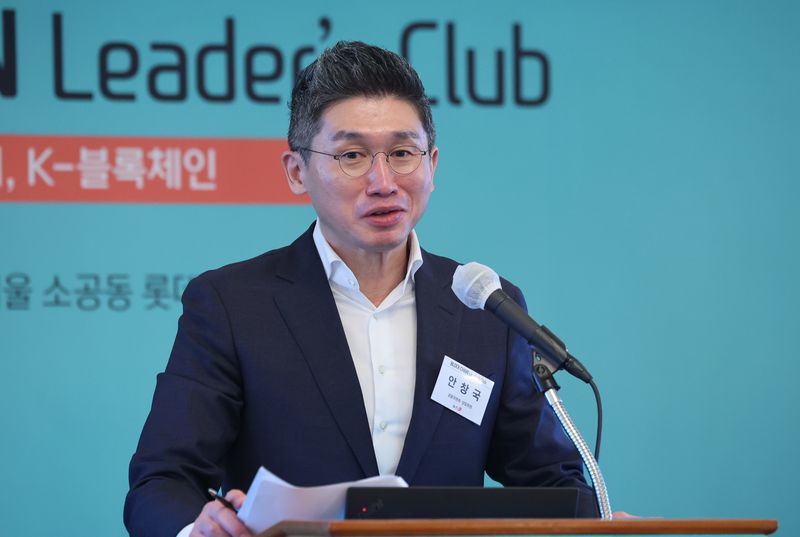
On the 14th, the Financial Services Commission said Ahn Chang-guk had discussed ways to strengthen private credit oversight and explored global cooperation to promote financial stability during a trip to the United States. Ahn also held a meeting with Korean financial firms operating in the United States and heard about the challenges they face locally.
The FSB SRC meeting was held in Washington, D.C., chaired by Michelle Bowman, the U.S. Federal Reserve’s vice chair for supervision. Topics included improving external audit quality, overseeing private credit, and how financial authorities can use artificial intelligence (AI). In particular, the results of an FSB roundtable held in June were shared in connection with external audits. Participants said that increased private equity investment in accounting and audit firms could help improve audit quality, but also raised risks stemming from conflicts of interest and changes in corporate governance. They also noted that human oversight is needed because applying AI to audit work could spread errors and bias.
Ahn Chang-guk emphasized that “inflows of external capital and technological advances present an opportunity to enhance audit capabilities,” while “continued monitoring is needed to address the prioritization of profitability and the risk of weakened auditor independence.” He went on to explain that “Korea safeguards independence by restricting private equity funds from investing directly in accounting firms, and requires large accounting firms to establish audit quality oversight committees led by external experts.” He also outlined management systems, including mandatory training on the use of new technologies such as AI and controls on access rights.
The discussion on private credit oversight addressed the identification of risks and supervisory challenges, drawing on a related report the FSB published in May. The FSB said private credit is growing rapidly as a means of corporate financing. It assessed that, given private credit’s links with various financial institutions, a market shock could spread across the financial sector as a whole. Ahn said, “Alongside the benefits of private credit, we need to closely examine potential risks, including high leverage and complex interconnected structures, and strike a balance between supporting corporate financing and maintaining financial stability.”
Regarding financial authorities’ use of AI, member countries shared their experiences and discussed the governance and risks of using AI in supervisory work, drawing on the “Consultative Report on Good Practices for the Responsible Adoption of AI by Financial Institutions,” which was discussed at the FSB plenary in June. Ahn said, “AI can improve supervisory efficiency, for example by detecting anomalies early, but risks such as a lack of explainability also need to be managed.” He added, “Korea uses AI to monitor virtual asset markets and detect abnormal trading, such as market manipulation, and is also introducing AI in handling complaints and disputes.”
The SRC discussed several priorities for its future work: modernizing regulation and supervision, addressing AI-related risks and use, and strengthening international cooperation on stablecoins. Key tasks identified included developing modernization principles in response to changes in the financial environment, improving the toolkit for responding to cyber incidents, analyzing the links between AI and financial fraud, and national stablecoin regulatory frameworks and supervisory cooperation.
Ahn later traveled to New York to attend the Financial Leadership Forum at “KOOM Week 2026” and a meeting with the Korean Founders Association (UKF). Hosted by the Korean Founders Association, KOOM Week 2026 is being held in Manhattan, New York, from October 12 to 18. It supports Korean-founded startups seeking to enter the U.S. market and helps expand networks among Korean and U.S. investors and founders. The forum brought together local startups and VC investors, as well as financial institutions including the Industrial Bank of Korea, Korea Development Bank, and Korea Exchange.
In his opening remarks, Ahn said he “emphasized the importance of public-private cooperation in supporting startups’ global ambitions and hoped KOOM Week would establish itself as a networking platform for seeking new opportunities in the U.S. market.” At the meeting that followed, he heard about local founders’ challenges and discussed the characteristics of the U.S. venture ecosystem. Ahn responded, “Alongside advancing productive finance, including by expanding funding for innovative companies and activating risk capital, we will support startups’ entry into the U.S. market by attracting overseas investment and expanding their connections with global investors.”
He also attended a briefing on the KOSDAQ market hosted by the Korea Exchange. The exchange explained that KOSDAQ supports financing for companies with technological capabilities and growth potential, and offers ample liquidity and lower listing costs compared with global exchanges. It also highlighted that the technology-based special listing system enables innovative companies to list based on their technological capabilities and growth potential. The briefing covered the procedures for foreign companies to list on KOSDAQ and successful examples.
Ahn also met with representatives of Korea Development Bank, the Export-Import Bank of Korea, the Industrial Bank of Korea, Woori Bank, Shinhan Bank, KB Kookmin Bank, Hana Bank, and NongHyup Bank, all of which operate in the United States. He heard about trends in the local financial industry and business conditions, as well as suggestions concerning their operations. Emphasizing the importance of financial cooperation as Korea-U.S. relations expand across areas including the economy and industry, Ahn said, “We will continue to support the overseas expansion of Korean financial firms.”
[email protected] Park Mun-su Reporter