Global AI Hub site-selection criteria to take shape today... Jeju’s 16 years of international training put to the test
- Input
- 2026-10-14 09:12:11
- Updated
- 2026-10-14 09:12:11
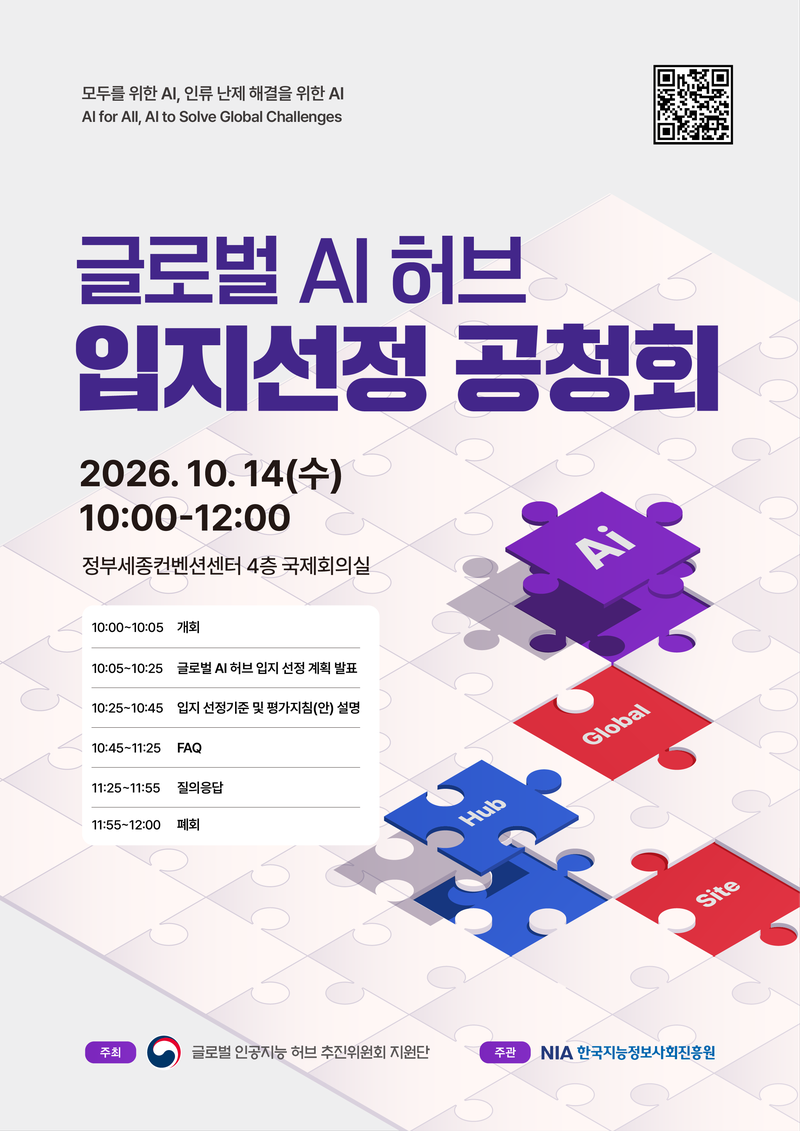
【Financial News | Jeju = Jeong Yong-bok, reporter】 Jeju, drawing on 16 years of accumulated international training experience and a foundation for digital cooperation, is facing a test in its bid to host the “Global AI Hub.” With the government set to release draft site-evaluation criteria on the 14th, the key will be how concretely Jeju can demonstrate that it can accommodate international organizations on a permanent basis and carry out joint projects.
According to the Global AI Hub Promotion Committee Support Team, the “Global AI Hub Site Selection Public Hearing” will be held at 10 a.m. on the 14th in the international conference hall of the Government Sejong Convention Center.
At the hearing, the government will explain the site-selection criteria, evaluation procedures and future schedule. It will also release draft bidding guidelines, including instructions on preparing and submitting applications to participate for local governments, and gather opinions through a question-and-answer session.
The government plans to incorporate the opinions raised at the hearing, revise the evaluation criteria and bidding guidelines, and announce a call for candidate sites this month. It will then evaluate the applicant regions and conduct on-site inspections before deciding on the final location.
This hearing is a follow-up to the first meeting of the Global AI Hub Promotion Committee, chaired by the prime minister on September 21. At the time, the government reviewed progress on establishing the hub and discussed a basic plan for selecting a suitable site where staff dispatched by international organizations could be based and joint projects carried out.
The Global AI Hub is different in nature from a typical AI data center or corporate support facility. It is a multilateral cooperation hub that brings together AI capabilities dispersed across international organizations and enables governments, research institutions and companies from around the world to work together to address global issues. It is designed to host staff from international organizations on a permanent basis, where they will work on developing policies and standards to support AI adoption in developing countries, sharing data and models, conducting international joint research, and providing education and training.
On May 21, the government announced its vision for a Global AI Hub, with participation from nine international organizations, including the International Organization for Migration (IOM), the International Telecommunication Union (ITU), the International Labour Organization (ILO), the United Nations Development Programme (UNDP) and the World Health Organization (WHO), as well as five multilateral development banks, including the World Bank (WB) and the Asian Development Bank (ADB).
The plan is to use AI to address challenges such as the climate crisis, health, food and jobs—issues that individual countries or international organizations would struggle to solve on their own. The government is moving forward with the necessary procedures, aiming to open the hub in 2027.
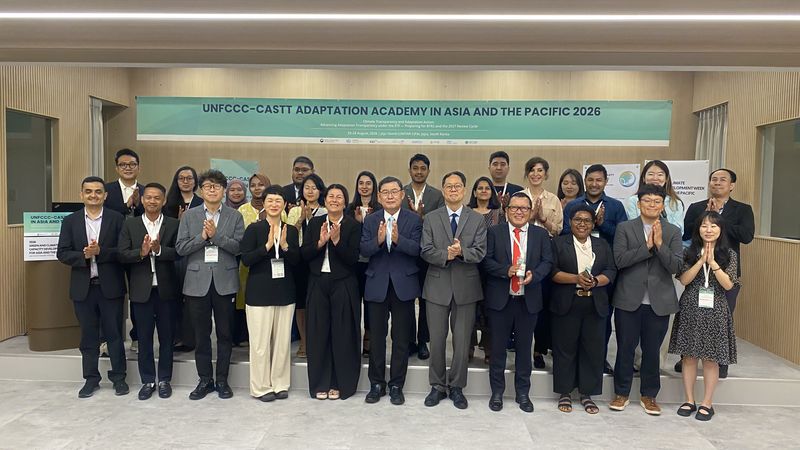
Jeju’s key strength is its existing foundation for international cooperation. According to the policy issue brief “Global AI Hub: Why Jeju Is Ready,” released by the Jeju Research Institute on September 23, the United Nations Institute for Training and Research (UNITAR) Jeju International Training Center in the Jungmun Tourist Complex in Seogwipo has been running international training programs since 2010.
Last year, 7,049 people from around 150 countries took part in the center’s training programs. Including the 6,622 participants in 2024, the total for the past two years was 13,671.
Jeju also has a track record in international education in the digital sector. The course “Inclusive Digital Governance in the Asia-Pacific Region,” held last year, drew 509 participants from 63 countries. This accumulated experience in international education on the policy applications of AI and digital technologies provides a foundation that could support the hub’s capacity-building function.
The government’s international digital cooperation organization is also based in Jeju. The Global Center of the National Information Society Agency (NIA), in Jeju Innovation City in Seogwipo, carries out information and communications technology cooperation with developing countries and international capacity-building projects. The fact that NIA’s Global Cooperation Headquarters is in Jeju is another asset that could support a bid to host an international cooperation hub.
The Jeju Research Institute highlighted that the UN international training base and the government’s digital international cooperation functions are both located in Jeju. It identified the creation of an AI international training program linking the two institutions, preparations for on-site inspections by international organizations, and reviews of relevant laws and systems as key tasks.
Jeju Province has also activated a dedicated organization for its bid. It has formed a working-level task force centered on the AI Innovation Promotion Group, headed by Lee Chang-heum, Jeju Province’s deputy governor for climate and the economy. Four divisions—international cooperation, living conditions, trends and publicity, and demonstration models—are involved, with the Jeju Research Institute providing policy advice.
The international cooperation division is compiling experience in running existing UN training programs and international conferences, while the living conditions division is reviewing housing, education and daily-life conditions for international organization staff and their families. The demonstration models division is developing ways to connect Jeju’s experience in climate, environment and energy demonstrations with international joint projects.
However, experience in international training does not, by itself, demonstrate the ability to operate a hub where international organizations are permanently based. Temporary education and conference programs require different facilities and operational systems from a permanent hub where staff of international organizations work over the long term. Concrete plans are needed for whether existing facilities can be used as office space for international organizations and how to support the living conditions of resident staff and their families.
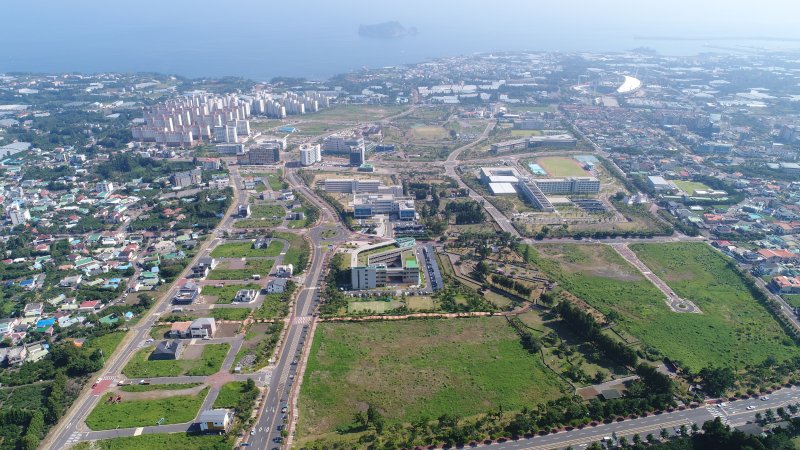
Jeju Province also needs to prepare details on the location and size of candidate sites, whether they are secured, access to an international airport, cooperation arrangements with domestic and international research institutions, and long-term operational and funding-sharing plans.
However, the draft criteria to be presented at the hearing will need to be reviewed to determine how much weight these factors will carry in the actual evaluation. Until the evaluation categories, their scores and mandatory requirements are finalized, it cannot be asserted that any particular facility or industrial base will give a bid an advantage.
Jeju’s plan for a renewable-energy-powered AI data center with capacity of around 40 MW should also be considered separately. The project is a separate national-project concept intended to drive a major AI transformation in the Jeju region by linking large-scale computing facilities with AI demonstrations in regional industries such as energy, space and biotechnology. It is being planned for implementation between 2028 and 2032, and differs in purpose and schedule from the Global AI Hub, which focuses on policy, research and education cooperation among international organizations.
The two projects’ functions could be linked in the future, but construction of a 40 MW data center has not been established as a prerequisite for hosting the Global AI Hub.
Competition to host the hub is also intensifying. In addition to Jeju, several regions are bidding, including Incheon, Busan, Gwangju, North Gyeongsang Province, South Chungcheong Province and Goyang in Gyeonggi Province. Incheon is highlighting its experience hosting international organizations and airport access; Busan, its living conditions for foreign residents and its international conference infrastructure; and North Gyeongsang and South Chungcheong, their manufacturing industries and conditions for demonstrations in advanced industries.
The bidding process is another variable. Regional strategies could differ depending on whether the international cooperation secretariat and the research and demonstration functions are consolidated in one region or distributed by function. The government’s proposed approach to site selection will also need to be examined.
Jeju’s competitiveness in the bid will depend on proving that its existing international cooperation track record translates into the ability to operate actual projects. It must develop concrete plans for permanent office space for international organizations and support for international organization staff and their families settling in Jeju, joint research, and the division of responsibilities with existing institutions, and present them with objective evidence. Once the government releases its evaluation criteria, it will be possible to assess how well the strengths Jeju has put forward match the actual selection requirements.
[email protected] Jeong Yong-bok Reporter