Tortured with a charcoal brazier for 3 hours to “drive out evil spirits”... Supreme Court: “Murder, not causing death by injury”
- Input
- 2026-10-14 08:09:32
- Updated
- 2026-10-14 08:09:32
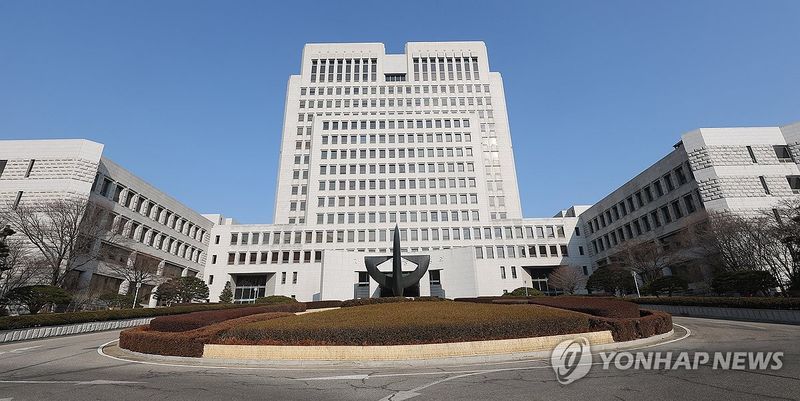
According to legal sources on the 14th, the Supreme Court’s Third Division, presided over by Justice Eom Sang-pil, overturned the lower court’s ruling, which had convicted only of causing death by bodily injury the seven defendants, including shaman A, who had been indicted on charges of murder and aiding and abetting murder. The court sent the case back to the Seoul High Court on the 23rd of last month.
A, a shaman with 40 years of experience, had made a living from the labor of A’s four children, a niece or nephew, and followers, as well as from offerings. A, who was 1.61 billion won in debt, took over in March 2024 a restaurant in Incheon run by A’s younger sibling and spouse, and operated it under the victim B’s name. B worked until the early hours every day without pay.
When B said she wanted to go to Ulleungdo, where her parents lived, A pressured her, saying that B was possessed by an evil spirit. When B would not change her mind, A proposed a charcoal-fire shamanic ritual on the morning of September 18, 2024, saying, “If we remove the evil spirit, I’ll do as you wish,” and told the followers, “It’s really dangerous, and B could die.”
The ritual began at 3:26 p.m. that day on the restaurant’s second floor. When B lay face down on a metal structure, the followers tied her neck, torso, arms, and legs with wire and placed a basin of burning charcoal beneath her abdomen. B asked them to untie her, saying, “It’s hot. I was wrong,” but A said, “We’ve already tied you up; we can’t undo it.” They added more charcoal and cut her clothes so the heat would reach her bare skin.
When B could not be roused at 6:22 p.m., they performed CPR but also dismantled the structure and cleaned the second floor. They did not call 119 until two hours later. B died two days later from burns covering 25% of her body surface.
The key issue was whether they had conditional intent to kill, or dolus eventualis. This means that even without an aim to kill, a person knows their actions could cause someone’s death and accepts that possibility. If such intent is not established, they can be convicted only of causing death by bodily injury.
In September last year, the first-trial court, Incheon District Court, found all the defendants guilty and sentenced A to life in prison and the other six to 10 to 25 years in prison. The Seoul High Court, however, acquitted them of murder this April and found them guilty only of causing death by bodily injury, reducing A’s sentence to seven years and releasing the others on suspended sentences. It reasoned that, because they believed in A’s spiritual powers and the ritual’s efficacy, conditional intent could not readily be inferred.
The Supreme Court reached a different conclusion. The justices said that tying someone with wire and placing burning charcoal beneath them was itself extremely cruel and dangerous. They stated, “Anyone can readily see that carrying out such acts for two to three hours or longer and causing extensive burns to the front of the torso creates a very high likelihood of death.”
The court also held that their belief in shamanistic practices was not grounds for finding that they lacked intent. The justices said, “The intention to ‘drive out evil spirits through a shamanic ritual’ can coexist with the awareness that ‘the victim could die from a dangerous shamanic ritual.’” They added, “Once they realistically recognized and accepted the risk of death, their intention to drive out evil spirits cannot be used to negate their intent to kill.”
B’s older female cousin and biological older brother, who merely watched while the restaurant was operating on the first floor, were also found guilty of aiding and abetting murder by omission. This applies when someone with a duty to prevent a crime does nothing and thereby makes it easier to commit. The court said that, as relatives who shared a livelihood, they had a duty to help but neither intervened nor called for help.
[email protected] Kim Dong-gyu Reporter