Roh So-young did not file a cross-appeal over 'property division'... Chey Tae-won challenges only 244 billion won
- Input
- 2026-10-14 06:44:41
- Updated
- 2026-10-14 06:44:41
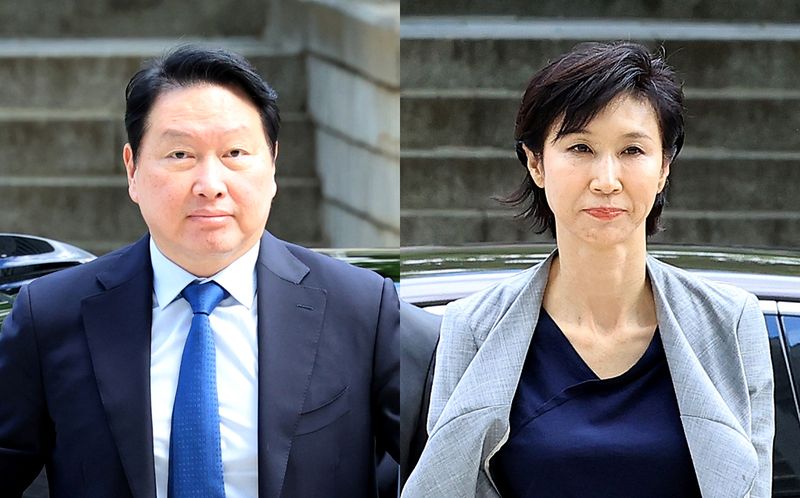
[Financial News] Roh So-young, director of Art Center Nabi, gave up her cross-appeal in the ruling on the retrial on remand of her property division case against Chey Tae-won, chairman of SK Group. Since Chey’s side had already filed a further appeal, the property division dispute between the two is expected to continue before the Supreme Court.
According to legal sources on the 14th, Roh’s side did not submit a notice of incidental appeal to the Supreme Court by midnight the previous day, the deadline for filing one. An incidental appeal allows one party to challenge aspects of the original judgment unfavorable to them when the other party appeals.
There had been interest in whether Roh’s side would use an incidental appeal to further contest the assets subject to division and the division ratio, among other matters, but it appears to have concluded that doing so would offer little practical benefit.
Last July, the Seoul High Court ruled in the retrial on remand of the couple’s property division case that Chey must pay Roh 944 billion won in cash. The court deemed assets worth a total of 2.9 trillion won, including SK shares worth 2 trillion won, subject to division, and set the division ratio at 66.6% for Chey and 33.3% for Roh.
Chey filed a further appeal last August, challenging the ruling in the retrial on remand. According to the statement of grounds for appeal he submitted the previous day, a key issue is whether the property division ratio set in the retrial on remand was appropriate. However, he later filed an application to narrow the scope of his appeal, saying he would not contest 700 billion won of the 944 billion won and would challenge only the remaining 244 billion won.
What Chey is challenging is that the retrial on remand recognized a 33.3% share for Roh even after excluding consideration of the ‘slush fund of former President Roh Tae-woo,’ in line with the Supreme Court’s ruling last year. That figure was not much lower than the 35% recognized by the second-instance court before the case was remanded.
He also argues that it was improper to use the value of the SK shares subject to division as of the date oral arguments concluded in the second trial before remand, while taking subsequent share-price gains into account when calculating the division ratio, and to include in the assets subject to division a stake in SK Siltron acquired in 2017, after the marital relationship had broken down.
Meanwhile, the Supreme Court is expected to assign a justice to handle the case soon and begin its full review.
[email protected] Kim Hee-sun Reporter