Chung Eui-sun courts India, targets 5.25-million-unit market despite tariffs of up to 110%
- Input
- 2026-10-14 17:00:00
- Updated
- 2026-10-14 17:00:00
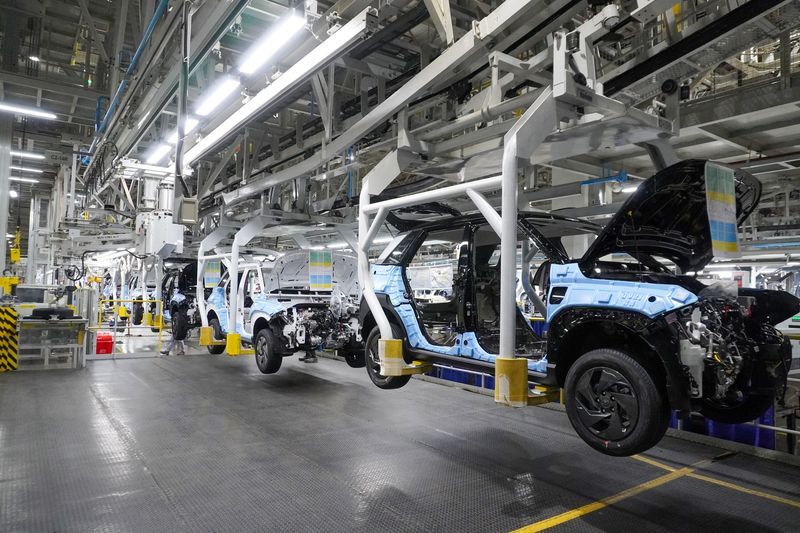
【Financial News, Pune (India) = Reporter Kim Dong-ho】India, the world’s third-largest automotive market, is emerging as a new growth hub for Hyundai Motor. Passenger-car sales are expected to reach 5.25 million units this year, while tariffs of up to 110% on imported fully built vehicles make securing local production facilities a key factor in competitiveness. Hyundai Motor Group Chairman Chung Eui-sun expressed his determination to tap the Indian market, saying, “The new Pune plant will be a key base demonstrating Hyundai Motor’s commitment to India.”
■A 5.25-million-unit market and high tariffs...local production is the answer
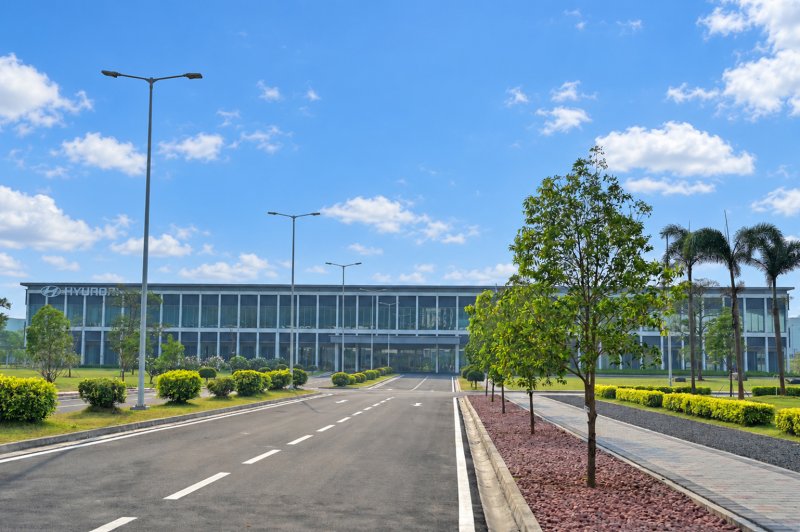
Hyundai Motor held a completion ceremony for its new Pune plant in Talegaon, Maharashtra, on the 14th (local time). Attendees included Chairman Chung, Hyundai Motor Group Vice Chairman Jaehoon Chang, Hyundai Motor President José Muñoz, Tarun Garg, CEO of Hyundai Motor India, and senior Indian government officials. In his welcoming remarks, Chung emphasized, “Hyundai Motor Group currently employs at least 24,000 people across India,” adding, “Through these investments, we will create more jobs and support India’s continued industrial development together with our suppliers and other stakeholders.”The rapid growth of India’s automotive market lies behind Hyundai Motor’s move to expand its production facilities there. India’s passenger-car market, the world’s third-largest after China and the United States, is forecast to grow by about 15%, from 4.57 million units last year to 5.25 million this year. Demand for cars is rising rapidly, fueled by a vast domestic market of 1.47 billion people.
High import tariffs are also driving the expansion of local production. India imposes tariffs of 70% to 110% on imported fully built vehicles, making local production facilities virtually essential to achieving price competitiveness. That is why global automakers are working hard to secure production bases in India.
India is geographically close to emerging markets such as the Middle East and Africa, and is also competitive in terms of manufacturing costs. This means it can serve the domestic market while also acting as an export hub targeting the Global South. Hyundai Motor Group plans to invest a total of $15.5 billion (about 20.8 trillion won) in India over seven years, from this year through 2032.
Hyundai Motor already uses India as a major export base. Its Indian subsidiary became the first among local automakers to reach 4 million cumulative passenger-car exports. The milestone follows successive achievements of 1 million units in 2010, 2 million in 2016 and 3 million in 2020. The Grand i10 was the most-exported model, with more than 1,757,000 units, followed by the i20 and Santro.
Hyundai Motor began localizing its operations in 1998, when it started producing the Santro at its Chennai plant. Taking into account India’s road conditions, which at the time included many unpaved roads, the company increased the vehicle’s ground clearance and equipped it with a multi-point injection (MPI) engine. Hyundai’s Indian business began with the development of vehicles tailored to local needs and has now entered a phase of expanding production and exports simultaneously.
■1 trillion won invested in GM’s former plant...1 million units in sight
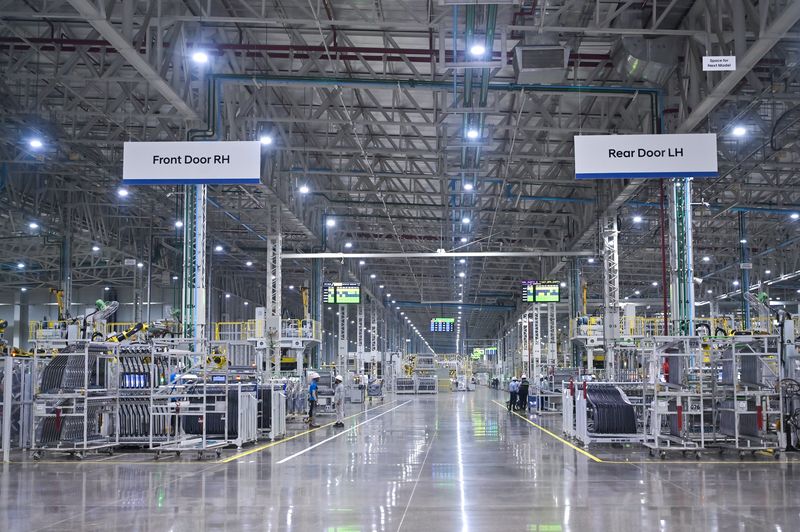
The Pune plant is a former GM facility that Hyundai Motor acquired in late 2023 and refurbished after GM halted operations there in 2020. The site, which received an investment of about 1 trillion won, covers 1.2 square kilometers—equivalent to 166 soccer fields. The Pune plant currently has annual production capacity of 170,000 units. Hyundai Motor plans to expand that in stages to 250,000 units in 2028 and 320,000 in 2030. Including its existing Chennai plants 1 and 2, with combined capacity of 824,000 units, Hyundai Motor’s current production capacity in India totals 994,000 units a year, close to 1 million. It is set to rise to 1,144,000 units by 2030.The first model to enter mass production is the small sport utility vehicle (SUV) ‘All-New Venue.’ It will be sold in India’s domestic market and exported to around 30 countries, including Mexico, Chile, South Africa and Saudi Arabia.
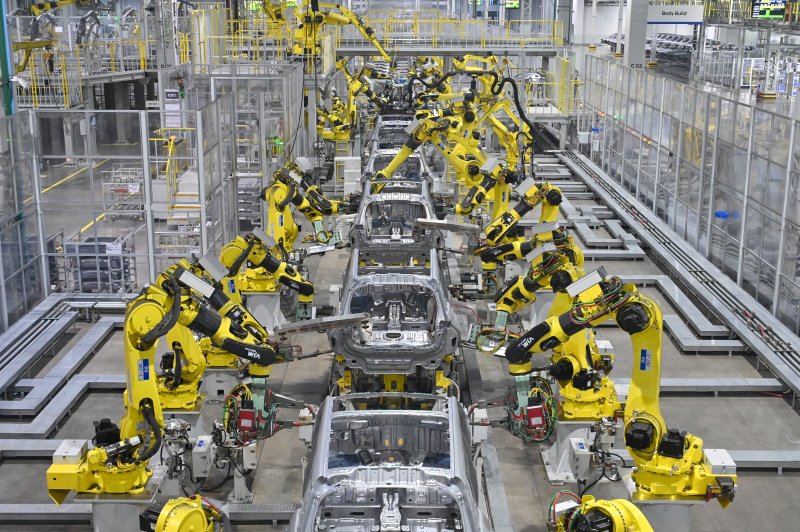
The production line uses an artificial intelligence (AI)-based system to detect cracks in panels. More than 200 robots handle welding in the body shop, and augmented reality (AR) is used to train employees.
The company is also expanding its electric-vehicle business. In line with the Indian government’s policy of raising electric vehicles’ share of new-car sales to 30% by 2030, Hyundai will add a small electric SUV tailored to India’s vehicle-segment classification as a strategic local model in the first quarter of next year (January-March), alongside the Hyundai Ioniq 5 and Creta Electric, which are already on sale.
Hyundai Motor Group’s expanding business in India is also expected to boost sales for its suppliers. More than 120 South Korean auto-parts makers have entered India alongside Hyundai Motor and Kia. Sungwoo Hitech, which produces body parts, saw its sales in India surge 54.6%, from 345.8 billion won in 2019 to 534.6 billion won in 2025. Sales are expected to rise significantly once the Pune plant is operating at full capacity.
Meanwhile, exports of auto parts to India totaled $841.09 million last year, ranking fifth among major product categories in trade with India.
[email protected] Kim Dong-ho Reporter