“Emergency rooms get raided, everyday cases get a belated response” ... Gyeonggi Nambu police come under fire at audit over “inconsistent investigations”
- Input
- 2026-10-13 23:32:04
- Updated
- 2026-10-13 23:32:04
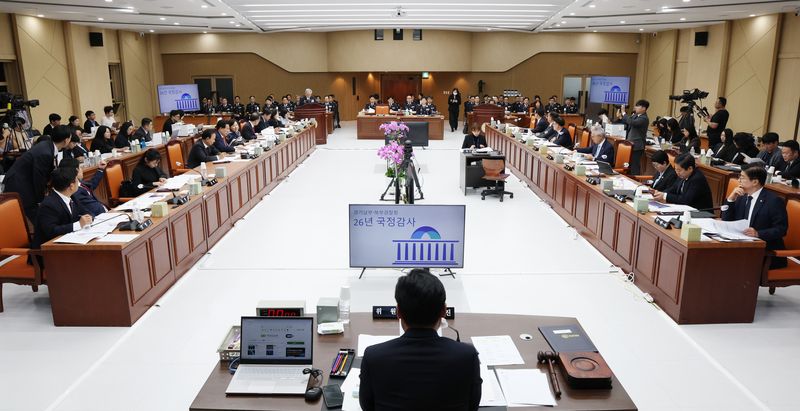
[Financial News] At the National Assembly Public Administration and Security Committee’s audit of the Gyeonggi Nambu and Bukbu Provincial Police Agencies held on the 13th, controversy over the police’s excessive search of the pediatric emergency center at Ajou University Hospital and their inadequate, delayed investigations into various crimes affecting the public came under scrutiny. Lawmakers from both the ruling and opposition parties sharply criticized what they called the police’s convenience-driven pattern of “inconsistent investigations” and called for measures to address it.
■ “The pediatric ER was raided despite records being impossible to alter” ... Police face backlash over excessive use of force
The main focus of the audit that day was the recent search by the Gyeonggi Nambu Provincial Police Agency of Ajou University Hospital’s pediatric emergency center as part of its investigation into the death of a child patient.
People Power Party lawmaker Seo Myeong-ok strongly criticized the police, saying, “The hospital’s electronic medical records (EMRs) are automatically saved every second, making them impossible to alter or falsify. Yet the police raided the pediatric emergency center while it was treating patients without even first requesting the records.” She added, “This is an abuse of state power that violates the presumption of innocence, as well as an obstruction of medical care provided by healthcare workers serving on the front lines.”
Yoon Geon-young of the Democratic Party of Korea also joined the criticism, saying, “Searching an emergency medical institution that handles matters of life and death without even a minimal advance request for cooperation or a manual is an extremely convenience-driven approach.” Lawmakers expressed concern that the police’s coercive stance could drive essential medical staff away from the field.
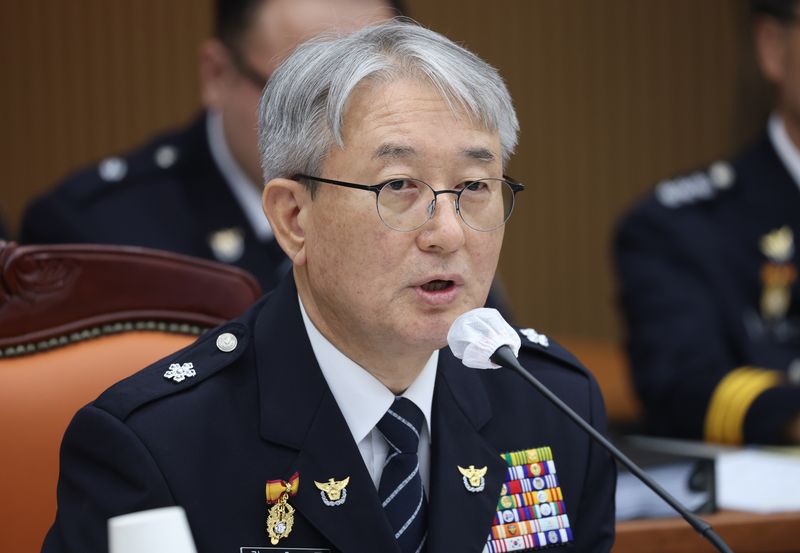
In response, Kim Hong-geun, acting chief of the Gyeonggi Nambu Provincial Police Agency (director of police affairs), and Ham Yeong-uk, head of the Provincial Investigation Unit, said, “Taking into account the nature of a hospital, we deployed only two investigators and began by checking empty examination rooms, carrying out the search to the minimum extent necessary in accordance with proper procedures.” However, following lawmakers’ repeated criticism, Kim said, “Taking these concerns into account, we will consult with the Ministry of Health and Welfare and other relevant agencies to draw up guidelines for searches of medical institutions.”
■ Inadequate, delayed response put bereaved families through further anguish ... “Can the public trust police investigations?”
There was also a stinging wave of criticism that the police, while aggressive in conducting forced searches at medical facilities, had in fact been passive in initial investigations of everyday and violent crimes and in protecting victims.
A bereaved family member who appeared as a witness in connection with the “death of a patient in isolation and restraints” at Wjin Hospital in Bucheon pleaded through tears for a reinvestigation and punishment of those responsible, saying, “The police investigation at the outset was so inadequate that they failed to secure some evidence, and they even suspended the investigation. Isn’t the National Human Rights Commission better than the police?”
The inadequate investigation into the “case involving the sexual assault and death of Choi Dan-bi, a teenage part-time worker” was also raised. Ansan Danwon Police Station initially decided not to refer the case for prosecution, but the recently established Public Prosecution Office overturned that decision and indicted the suspect. Basic Income Party lawmaker Yong Hye-in said, “The victim died because of the police’s inadequate investigation, and the police even engaged in secondary victimization by bringing up ‘memory distortion’ and similar claims.” She strongly called for an apology to the bereaved family and appropriate disciplinary action.
Other targets of criticism included the delayed response to a vehicle-damage case involving a foreign national in Icheon last July, which had been left on hold with a no-charge decision and other measures until media reports in September; the lack of public-safety measures following a group brawl among foreign nationals in Pyeongtaek; and inadequate protection for victims of stalking-related revenge killings in Seongnam and Gwangju.
In response to calls from bereaved families and lawmakers for an apology, acting chief Kim said, “I find this regrettable,” acknowledging shortcomings in the delayed response and other matters. He added, “We will deal strictly with officers who engaged in secondary victimization, depending on the results of the investigation, and strengthen crime-prevention systems, including public-safety efforts in areas with large foreign populations.”
Meanwhile, committee members unanimously urged the police—who have taken over full investigative authority following the abolition of the prosecution service and the launch of the Public Prosecution Office under amendments to the Criminal Procedure Act—to increase investigative staffing and strengthen their capacity to conduct thorough investigations. “Given the current situation, everything seems to be in disarray. Can the public really trust police investigations?”
[email protected] Park Ji-hyun Reporter