[Editorial] Warning that the competitiveness of industries other than semiconductors is declining
- Input
- 2026-10-13 18:18:05
- Updated
- 2026-10-13 18:18:05
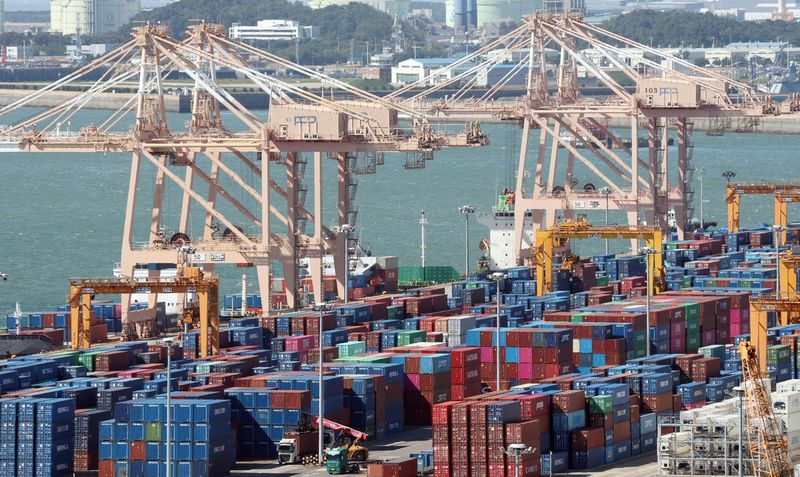
At an economic forum held on the 12th by the Korea Development Institute (KDI) and others, Kwon Nam-hoon, head of the Korea Institute for Industrial Economics and Trade, warned of the distorting effect of the semiconductor boom: “It is positive that semiconductor performance has been so exceptional and that this has improved indicators for the economy as a whole. But we do not know how long the semiconductor industry’s extraordinary boom will last, and excluding semiconductors, the competitiveness of Korean industry has already stagnated or begun to decline.”
KDI also expressed concern that the long-term economic growth rate has fallen by about 1 percentage point every five years since the early 1990s, and that if this trend continues, growth could enter the 0% range this year and turn negative from around 2030. The long-term growth rate is an indicator of an economy’s underlying growth capacity. The slowdown in productivity, particularly in manufacturing, has been cited as a cause of the decline. Core manufacturing industries such as petrochemicals and steel, excluding semiconductors and automobiles, have faced mounting difficulties over the past 15 years as China’s oversupply and intensifying competition have left exports stagnant, among other effects.
Meanwhile, China’s CMXT announced on the 10th that it would begin mass-producing 4F2-structure DRAM for next-generation servers within the year. The design dramatically reduces cell size. Some market observers say the announcement appears more aimed at showcasing its technological capabilities than at proving that they are ahead of those of Korean companies. Korean companies, too, have been researching 4F2 DRAM for some time, but reportedly have yet to bring it to mass production due to issues such as yield.
However, the possibility that China has in fact achieved technological innovation with the full support of its government cannot be ruled out. It remains to be seen whether the announced technology will lead to mass production and, even if mass production succeeds, whether the company can achieve competitive yields and costs. That does not mean China’s pursuit should be taken lightly. Memory semiconductor stocks fell on the Korean stock market immediately after the related reports, showing that this is by no means something to dismiss.
It is also worth noting that China’s technology ecosystem is expanding beyond memory into other fields. Recently, Huawei, a leading Chinese tech company, signed a multiyear patent cross-licensing agreement with U.S. semiconductor company Qualcomm covering 5G, computing, artificial intelligence (AI) and networking technologies. This is why there are concerns that, despite strong near-term results amid the extraordinary semiconductor boom, South Korea could lose its lead—as it did in the display industry, including LCDs, in the past—if it misses the right time to invest in research and development.
The warning of a declining long-term growth rate and China’s announcement of next-generation DRAM are major signals that will shape South Korea’s economic future. Domestic semiconductor companies should invest actively and develop technology now, while they are reaping enormous profits. This is the golden window to improve yields, accelerate the shift to next-generation architectures and establish an overwhelming technological lead. The government and political leaders, too, should actively pursue structural reforms: improving regulations that hold businesses back, expanding women’s and older people’s participation in economic activity, and nurturing the creative talent needed in the AI era.