[2026 Paris Motor Show] Peugeot: “South Korea has huge growth potential ... no reason not to export new models from our Chinese JV”
- Input
- 2026-10-14 06:00:00
- Updated
- 2026-10-14 06:00:00
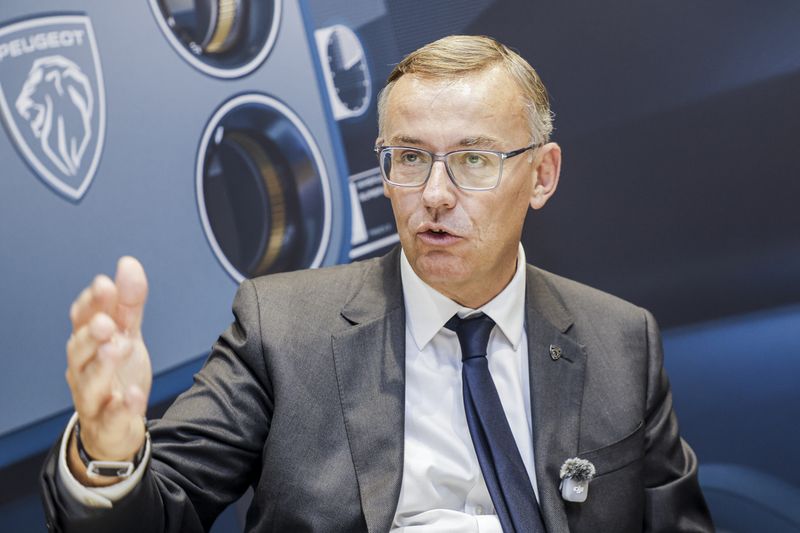
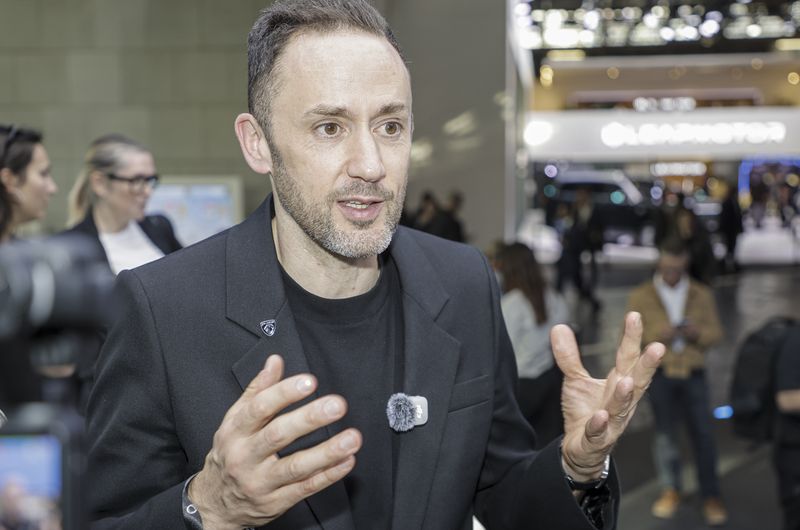
Peugeot brand CEO Alain Favey made the remark when he met with Korean reporters at the Peugeot booth at the 2026 Paris Motor Show, held at Porte de Versailles in Paris, France, on the 12th (local time).
He said the reason was that “our performance is currently very low in terms of sales volume and market share.”
While describing South Korea as “a very complex and difficult market,” CEO Favey said Peugeot is developing a growth strategy for the country with Stellantis’ Asia-Pacific (APAC) organization. He added, “We have high expectations that we can grow the Peugeot brand in South Korea.”
■ New joint venture with Dongfeng ... “No reason not to export to South Korea”
Asked whether Peugeot or Stellantis planned to strengthen cooperation with Chinese companies, CEO Favey replied, “As CEO of Peugeot, I’ll speak from Peugeot’s perspective,” adding, “Peugeot already has a partnership with a Chinese company.”Peugeot has worked with Dongfeng Motor Corporation, based in Wuhan, China, for 34 years. This year, it decided to strengthen the partnership by establishing a new joint venture.
The new joint venture is set to produce two new models. The first is scheduled to launch in China next year, and the second in 2028. Both models will be made in China and sold there, as well as exported to Asia-Pacific, South America and other regions. Europe is excluded from the export destinations.
Asked whether South Korea would also be included among the export destinations, he replied, “There’s no reason not to.”
He drew a distinction between Peugeot and Leapmotor, which partners with the Stellantis Group. CEO Favey said, “The Peugeot brand itself does not work with Leapmotor,” adding, “From our perspective, Leapmotor is a competitor, just like our other competitors.” The joint venture between Stellantis and Leapmotor is solely intended to sell the Leapmotor brand in Europe; Peugeot’s position is that it competes in the European market with other brands, including Leapmotor.
■ STLA One platform cuts production costs by 20% ... next-generation 208 to be the first model to use it
CEO Favey cited “multi-energy” and the STLA One platform as strategies for navigating the transition to electrification. Multi-energy means offering each model in either an electric or internal-combustion version, allowing customers to choose their preferred powertrain.The first model to use the STLA One platform, which launches next year, will be the next-generation Peugeot 208. CEO Favey said the platform would make “the cost of producing a car 20% lower than it is today.” He added that its greater efficiency could also improve driving range.
The next-generation 208, based on STLA One, will be a fully electric vehicle. CEO Favey expressed confidence that it would be “highly efficient and attractively priced.” The current 208 will continue to be sold as a hybrid.
Peugeot plans to continue offering both hybrid and electric vehicle options as long as demand for hybrids exists. CEO Favey stressed, “Even after 2030, if there is demand for the hybrid version, we will continue to offer it.”
He said autonomous driving is less a matter of technology than of obtaining legal and regulatory approval for use on public roads, and that it would be introduced when the regulatory environment allows. Regarding Software-Defined Vehicles (SDVs), he said STLA One is a platform aligned with the SDV concept.
■ Design director: “We always look to the future”
Peugeot Design Director Matthias Hossann said the E-T16 concept unveiled at the motor show “offers clues to the styling of the next-generation 208, which will launch next year.” E-T16 is also a tribute to the 205 T16, which won the World Rally Championship in 1985 and 1986. He added that elements such as the lighting signature offer a glimpse of the next-generation 208’s design.Director Hossann said the “Hypersquare,” a steer-by-wire steering wheel with no mechanical connection between the steering wheel and the wheels, “is set to be used in production vehicles.” He described it as “another way to redefine and reinvent the pleasure of driving.” Peugeot believes that even in the era of autonomous driving, drivers should be able to choose whether to leave the driving to the vehicle or drive themselves.
The RCZ Vision unveiled alongside it is a concept model, with no production plans for now. Its overall length is 4.6 meters, 30 centimeters longer than the first-generation RCZ, which was about 4.3 meters long. The cabin was moved slightly farther back to create better proportions, and the design provides seating for four people.
Director Hossann described Peugeot’s design language as “Feline Future.” The name combines the feline qualities evoked by the lion emblem with a forward-looking outlook. He stressed, “While we draw on elements from the past, we are by no means trying to create retro designs. We always look to the future.”
[email protected] Kim Dong-chan Reporter