An amount of seawater equal to 70% of the East Sea’s seawater flows deep into Earth... ‘Water transport mechanism’ discovered
- Input
- 2026-10-13 17:07:10
- Updated
- 2026-10-13 17:07:10
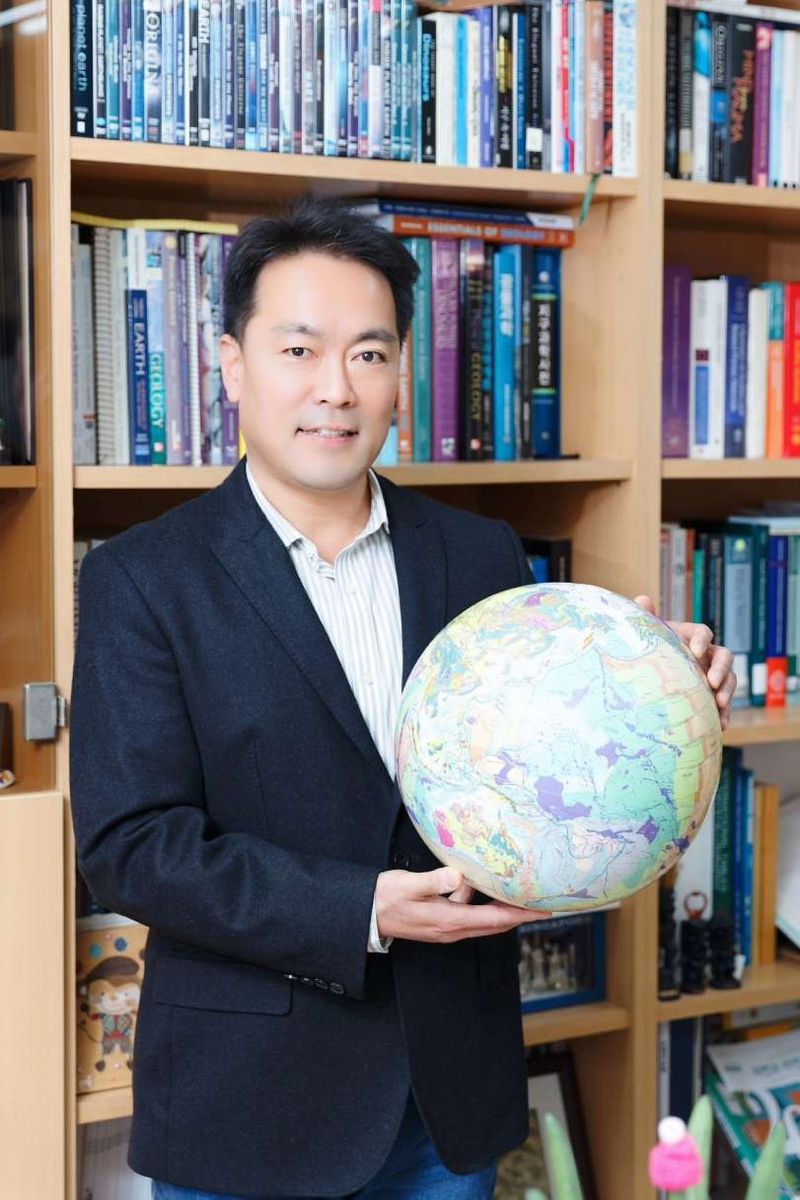
[Financial News] A study has found that minerals commonly found at Earth’s surface act as ‘carriers,’ transporting large amounts of water as they move deep into the planet.
A team led by Professor Lee Yong-jae of Yonsei University’s Department of Earth System Sciences has identified a new mechanism by which water is transported all the way to the lower mantle as intact water molecules, rather than ions, as tectonic plates sink into Earth’s interior, the team said on the 13th. The findings were published in the prestigious international journal Proceedings of the National Academy of Sciences of the United States of America (PNAS).
According to the team’s analysis, about 6 million metric tons of water are transported deep into Earth each year through this process. Over about 200 million years, that would amount to roughly 70% of all the seawater in the East Sea flowing into Earth’s interior.
Scientists have traditionally believed that water inside Earth moves mainly in the form of hydroxyl groups chemically bonded to mineral structures. But, by using a synchrotron radiation accelerator to recreate the high-temperature, high-pressure conditions inside Earth, the team became the first in the world to confirm that water can be stored and transported inside minerals while remaining in intact molecular form (H2O).
Feldspar, a major mineral that makes up Earth’s crust, transforms into a structure with tiny tunnel-like spaces (the hollandite type) when subjected to the intense pressure and heat of the mantle transition zone, 410 to 660 km underground. In this process, feldspar traps surrounding water molecules in its internal tunnels and stores water amounting to up to about 2% of its own weight.
When these water-bearing minerals reach the upper part of the lower mantle, between 720 and 780 km underground, the volume of their tunnel spaces shrinks by about 6%, releasing the stored water molecules. The team also proposed that the released water could spread into the surrounding area and cause a ‘double seismic discontinuity,’ in which seismic-wave speeds deep underground change abruptly or a boundary is observed as two separate interfaces.
Professor Lee Yong-jae, who led the study, said, “We have shown that feldspar at Earth’s surface, which had not contained a drop of water, transforms into a carrier that takes on water as it passes through the mantle transition zone and heads deeper into Earth,” adding, “This is an important result that will significantly advance our understanding of water circulation deep within Earth and seismic-wave anomalies.”
[email protected] Kim Man-gi Reporter