Jeju Halts Expansion of Island-Platform Stops Under BRT; Decision on Upgrades to Existing Six Due in November
- Input
- 2026-10-13 16:54:04
- Updated
- 2026-10-13 16:54:04
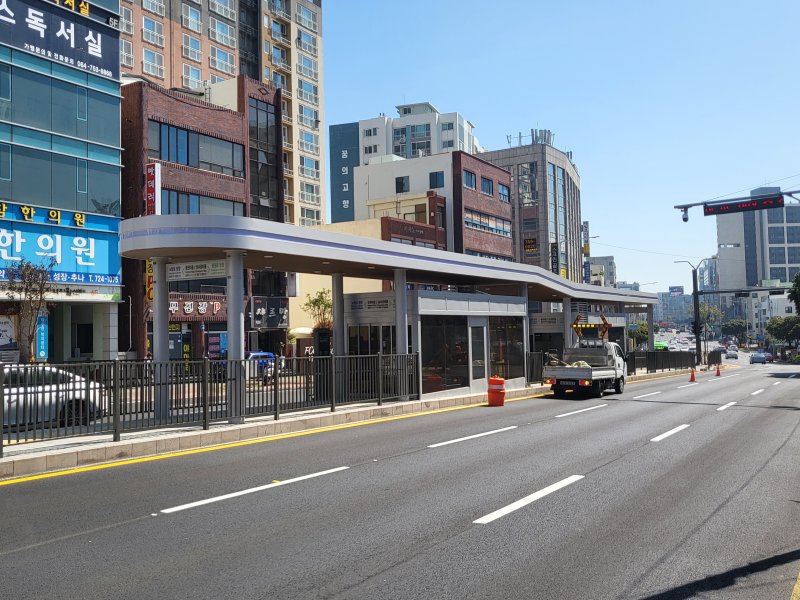
【Financial News, Jeju = Jeong Yong-bok】Jeju, the first in South Korea to introduce island-platform stops and dual-door buses, has shifted its policy toward halting further additions of these facilities. How to improve the existing stops on Seogwang-ro, which opened last year, and how to proceed with subsequent bus rapid transit (BRT) projects are expected to take shape in November.
According to Jeju Special Self-Governing Province on the 13th, the 13-member Jeju BRT Policy Advisory Panel, comprising transportation experts, civic group representatives and residents' representatives, will analyze residents' opinions, traffic data and the operation of existing facilities and prepare policy recommendations by November.
The main subjects under review are the island-platform stops and dual-door buses installed on Seogwang-ro in Jeju City. The panel will compare the advantages, disadvantages and impacts of various options, including keeping the existing facilities while addressing their problems or changing how the stops are operated.
BRT is a public transportation system that improves bus-only lanes, stops and traffic signal systems, among other things, to increase bus speeds and punctuality on regular roads. It does not necessarily require island-platform stops or dual-door buses.
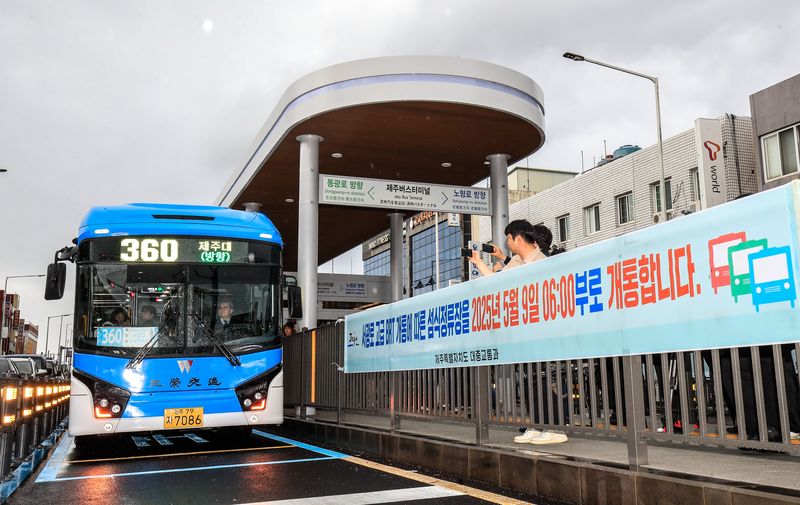
An island-platform stop is built in the middle of a road like an island and is shared by buses traveling in both directions. A dual-door bus has a door on the left in addition to the regular bus's right-side doors, allowing it to serve both median stops and roadside stops.
On May 9 last year, Jeju Province opened six island-platform stops along a 3.1-km stretch of Seogwang-ro from Gwangyang Rotary to Doryeongmaru and began operating low-floor dual-door buses. The province said at the time that island-platform stops would help secure space on both sides of the road for sidewalks and reduce the need to transplant street trees, while also improving bus punctuality and transfer convenience.
After the stops opened, some passengers confused the old stops with the new ones or had difficulty using the left-side doors. The consolidation into island-platform stops also led to the closure of nine existing roadside stops, prompting concerns about access to stops and the convenience of boarding and alighting.
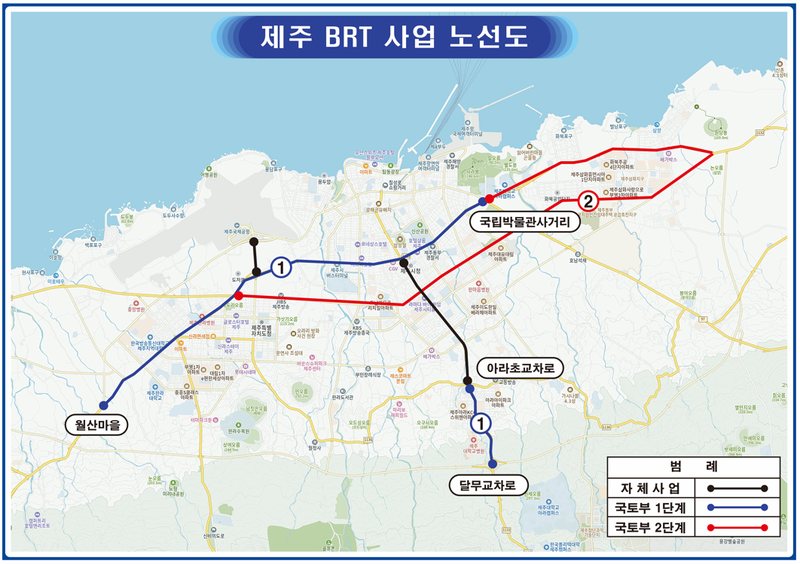
Jeju Province therefore provisionally halted construction of island-platform stops on the 2.1-km Donggwang-ro stretch from Gwangyang Rotary to the National Jeju Museum, a subsequent project, and has been reviewing how the stops should operate.
In particular, the future direction of the BRT project was a major issue at the Jeju Provincial Council's Environment and Urban Committee on the 7th. Kang Min-cheol, head of Jeju Province's Transportation and Aviation Bureau, said in response to questions from provincial council members that “there will be no further introduction of island-platform stops and dual-door buses.” He added that improvements to facilities already in place and the direction of subsequent projects would be decided after review by the policy advisory panel.
Some provincial council members also said policy decisions needed to be made quickly. Councilor Yang Yeong-sik criticized the province, saying, “Even after the launch of the ninth popularly elected administration, no specific alternative has been prepared for what to do with the existing island-platform stops.” Yang Hong-sik, chair of the Environment and Urban Committee, said, “The shift in the decision-making process from public deliberation to policy consultation has continued to confuse residents.”
Jeju Province says it formed an advisory panel involving experts and stakeholders to reduce the time and cost required for policy decisions. The panel, formed on September 30, includes transportation experts, civic group representatives, neighborhood self-governing committee chairs and university student council presidents. Oh Jeong-hun, former chief of the Jeju Provincial Council Secretariat, is the panel's chair.
The panel holds regular weekly meetings to review the operation of existing facilities, traffic flows and inconveniences faced by users. So far, it has discussed the panel's operating direction, ways to gather residents' opinions and options for improving the island-platform stops on Seogwang-ro.
Residents' opinions will be gathered through surveys conducted by a specialist organization and interviews with stakeholders. The province plans to hear from provincial council members representing areas near BRT routes, neighborhood self-governing committees, transport operators, businesses and student representatives, and to conduct on-site inspections as well.
Traffic data and records of public complaints will also be analyzed. The panel will review the operational effectiveness of the existing island-platform stops and dual-door buses and compare access to stops, boarding and alighting convenience, traffic flows, and the administrative and financial burdens of improving the facilities before preparing policy recommendations.
The review covers both the Phase 1 BRT sections already in operation and the Phase 2 sections included in the government plan. Phase 1 includes Donggwang-ro–Seogwang-ro–Doryeong-ro–Nohyeong-ro and the Ara Elementary School–Dalmu Intersection route, among others. Phase 2 is a route linking the National Jeju Museum, Samyang Checkpoint Intersection and Shingwang Intersection.
In July, MOLIT finalized and announced its second comprehensive BRT plan, which included Jeju's Phase 2 project. The route is approximately 15 km long, and the plan sets its project cost at 48 billion won.
However, the inclusion of a project in the government's comprehensive plan does not mean that the design, construction method and budget execution for each section have been finalized. Since Jeju Province has announced that it will halt further introductions of island-platform stops and dual-door buses, adjustments are needed between the existing national plan and how the project will actually proceed.
The key issue is how to use the facilities installed last year and the associated costs. The project costs, user convenience and traffic effects of retaining or improving the existing facilities must be objectively compared with those of changing the stop design.
The same applies to subsequent BRT projects. Even if the introduction of additional island-platform stops and dual-door buses is halted, alternatives are needed to achieve BRT's original goals of improving bus speeds and punctuality and making the system more convenient for passengers.
The policy advisory panel plans to prepare recommendations by November after analyzing the advantages, disadvantages and impacts of each option. Jeju Province intends to use the recommendations to decide how to improve existing facilities and proceed with subsequent projects.
“BRT is a project that affects Jeju's public transportation system as a whole,” said Kang Min-cheol, head of Jeju Province's Transportation and Aviation Bureau. “We will support the development of reasonable policy recommendations by objectively reviewing operating conditions and traffic data and gathering residents' opinions.”
[email protected] Jeong Yong-bok Reporter