Detecting myocardial damage before it develops: Kyung Hee University launches development of quantum-sensing technology for early diagnosis
- Input
- 2026-10-13 16:37:55
- Updated
- 2026-10-13 16:37:55
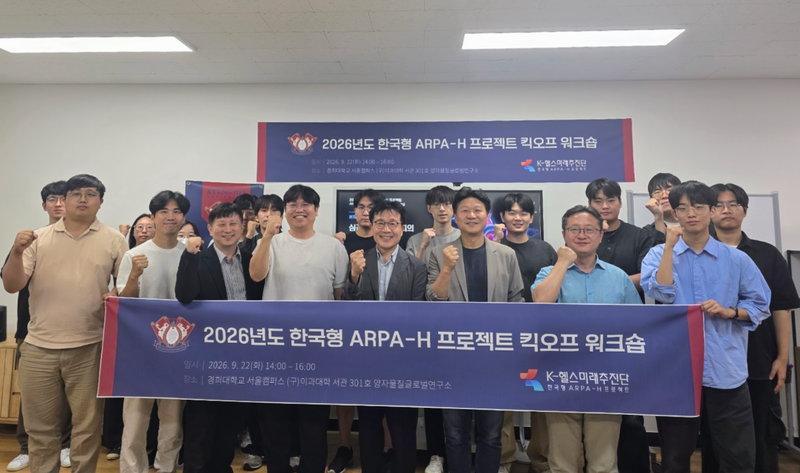
[Financial News] Kyung Hee University said on the 13th that it had begun developing early-diagnosis technology that uses quantum sensing to detect subtle biological signals that appear before the heart muscle is damaged.
The research breaks from conventional diagnostic methods that rely solely on specific substances that appear after a disease has clinically worsened. Its goal is to build a platform that can detect disease risk in advance by quantitatively measuring subtle changes in oxidative stress, local temperature and metabolic activity that occur before heart cells are destroyed, such as by chemotherapy.
To this end, the research team will combine molecular quantum sensors that detect extremely subtle biological changes with organ-on-a-chip technology based on cardiac organoids that mimic human heart tissue. By measuring cellular changes in an experimental environment similar to an actual human heart, the team plans to identify early warning signs of myocardial damage.
The project is a multi-institutional collaboration spanning physics, medicine, artificial intelligence and bioscience. Kyung Hee University will serve as the lead research and development institution, overseeing the development of molecular quantum sensors and the construction of the overall platform. Kyung Hee University Medical Center will build disease models based on cardiac organoids and conduct biological validation. Chosun University will handle quantum-signal interpretation and AI analysis, while the Korea Electronics Technology Institute (KETI) will develop microfluidics-based organ-on-a-chip systems and integrate the sensors. Korea University (KU) and LCI will respectively conduct cross-validation of quantum sensing and develop commercialization strategies.
Project lead Son Seok-gyun, a professor in Kyung Hee University’s Department of Physics, said, “Researchers in physics, medicine, bioscience, MEMS and AI will work closely together to demonstrate the potential of new quantum medical technologies that can detect risk signals before a disease fully progresses.” He added, “Ultimately, our goal is not merely to demonstrate the high sensitivity of individual quantum sensors, but to build an integrated platform that can obtain reliable signals in actual biological environments and interpret them for medical use.”
The research is supported by the Ministry of Health and Welfare’s 2026 Korean ARPA-H Project and is being carried out under the management of the Korea Health Industry Development Institute’s K-Health Future Task Force.
[email protected] Kim Man-gi Reporter